By Adamu Lawal Toro
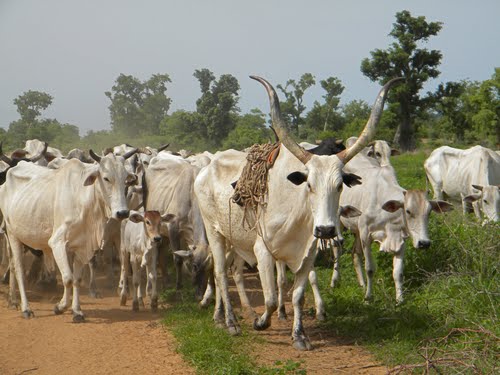
For decades, Nigeria’s livestock sector , a multi trillion naira business has existed in a paradox. It contributes significantly to food security, rural livelihoods and the national economy, yet it remains one of the most under-invested and poorly structured sectors of agriculture. Millions of pastoralists, agro-pastoralists and commercial livestock farmers operate without reliable water, veterinary services, cold chains, markets or disease surveillance systems. The result has been low productivity, recurring farmer–herder conflicts, animal disease outbreaks and massive losses across value chains.
It is against this backdrop that the Livestock Productivity and Resilience Support Project (L-PRES) was conceived. Often misunderstood or casually dismissed in public debates, L-PRES represents one of the most ambitious attempts in Nigeria’s history to systematically address the infrastructure deficit in the livestock sector.
But what exactly is L-PRES, and how much work has it really done?
L-PRES is not a private organisation, no an NGO, and not a political pressure group. It is a World Bank–supported project implemented by the Federal Government of Nigeria, through the Federal Ministry of Agriculture and Food Security, in partnership with participating states.
The project runs from 2022 to 2028, with financing of about US$500 million, making it one of the largest single investments ever made in Nigeria’s livestock sector. Its mandate is clear: to improve livestock productivity, strengthen resilience among livestock-dependent communities, and modernise key livestock value chains.
Importantly, L-PRES is not designed as a “grazing programme” or a resettlement scheme. Its focus is infrastructure, services, institutions and markets, the hard foundations without which any livestock policy is bound to fail.
Infrastructure:
L-PRES Is Trying to Fix
Nigeria’s livestock sector which has long suffered from a severe underfunding and neglect. In many states, veterinary hospitals are either nonexistent or operating with equipment from the 1970s. Slaughter facilities fail basic hygiene standards. Livestock markets lack water, sanitation and cold storage. Disease surveillance is weak, allowing outbreaks to spread unchecked.
L-PRES therefore directly targets these failures.
Across participating states, the project is investing in
Modern veterinary hospitals and clinics, including diagnostic laboratories.
Livestock service centres, combining animal health, extension services and farmer support.
Slaughter slabs and abattoir upgrades, aimed at improving meat hygiene and food safety.
Water infrastructure such as solar-powered boreholes and small earth dams for livestock use.
Cold chain facilities, critical for meat, milk and vaccine preservation.
These are not abstract policy ideas. They are physical assets already under construction or completed in several states, particularly in the North-East, North-West and North-Central zones where livestock production is most concentrated.
Strengthening Systems and Skills
Infrastructure alone does not transform a sector. L-PRES recognises this and complements physical investments with capacity building and institutional reform.
Thousands of livestock farmers have been trained under the project on:
Modern feeding and pasture management.
Disease prevention and biosecurity.
Feed formulation and storage.
Market access, aggregation and value addition.
Climate-smart livestock practices.
At the institutional level, L-PRES supports states to strengthen livestock departments, improve data systems, and develop realistic livestock investment plans. This is critical in a country where livestock governance has historically been fragmented and weak.
Critics often ask whether L-PRES is “all talk”. The evidence suggests otherwise, though the project is still mid-way through its lifespan.
As of now,
The project is active in over 20 states, selected based on livestock potential and vulnerability.
Hundreds of infrastructure projects, veterinary facilities, boreholes, markets and slaughter facilities are at various stages of completion.
Millions of Nigerians are projected to benefit directly or indirectly through improved services, markets and food supply.
Significant attention is now being paid to sustainability, with states required to commit to operating and maintaining facilities after project completion.
This does not mean implementation has been flawless. Delays, procurement bottlenecks and coordination challenges common to large public projects in Nigeria have occurred. In some states, political commitment has been uneven. But compared to many past livestock interventions, L-PRES shows a higher level of structure, funding and accountability.
Livestock development in Nigeria is not just an agricultural issue; it is a national security and social stability issue. Competition over water and pasture, weak animal health systems, and collapsing rural economies all contribute to conflict.
By investing in water infrastructure, veterinary services and organised markets, L-PRES indirectly addresses some of the drivers of farmer–herder tension. Healthier animals, better-managed value chains and clearer economic incentives reduce desperation and disorder.
Equally important is the project’s emphasis on sedentary, semi-sedentary and commercial livestock systems, reflecting the reality that Nigeria’s livestock future will be diverse, not one-size-fits-all.
Even though L-PRES should not be romanticised, it is not a magic wand, and it will not fix decades of neglect in six years. Its ultimate success will depend on.
Whether states take ownership of the infrastructure after World Bank funding ends.
Whether facilities are properly staffed, maintained and protected.
Whether livestock policies are insulated from politics and ethnic manipulation.
Whether beneficiaries , pastoralists, women, youth and commercial farmers are genuinely included.
Nigeria has seen too many projects fail at the point of sustainability. L-PRES appears aware of this risk, but awareness alone is not enough.
L-PRES represents one of the most serious and well-funded efforts to modernise Nigeria’s livestock sector in recent history. It has moved beyond policy documents to concrete infrastructure, training and institutional reform. While still a work in progress, dismissing it as ineffective or irrelevant would be intellectually dishonest.
The challenge now is not whether L-PRES exists, but whether Nigeria, federal and state governments alike will protect, maintain and build on what it is creating.
If Nigeria truly wants to transform livestock from a source of conflict and inefficiency into a pillar of food security, jobs and exports, then projects like L-PRES must be judged fairly, strengthened where weak, and sustained long after donor funds are gone.
The livestock sector has waited long enough.
Toro is public policy analyst based in GRA Bauchi