By Augustine Aminu
The National Association of Seadogs (NAS), also known as the Pyrates Confraternity, as well as stakeholders in security sector in the Federal Capital Territory (FCT), have called for stronger collaboration between security agencies and relevant authorities to safeguard lives and property in the nation’s capital.
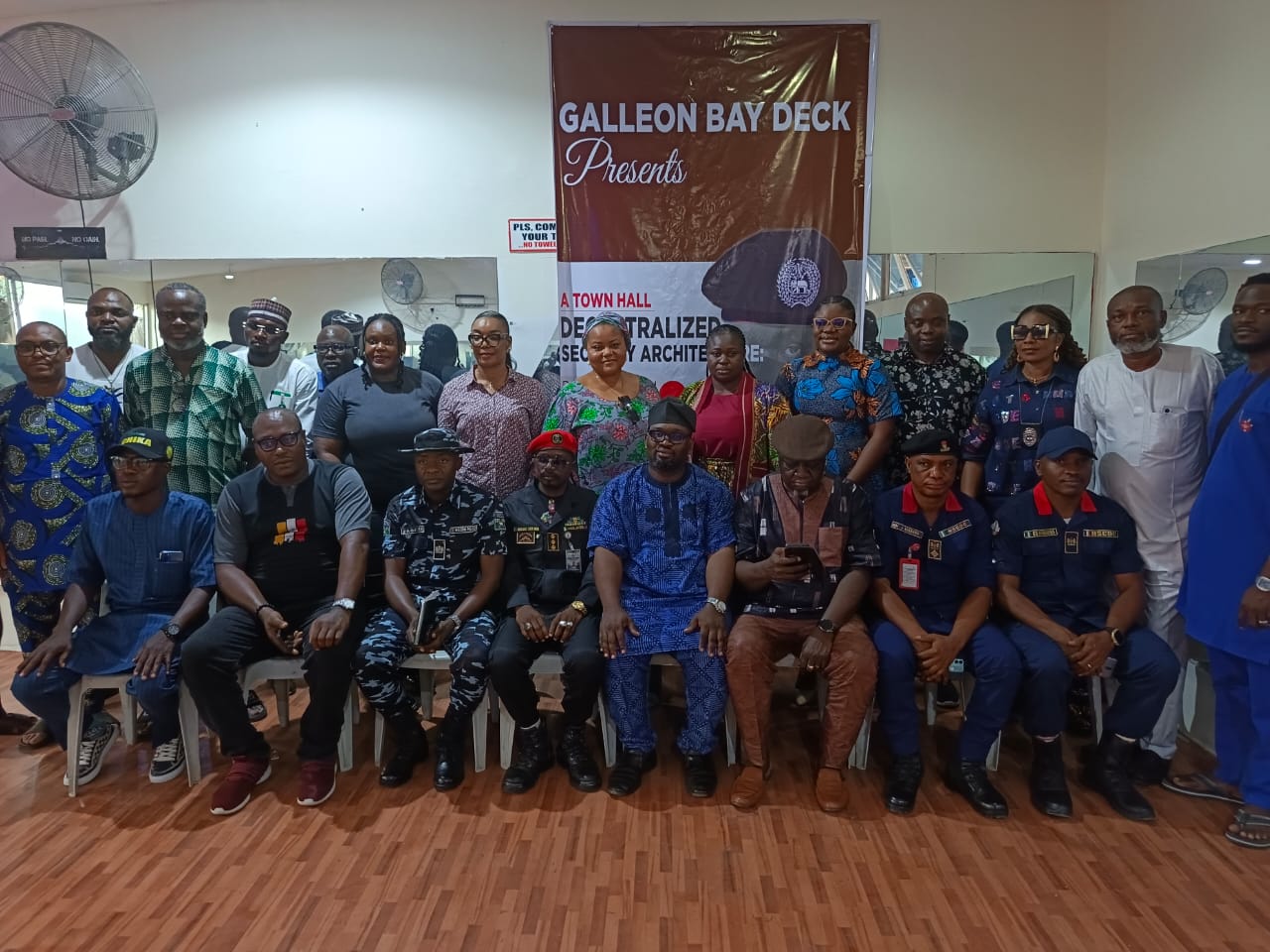
The call was made on Saturday at a Town Hall on addressing insecurity through Decentralized Security Architecture, organised by the National Association of Seadogs (NAS), Galleon Bay Deck, Gwarimpa, Abuja in collaboration with the Centre for Transparency Advocacy.
Speakers at the Town Hall renewed calls for urgent reforms in Nigeria’s policing system as a critical step toward addressing rising insecurity, especially in Abuja.
The summit, held under the theme “Decentralized Security Architecture: Defining Federal and State Roles in State Policing,” brought together security agencies (Police, Civil Defence), security experts, civil society actors and policy advocates to examine gaps in Nigeria’s centralized security structure and their implications for public safety, particularly in the nation’s capital.
Participants noted that despite governors being constitutionally recognised as chief security officers of their states, real control of the police remains concentrated at the federal level, limiting effective and timely responses to local security threats.
They called for the decentralisation of policing and the formal integration of community security councils, traditional institutions and residents’ associations into the security architecture, stressing that local communities are best positioned to provide early warning signals and actionable intelligence.
Speaking at the summit, police historian and lead paper presenter, Uche Bamah, said meaningful policing reform must recognise the importance of community-driven security models, adding that trust between citizens and law enforcement remains a major factor in tackling insecurity.
Discussions also highlighted the need for improved police welfare, enhanced training and greater investment in modern technology.
Bamah pointed to survey data which showed that over 70 per cent of respondents believe the use of technology in policing strengthens accountability and the protection of human rights.
He recommended that any constitutional amendment must mandate independent state-level police oversight commissions, insulated from governors and political office holders, with representation from civil society, the judiciary, and professional bodies.
He also backed decentralisation with clear legal boundaries and strong laws, noting that while human rights abuse remain a major concern, the legal framework must clearly define jurisdictional limits, command structures, use-of-force rules.
NAS member, Samuel Abhulimen, alongside Engr. Faith Nwadishi, Executive Director of the Centre for Transparency Advocacy (CTA), emphasized that policing reform must be backed by strong legal frameworks and independent oversight to prevent abuse and ensure professionalism.
The Town Hall called for swift policy action, clear delineation of federal and state responsibilities, and sustained stakeholder engagement to build an accountable, community-focused security system capable of responding effectively to insecurity in the FCT and across Nigeria.
Division crime officer of Gwarimpa Police Station, Supol Bature in his short address, said Gwarimpa is safe, noting that all through January Gwarimpa has not recorded major crimes or kidnapping or one chance.
He said, “Security is something we should all be interested in. It is not something only government can do or that citizens alone can do. It requires collaboration and that is why we are happy to collaborate with NAS