By Chuks Oyema-Aziken
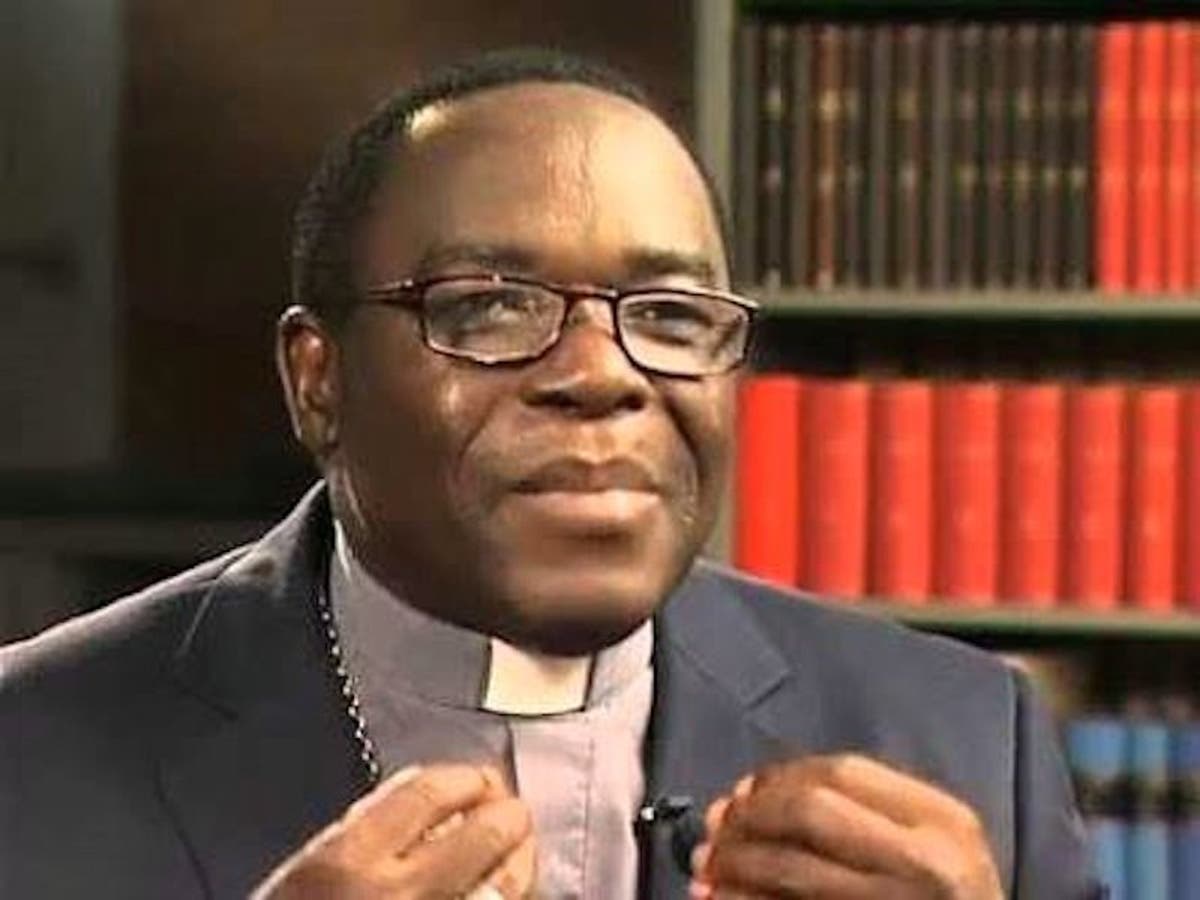
The Catholic Bishop of Sokoto Diocese, Bishop Matthew Hassan Kukah, on Thursday delivered a forceful and uncompromising charge to the Independent National Electoral Commission (INEC), urging it to ensure credible elections in 2027, warning that Nigeria cannot afford further democratic setbacks in an increasingly unstable global order.
Speaking at the Leadership Annual Conference and Awards 2025 in Abuja, Kukah declared that the integrity of Nigeria’s electoral process will determine whether the country strengthens its democratic foundations or continues to struggle with legitimacy concerns.
“By God, by whatever means, give us clean and credible elections,” the cleric said emphatically, drawing sustained applause from the high-profile audience.
Chairing the occasion, which was themed “Political Stability and Sustainable Development in Africa in an Increasingly Unstable Global System: A Roadmap for Nigeria,” Kukah said Nigeria’s democratic credibility is too important to be undermined by avoidable controversies.
He warned that Africa is once again at the centre of intense geopolitical competition, particularly over critical minerals essential to global industrialisation, and said Nigeria must not enter that era politically weakened.
“The boys in Washington are discussing critical minerals,” he said, noting that global powers are recalibrating their strategies to secure resources required for technological and industrial dominance.
According to him, powerful nations are investing heavily in mining, protecting their companies and rebuilding extraction ecosystems, while Africa — the primary source of many of these resources — remains largely excluded from decisive global negotiations.
“We are not at the table,” Kukah cautioned, adding that what appears to be a modern-day scramble for Africa is quietly unfolding in major capitals around the world.
He lamented that while global actors consolidate influence, Africa continues to battle internal instability, conflicts and governance challenges that weaken its bargaining power.
“A roadmap to make Africa great again cannot proceed without Nigeria,” he said, stressing that Nigeria’s size, population and influence make it central to the continent’s future.
However, he warned that the rest of Africa will not wait indefinitely for Nigeria to resolve its electoral disputes and procedural controversies.
“They will not wait for us to decide whether we transmit election results by podcast, telecast, videocast or livestream,” he said in a pointed reference to past disputes over result transmission.
Kukah insisted that the mechanics of elections must not overshadow the fundamental requirement of transparency, credibility and public trust.
He described Africa as “haemorrhaging” from internal wars and instability even as external powers intensify competition for influence and resources across the continent.
“While Africa is drowning in its own blood and consolidating its weakness, other nations are moving forward in their domination,” he warned.
The bishop nevertheless expressed hope that platforms such as the Leadership Conference provide space for honest national introspection and solution-driven dialogue.
He said the conference theme was timely, as Nigeria must confront hard questions about governance, institutional strength and political stability in a turbulent global environment.
Kukah added that the awards segment of the event was meant to celebrate resilience, innovation and service, stressing that national development requires collaboration across government, private sector and civil society.
His closing message was clear: Nigeria must fix its electoral process, strengthen its institutions and secure political stability if it hopes to remain relevant in a rapidly shifting global landscape.