By Chuks Oyema-Aziken
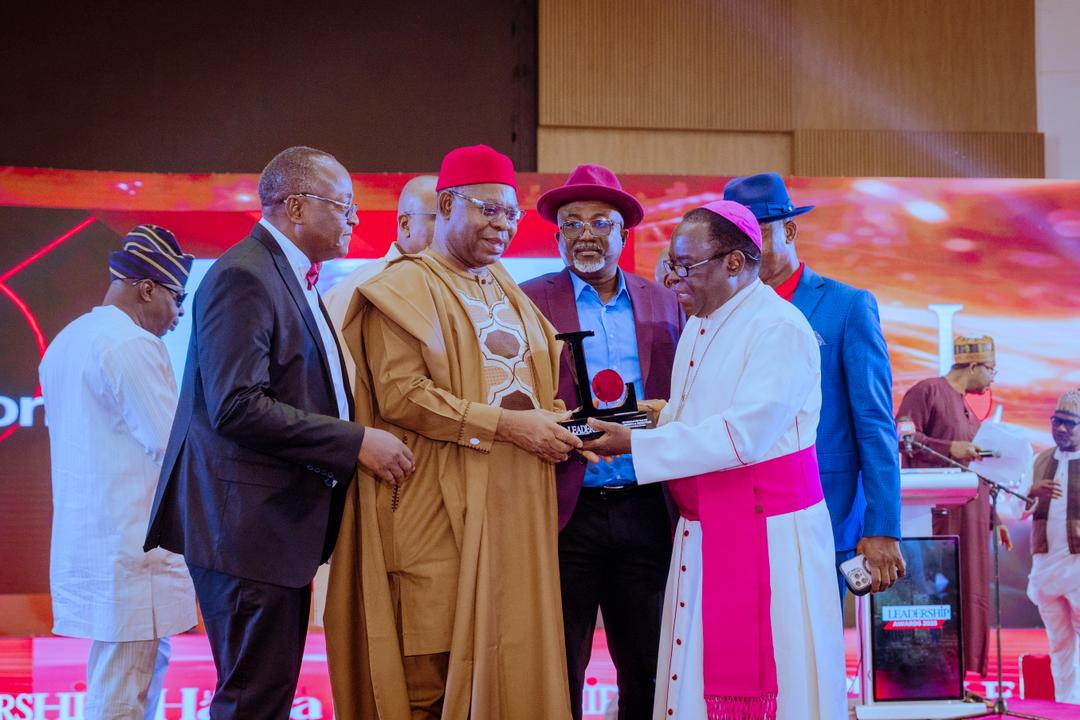
When Sheriff Oborevwori represented by his Deputy, Monday Onyeme mounted the podium to receive recognition as one of LEADERSHIP Newspaper’s 2025 “Governors of the Year,” the applause captured more than a ceremonial moment.
It reflected a broader acknowledgement that Delta State, under his watch, is experiencing a phase of visible infrastructure expansion, fiscal recalibration and strategic political positioning.
About three years into his tenure, Oborevwori’s administration has anchored its governance direction on the MORE Agenda—Meaningful Development, Opportunities for All, Realistic Reforms and Enhanced Peace and Security. While policy acronyms are common in Nigerian politics, what distinguishes this framework is the scale of execution that has followed.
Infrastructure as the Signature of Governance
Across Delta’s three senatorial districts—Delta North, Delta Central and Delta South—the governor’s imprint is most evident in roads, bridges and flyovers that are reshaping the state’s transport architecture.
Among the flagship projects is the Uromi Junction Flyover in Agbor, conceived to decongest one of the busiest entry corridors into the state. The flyover, strategically located along the Asaba-Benin axis, will significantly improve traffic flow and enhance commercial mobility. What was once a notorious bottleneck is gradually becoming a symbol of urban renewal.
In Warri and Effurun, the PTI Junction Flyover, DSC Roundabout Flyover, Enerhen Junction Flyover and Effurun Roundabout projects are altering the skyline and addressing long-standing traffic gridlocks. These structures are not isolated monuments; they form part of a broader urban mobility plan designed to connect economic clusters and ease the movement of goods and services.
Beyond urban centres, the administration has extended attention to rural connectivity. Road dualisation projects, bridge constructions linking riverine communities and rehabilitation of previously abandoned routes have opened access to agricultural belts. By connecting farmers to markets and reducing travel time, these projects are stimulating local economies and enhancing rural inclusion.
Observers note that the geographic spread of projects reflects deliberate equity—ensuring no senatorial district feels sidelined. Infrastructure, in this context, has become both a development tool and a unifying instrument.
Fiscal Discipline Amid Expansion
Infrastructure expansion of this magnitude demands financial discipline. Delta State, historically buoyed by oil revenues, has not been immune to national economic headwinds. Yet the administration has maintained relative fiscal stability while executing capital-intensive projects.
Prudent budgeting, improved internally generated revenue mechanisms and careful debt management have helped the state balance recurrent obligations with capital investment. Workers’ salaries and pensions have reportedly remained consistent, reinforcing labour confidence.
Such fiscal steadiness enhances investor perception. In a competitive federal system where states increasingly seek private partnerships, financial credibility becomes a strategic asset.
Education and Human Capital Investment
Beyond concrete and steel, Oborevwori’s governance model recognises the primacy of human capital. Delta’s distinction as the only state in Nigeria with four state-owned universities underscores a longstanding commitment to education.
The current administration has sustained and strengthened this trajectory through campus upgrades, improved funding and bursary disbursements to students. Primary and secondary schools have seen classroom renovations, improved laboratory facilities and teacher recruitment exercises aimed at raising standards.
By investing simultaneously in infrastructure and education, the government appears to be building both physical and intellectual foundations for long-term prosperity.
Healthcare and Social Inclusion
Healthcare reforms under the administration include upgrades to general hospitals, rehabilitation of primary healthcare centres and provision of modern equipment. Rural health access has improved in several communities where dilapidated facilities once limited service delivery.
Social protection initiatives targeting vulnerable groups—including women, youth and persons with disabilities—have complemented these efforts. The philosophy appears clear: development must not be confined to highways and flyovers but must extend to human wellbeing.
Security and Stability
Delta State occupies a sensitive geopolitical space within the Niger Delta. Maintaining peace is not only a governance responsibility but also an economic necessity.
Through collaboration with federal security agencies and community engagement structures, the administration has sustained relative calm, providing an enabling environment for business and investment.
The emphasis on enhanced peace under the MORE Agenda reflects understanding that infrastructure without security yields limited dividends.
Political Realignment and Centre-State Synergy
One of the most consequential political decisions of Oborevwori’s tenure has been his alignment of Delta State with the ruling party at the federal level. By joining the All Progressives Congress (APC), the governor signalled a strategic recalibration aimed at strengthening centre-state relations.
In Nigeria’s federal structure, political alignment with the party controlling the presidency can influence intergovernmental collaboration, access to federal support and smoother execution of joint projects. Oborevwori’s decision to align Delta with the political centre under President Bola Ahmed Tinubu has been interpreted by analysts as pragmatic rather than merely partisan.
Supporters argue that this realignment positions Delta advantageously in negotiations for federal infrastructure, security coordination and economic partnerships. Critics may debate motivations, but the strategic logic of synchronising state priorities with national direction is difficult to ignore.
Recognition Beyond Ceremony
The LEADERSHIP award adds to other recognitions from national media platforms, including Vanguard Newspaper and ThisDay in collaboration with Arise TV. While awards alone do not define performance, repeated commendations across independent institutions suggest consistency.
For Delta residents, however, the true measure lies not in plaques but in daily experience—shorter commute times, improved access roads, functional schools and responsive governance.
Why the Award Appears Justified
In assessing whether Oborevwori deserves the LEADERSHIP recognition, three factors stand out.
First, visible infrastructure transformation across multiple urban and rural corridors demonstrates tangible delivery. Projects like the Uromi Junction Flyover and Warri-Effurun flyovers provide enduring public assets.
Second, fiscal prudence amid expansion suggests sustainability rather than reckless spending.
Third, strategic political alignment with the centre enhances Delta’s leverage within Nigeria’s federal ecosystem.
Taken together, these elements construct a narrative of governance that is both developmental and strategic. The award, therefore, appears less like ceremonial generosity and more like acknowledgment of momentum.
For Governor Oborevwori, the recognition brings both prestige and expectation. Development, once accelerated, must be sustained. Political alignment must translate into concrete benefits. Infrastructure must be maintained.
Yet, at this juncture, the case for the LEADERSHIP honour rests on visible evidence: a state in motion, guided by a governor whose blend of pragmatism, infrastructure ambition and political strategy has placed Delta prominently in the national conversation on sub-national performance.