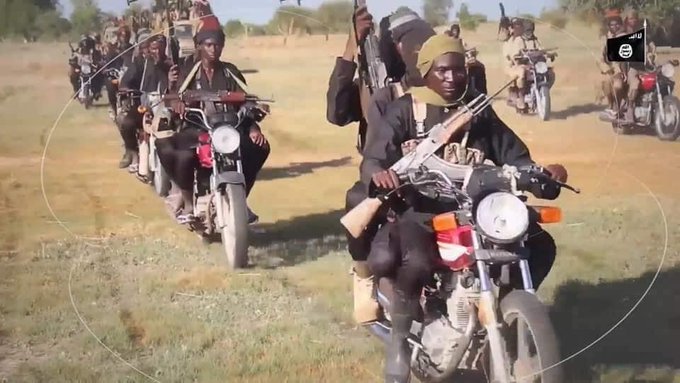
Security analysts are raising alarm over the growing expansion of jihadist groups into the Benin Republic, warning that the development poses serious security and economic risks for neighboring Nigeria.
A new policy brief by Dr. Chukwuma Okoli and Dr. Ndu Nwokolo, both researchers at renowned policy think-tank, Nextier, highlights the deepening presence of the Katiba Hanifa faction of Jama’at Nusrat al-Islam wa al-Muslimeen (JNIM) in northern Benin.

The juhadist group, which operates across the Sahel, is reportedly using Benin as a logistical hub to support operations in Burkina Faso while working to weaken Benin’s military capacity and establish a strategic buffer zone along the tri-border area with Togo.
According to the report, fatalities linked to jihadist attacks in Benin have surged dramatically, rising from 58 deaths in 2023 to at least 575 in 2025. Major assaults on military positions, including coordinated attacks along the Benin–Burkina Faso border, underscore the group’s growing operational capacity.
The analysts argue that Benin’s large informal economy — which employs about 95 percent of its workforce — has created fertile ground for infiltration. Porous borders with Burkina Faso, Niger, and Nigeria have further enabled militant mobility, while communal tensions linked to transhumance and climate-related resource competition have been exploited by insurgents to gain local footholds.
For Nigeria, which shares a more than 700-kilometer border with Benin, the implications are significant. The report notes that established smuggling networks and informal cross-border trade could facilitate the movement of fighters, weapons, and logistics. In October 2025, JNIM reportedly carried out its first attack in Nigeria’s Kwara State, signaling a potential westward expansion into Nigerian territory.
Nigeria is already battling insurgent groups such as Jama’atu Ahlis Sunna Lidda’awati wal-Jihad (JAS) and Islamic State West Africa Province (ISWAP) in its northeastern region, it stated while explaining that the emergence of JNIM along its western flank could further stretch the country’s security forces and create opportunities for collaboration between regional jihadist networks and local bandit groups.
The report recommends sustained Nigerian military and diplomatic support for Benin, stronger border management, joint regulation of informal economic activities, and closer regional coordination through bodies such as Economic Community of West African States and the African Union ahead of Benin’s 2026 elections.
The authors conclude that preventing further entrenchment of JNIM in Benin is critical not only for the country’s stability but also for safeguarding Nigeria’s national security.