By Ipole Amajama
There is little argument that Africa needs to reimagine its place in a world that is increasingly anti-multiculturalism and dominated by force as can be seen in the global upheavals since the invasion of Ukraine by Russia nearly 5 years ago, and the ongoing US/Israel – Iran war that has seen allies caught in the crossfire and the global economic consequences.
To fully grasp the import of why the continent needs to rethink its strategic interest is to realise that at the beginning of the 21st century, Africa, according to the United Nations Commission for Africa, stood ‘as the poorest, the most technologically backward, the most debt distressed, and the most marginalized region in the world’.
The Commission, however, notes that while Africa faced significant challenges at the turn of the century, the continent has since made remarkable progress. Its combined Global Domestic Product (GDP) has grown from USD 537 billion in 1998 to $3.4 trillion in 2020, demonstrating a shift in its global economic capabilities and presenting new opportunities as a result of progress made by a landmass of 54 nations supporting more than 1.5 billion people. Africa accounts for 12.5 percent of the world’s population but produces only 3.7 percent of global GDP.
But this is not just about economics, but its governance structure and military alliances that are nuanced and can guarantee its stability and survival in the long term.
It is for this reason that leaders of the continent need to ask themselves, what deals are we making on behalf of our peoples? What is the devil in the details? It is easy to fly to Beijing, embrace the Kremlin, tout French heritage, get intoxicated on American whiskey, and trot on royal carpets and forget that the people are the ones that matter in the quest to belong.
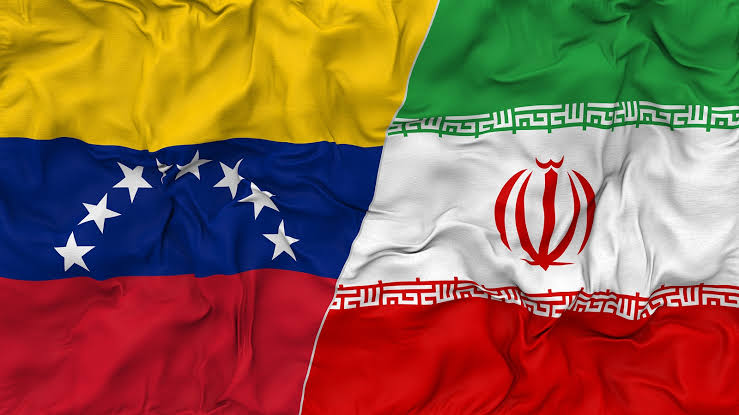
When Nicoals Maduro of Venezuela was getting high on Russian vodka and basking in the assurances of the Kremlin’s security guarantees, he never imagined it was a game of Russian Roulette. When American marines landed in Caracas, the famed Russian security guarantees fell flat like a pack of cards and went up in flames. Also, the Chinese in which Maduro had invested heavily in its military industrial complex did next to nothing with its one-off statement on the capture.
At present, American allies are bearing the brunt of the US/Israel military action against Iran. While Tehran gets the pounding, it has adopted the Samson Option by shelling and lobbing missiles against fellow Arab neigbhours for being allies to the Americans even when they have not been part of the war.
In Africa since 2023, some States have gone rogue not only in sacking democratic institutions, but becoming autocratic and charting new diplomatic ties with countries like Russia and China at a time when the global superpowers are antagonising each other and eyeing Africa as their new diplomatic playground. The Alliance of Sahel States, AES, also known as the Confederation of Sahel States which includes Mali, Niger, and Burkina Faso, are increasingly enamoured of Russia with the attendant risk. Since the emergence of different juntas in these countries, propaganda has taken a firm footnote, increasing human rights abuses and the near non-existence of the rule of law. It is worrying to note that the strong armed tactics of their new found friends is what has taken root in these countries.
There is the urgency to reappraise these alliances as global players seek to compete with traditional Western powers. African nations need to come to terms to forge a common front and seek for ways to alter the established global order to its advantage. This requires the continent to become skilled at directing and protecting their independent path in a multi-powered world.
According to Sefa Ikpa in the journal, International Politics and Society, it is imperative for leaders of the continent to note that while “Africa’s new partners may speak the language of South–South cooperation and mutual benefit, but their methods remain steeped in the same logic of extraction that defined earlier eras of Western dominance. Can genuine sovereignty emerge within a global system still governed by the same capitalist logic that once justified dependency?”
She makes the point that there is the imperative for political recalibration and enhanced economic diplomacy by leveraging on the combined markets of over 1.4 billion people and immense natural resource wealth of the continent.
This requires not just men of intellect, but that are solidly Pan-Africanist in thinking and that could offer bargaining power strategically. In practice, this has meant increased assertiveness in negotiating infrastructure loans, trade agreements and energy projects. Zambia, Ghana, and even Nigeria have, in different ways, used global competition to renegotiate debts and attract more diversified investment portfolios. Similarly, North African states have positioned themselves as energy partners to Europe while simultaneously courting Gulf sovereign wealth funds and Chinese investors.
So, the AES need to rethink their untenable position, return to the ECOWAS, forge an alliance with people of shared history and avoid the fates of Maduro and Iran. The hour ticks by!
(Amajama, a social commentator on African affairs, writes from Abuja)