By Felix Khanoba
The Nigerian Education Loan Fund (NELFUND) has disbursed over N206 billion to students in 270 tertiary institutions nationwide within 23 months of its establishment by President Bola Tinubu.

Recent data highlighting the scheme’s expanding reach show that since the application portal opened in May 2024, a total of 1,751,669 applications have been received, with 1,164,222 students benefiting from the programme.
A detailed breakdown indicates that N128.84 billion was paid directly to 270 institutions to cover tuition fees, while N77.45 billion was distributed to students as upkeep allowances.
The intervention is aimed at addressing both tuition and living expenses, thereby improving access to higher education for students from disadvantaged backgrounds.
The Fund continues to witness steady growth, with 969 additional applications recorded in its latest update, reflecting a 0.1 per cent increase and sustained public confidence in the initiative.
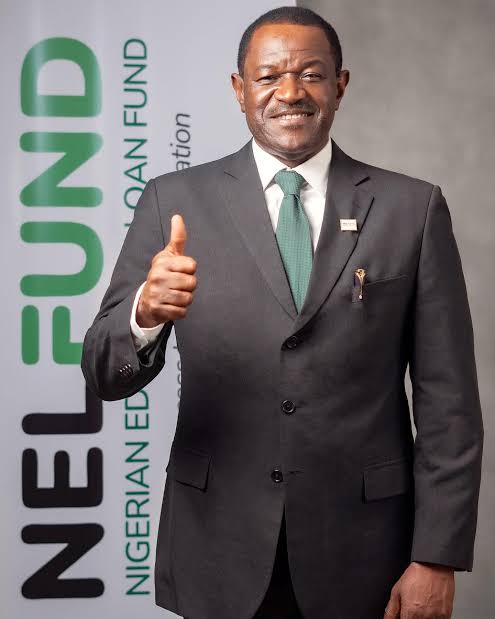
Commenting on the programme, the Managing Director of NELFUND, Mr. Akintunde Sawyerr, assured that no qualified beneficiary would be prevented from sitting examinations due to financial challenges.
Speaking during a recent interview on Arise TV, Sawyerr explained that the initiative, introduced by President Tinubu, was designed to remove financial barriers to tertiary education through interest-free loans with flexible repayment options.
“We started the scheme of His Excellency President Bola Ahmed Tinubu, GCFR, to provide students with loans, interest-free loans, with very, very soft terms, to ensure that the situation we’ve had in this country for so long, where so many cannot commence tertiary education or are forced to drop out because of lack of funds, is addressed,” he said.
He added that although the Fund prioritises timely disbursement, it must adhere to strict institutional processes due to the nature of government funding, in order to prevent misuse.
In a recent statement issued by the Director of Strategic Communication at NELFUND, Mrs. Oseyemi Oluwatuyi, Sawyerr praised the management of Delta State University, Abraka, for adopting a student-friendly policy.
The university had directed, through an internal memorandum from the Office of the Deputy Vice-Chancellor (Academic), that students whose NELFUND status is marked “Verified” or “Disbursed” should be allowed to sit for their first semester 2025/2026 examinations upon presenting proof of their status.
Sawyerr described the decision as a positive example of collaboration between institutions and the Fund in supporting students.
“We warmly welcome this student-centred approach by Delta State University. It reflects a clear understanding of the purpose of the NELFUND scheme, which is to ensure that no Nigerian student is denied access to education because of financial constraints.
“At NELFUND, we are very pleased to see institutions taking practical, youth-friendly steps that allow students who have successfully completed the application process to continue their academic activities without disruption,” he said.
He noted that such initiatives align with the broader goal of expanding access to higher education while ensuring fairness and inclusivity within the nation’s tertiary system.
Reacting to the programme’s progress in less than two years, the Tinubu Media Support Group (TMSG) described NELFUND’s achievements as a significant milestone and a transformative development in Nigeria’s education sector.
In a statement signed by its Chairman, Emeka Nwankpa, and Secretary, Dapo Okubanjo, the group said the Fund has become a critical driver of President Tinubu’s Renewed Hope agenda, particularly in advancing inclusive access to tertiary education.
“It is gratifying to note that in less than two years of its launch, NELFUND has disbursed N206.29 billion in student loans to over 1.16 million beneficiaries,” the group stated, adding that the agency started with limited institutional structures.
The group also recalled that President Tinubu prioritised student financing early in his administration by signing a student loan bill into law, which was later strengthened through comprehensive legislation passed by the 10th National Assembly in March 2024.
According to TMSG, the rapid expansion of the scheme underscores its credibility, despite early skepticism and attempts to undermine it. It noted that the participation of 270 institutions and over one million students reflects broad acceptance.
“This is a verifiable and measurable intervention aimed at ensuring that no Nigerian is denied access to tertiary education due to financial constraints,” the statement added.
The group further pointed out that the loans are interest-free, with repayment scheduled to begin two years after completion of the National Youth Service Corps (NYSC), subject to beneficiaries securing employment, while allowing for deferment where necessary.
Commending the Fund’s management for maintaining transparency and engaging the public, TMSG expressed optimism that beneficiary numbers would rise significantly before the end of the administration’s first term.
It also called on Nigerians to continue supporting government initiatives aimed at fostering inclusive growth and human capital development nationwide.