By Felix Khanoba
Experts in open and distance learning (ODL) have called for a comprehensive review of quality assurance frameworks across the sector to address emerging challenges associated with artificial intelligence (AI), micro-credentials, open educational resources and cross-border education.
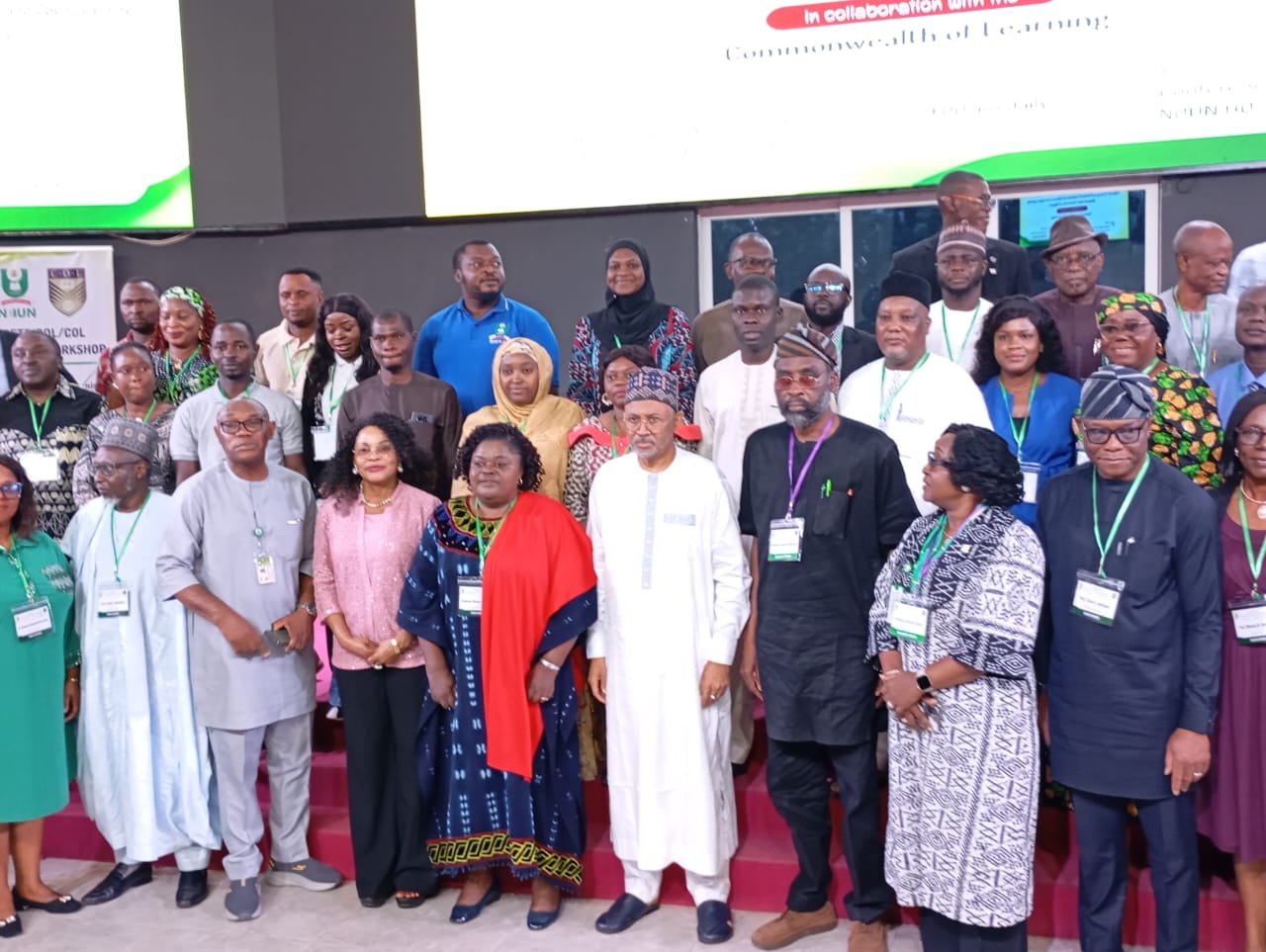
The experts made the call on Wednesday in Abuja at a regional workshop on “Quality Assurance Mechanisms for Emerging Issues in Open and Distance Learning.”
The workshop was organised by the Regional Training and Research Institute for Distance and Open Learning (RETRIDOL) and the National Open University of Nigeria (NOUN), in collaboration with the Commonwealth of Learning (COL).
Speaking virtually, Adviser on Higher Education at COL, Canada, Prof. Jane-Frances Agbu, said rapid changes in the education sector were raising critical concerns about standards, academic integrity, recognition, equity, learner protection and institutional accountability.
Agbu said, “AI is reshaping how we teach, learn and assess. Micro-credentials are challenging long-established ideas about qualifications, recognition and pathways through education.
“Open Educational Resources are widening access to knowledge and enabling new forms of collaboration. Cross-border provision is extending the reach of institutions beyond national boundaries.”
She acknowledged the opportunities created by the developments but stressed that quality assurance mechanisms must evolve alongside the changing educational environment.
“This brings us to the fundamental question: How do we ensure that quality assurance evolves as rapidly as the learning systems it is meant to assure?” she said.
According to her, maintaining quality was essential to building confidence in ODL, adding that learners, governments, employers and institutions must have confidence in the system for it to achieve its potential across West Africa.
“If open and distance learning is to realise its full promise for West Africa, then learners, government, employers and institutions must trust it. And trust is built on quality,” she said.
Agbu disclosed that a status study was commissioned ahead of the workshop to assess how quality assurance systems in the region were responding to emerging developments in ODL.
She said the workshop would enable stakeholders to scrutinise the study’s findings, exchange experiences and formulate practical and sustainable approaches suited to the region.
The COL adviser also described RETRIDOL as a significant regional platform for dialogue, knowledge sharing and action, saying its responsibilities went beyond programme implementation to ensuring that regional priorities and realities shaped policy and practice.
Also speaking, the Director of RETRIDOL, Prof. Dorothy Ofoha, said the institute was founded in 2003 through a partnership between NOUN and the Commonwealth of Learning to promote the development of open and distance learning across West Africa.
Ofoha said the institute had over the years contributed to strengthening the capacity of higher education institutions through training, research and regional collaboration.
She observed that the increasing adoption of AI, open educational resources, learning analytics and micro-credentials was changing the way quality assurance was approached within the ODL space.
“These developments challenge us to reflect on whether our existing quality assurance systems remain responsive to the evolving realities and demands of contemporary ODL provision,” she said.
She explained that the workshop was structured to promote dialogue, joint problem-solving and practical sessions aimed at developing workable frameworks and policy recommendations.
“The overall goal of the workshop is to build participants’ capacity to develop and implement quality assurance mechanisms that effectively respond to emerging threats and challenges in open and distance learning,” she said.
Ofoha added that participants included senior academics, quality assurance experts, institutional heads, directors of distance learning centres, policymakers, senior administrators and other specialists drawn from different parts of West Africa.
On his part, the Vice-Chancellor of NOUN, Prof. Uduma Oji Uduma, represented by the Deputy Vice-Chancellor, Administration, Professor Shehu Adamu, described quality assurance as essential to the credibility, effectiveness and long-term sustainability of ODL.
Uduma noted that the growing acceptance of ODL had established it as an important component of modern higher education, but warned that its credibility would depend largely on the ability of institutions to maintain high standards.
“We have now realised that ODL is a system that must come to stay. However, in order to strengthen our quality assurance mechanism, we need to ensure that what we do is governed by quality. The theme of this workshop could not be more timely,” he said.
He said developments in AI, digital learning technologies, open educational resources, micro-credentials and data-driven learning systems were significantly transforming ODL.
The vice-chancellor further noted that the quality assurance challenges facing ODL were not limited to individual institutions, stressing the need for regional cooperation in addressing them.
He encouraged participants to contribute actively to the workshop, exchange experiences and identify strategies that could be adapted to improve quality assurance within their respective institutions.
Uduma commended the Commonwealth of Learning for its continued partnership in capacity development, innovation and knowledge exchange in the ODL sector.
He also praised professionals and institutions contributing to the growth of ODL, stressing that enhanced regional cooperation would be crucial to developing quality assurance mechanisms capable of keeping pace with emerging trends.