By Aaron Mike Odeh
As Nigeria advances toward the next historic political transition, the nation finds itself at a crossroads—caught between the burdens of its past and the promise of a brighter future. With the projected conclusion of the Southern Presidential tenure by 2031, Nigerians across regions, religions, and generations are increasingly asking a profound question: Who will lead the country into a new era of justice, prosperity, and national rebirth?
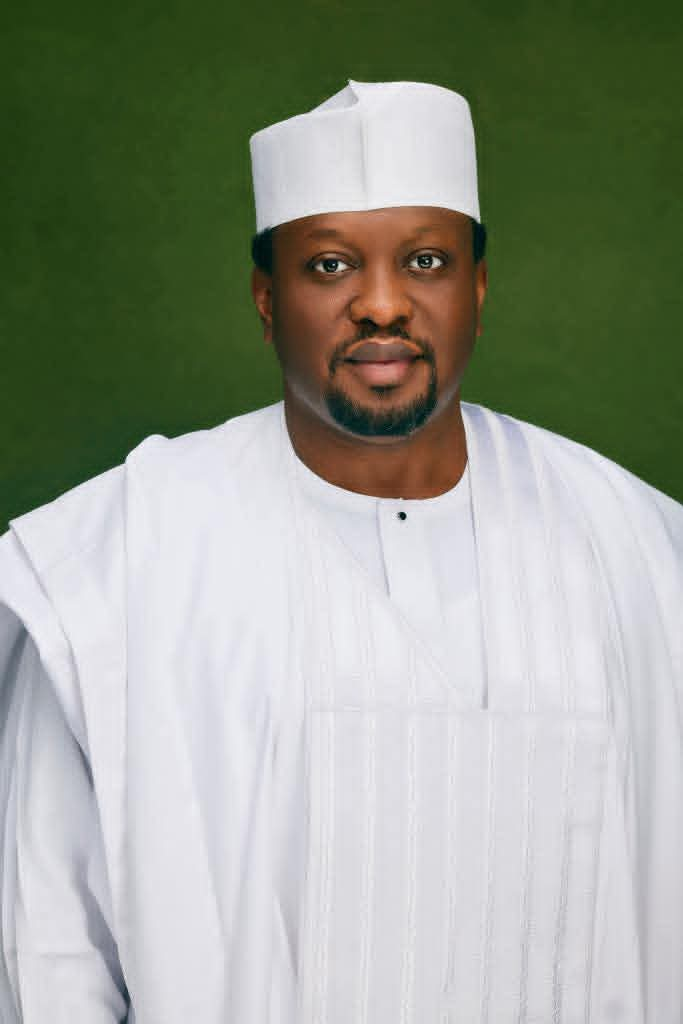
In many homes, prayer houses, public forums, and political conversations, there is a growing belief that Nigeria’s next transformational leader may not simply be a career politician—but a divinely prepared reformer, shaped by discipline, tested by governance, and guided by conscience. Among the names gaining national resonance is Honorable Abdulsamad Dasuki—a lawmaker whose track record in public finance, legislative excellence, youth empowerment, and principled leadership has elevated him into the realm of prophetic national discourse. To many observers, his rise feels less like coincidence and more like preparation for a defining national assignment.
The prophetic tone surrounding his leadership potential stems not only from spiritual sentiment but from a pattern of consistent service, moral restraint, and courageous decision‑making that distinguishes him in Nigeria’s political landscape.
A Leader Formed by Discipline, Not Desperation
Honorable Abdulsamad Dasuki’s journey in governance reflects a rare blend of competence and character. His early service as Commissioner for Finance in Sokoto State laid the foundation for a reputation built on fiscal prudence, transparency, and accountability. During a period when public finance mismanagement plagued many state administrations, Dasuki championed efficient budget execution, debt control, and responsible public spending. Analysts familiar with his tenure credit him with strengthening fiscal discipline and improving resource allocation toward priority sectors such as infrastructure, health, and education.
His subsequent role in the Sokoto State House of Assembly, where he served as Chairman of the House Committee on Appropriation, further reinforced his profile as a policy strategist capable of balancing political realities with economic wisdom. In that capacity, he played a central role in shaping development‑oriented budgets while ensuring that state expenditures aligned with measurable outcomes. These experiences did not merely build his résumé—they forged the administrative backbone of a leader equipped to manage the complexities of a modern national economy.
A National Legislator with a Prophetic Sense of Responsibility
Now serving as a Member of the Federal House of Representatives, Dasuki has expanded his influence beyond regional governance into the broader national arena. His performance in the Green Chamber reflects a deep sense of responsibility to the Nigerian people rather than to political godfathers or sectional interests. His motions and contributions to legislative debates frequently address pressing national issues, including economic reforms and cost‑of‑living pressures, youth unemployment and skills development, fiscal accountability and anti‑corruption measures, social welfare and poverty reduction, and electoral and governance reforms.
Political analysts have noted that Dasuki’s interventions often carry a moral undertone, suggesting a leader who sees governance not merely as politics but as stewardship.
The Rare Virtue of Stepping Aside for the Youth
One of the most defining and symbolic actions in Dasuki’s recent political career was his public decision to step down in favor of a younger successor. In a political climate where power retention frequently overshadows public interest, this move sent shockwaves across Nigeria’s political community. Rather than clinging to office, Dasuki chose to mentor, empower, and create space for emerging leadership. This act speaks volumes about his mindset: a belief in generational renewal, confidence in leadership continuity, and commitment to national progress over personal ambition. For many Nigerians, this singular decision embodies the spirit of servant leadership—a core attribute of the kind of transformational figure Nigeria hopes to see on the national stage by 2031.
Courage in Defending the Masses: The Tax Law Stand
Another defining chapter in Dasuki’s leadership narrative was his bold opposition to a controversial tax law that he believed would exacerbate economic hardship for ordinary Nigerians. At a time when inflation continues to rise—reportedly exceeding 28% nationally, with food inflation surpassing 35% in certain months—millions of Nigerians are grappling with the realities of rising fuel costs, stagnant wages, and declining purchasing power. Against this backdrop, Dasuki’s resistance to policies perceived as anti‑people positioned him as a voice for the vulnerable. His stance demonstrated economic empathy, policy foresight, and political courage. By prioritizing citizens’ welfare over political convenience, he reinforced the image of a leader who governs with conscience rather than calculation.
A Pan-Nigerian Figure in a Divided Nation
Nigeria’s diversity remains both its greatest strength and its most persistent challenge. Ethnic mistrust, religious polarization, and regional rivalry have often hindered national unity and slowed progress. Dasuki’s political approach, however, reflects a Pan‑Nigerian orientation—one that emphasizes collective national interest over tribal or sectarian loyalty. His legislative agenda consistently targets nationwide benefits, and his rhetoric avoids divisive language. Observers credit him with cultivating a reputation as a bridge‑builder across regional lines, a moderate voice in a polarized environment, and a potential unifier capable of restoring national confidence. If Nigeria is to achieve sustainable stability by 2031, leaders with such unifying instincts may prove indispensable.
Economic Competence for a Critical Decade
Nigeria’s economic challenges are daunting. With a population exceeding 230 million, unemployment rates hovering above 20%, and youth unemployment estimated to surpass 35%, the next decade will require leaders who understand both macroeconomic strategy and grassroots realities. Dasuki’s financial and legislative background positions him as a credible advocate for economic diversification beyond oil, strengthening Small and Medium Enterprises (SMEs), improving revenue generation without overburdening citizens, attracting foreign and local investment through policy stability, and reforming public expenditure systems. His track record suggests a leader capable of promoting growth, fiscal stability, and inclusive prosperity—three pillars essential for Nigeria’s post‑2031 recovery.
The Prophetic Metaphor: What It Means for Nigeria
Referring to Dasuki as a potential “Messiah” is not a religious proclamation but a symbolic reflection of national yearning. For decades, Nigerians have prayed for leadership that embodies integrity, wisdom, courage, and compassion. In prophetic terms, Dasuki represents the archetype of a prepared reformer—a man whose journey appears to align with the timing of Nigeria’s critical transition. His life story suggests preparation, not accident; refinement, not haste. For a nation seeking deliverance from corruption, insecurity, and economic stagnation, the emergence of such a figure feels, to many, like a divinely orchestrated possibility.
Why 2031 Could Mark a Turning Point
The year 2031 is shaping up to be more than a routine electoral milestone. It represents a potential reset point for Nigeria’s political culture, governance systems, and national psyche. By then, Nigeria will be confronting a rapidly growing youth population, intensifying climate and security challenges, digital transformation and global economic shifts, and heightened demand for accountability and transparency. A leader emerging in that season must possess vision, discipline, humility, and national credibility. Many believe Dasuki’s trajectory uniquely aligns with these demands.
Expectation, Responsibility, and the Road Ahead
While public admiration continues to grow, the weight of expectation is equally increasing. Should Dasuki consider a national leadership role in the future, Nigerians will expect a clear national development blueprint, concrete anti‑corruption strategies, security sector reforms, education and youth empowerment policies, and technology‑driven governance solutions. The true test will be whether he can transform symbolic hope into measurable national progress.
Conclusion: A Prophetic Possibility for a Waiting Nation
As Nigeria looks toward 2031 with a mixture of faith, fear, and expectation, Honorable Abdulsamad Dasuki stands out as a figure whose leadership narrative carries both credibility and prophetic symbolism. Whether history ultimately crowns him as Nigeria’s transformational leader or not, his example already challenges the status quo—proving that politics can be principled, leadership can be humble, and power can be exercised with restraint. To many Nigerians, his rise feels like more than political momentum—it feels like a call to national destiny. And if the winds of history and divine timing align, 2031 may well mark the season when Nigeria’s long‑awaited redeemer steps forward.
Aaron Mike Odeh
A Public Affairs Analyst, Media Consultant, and Community Development Advocator
Wrote from Post Army Housing Estate, Kurudu, Abuja