By Chuks Oyema-Aziken
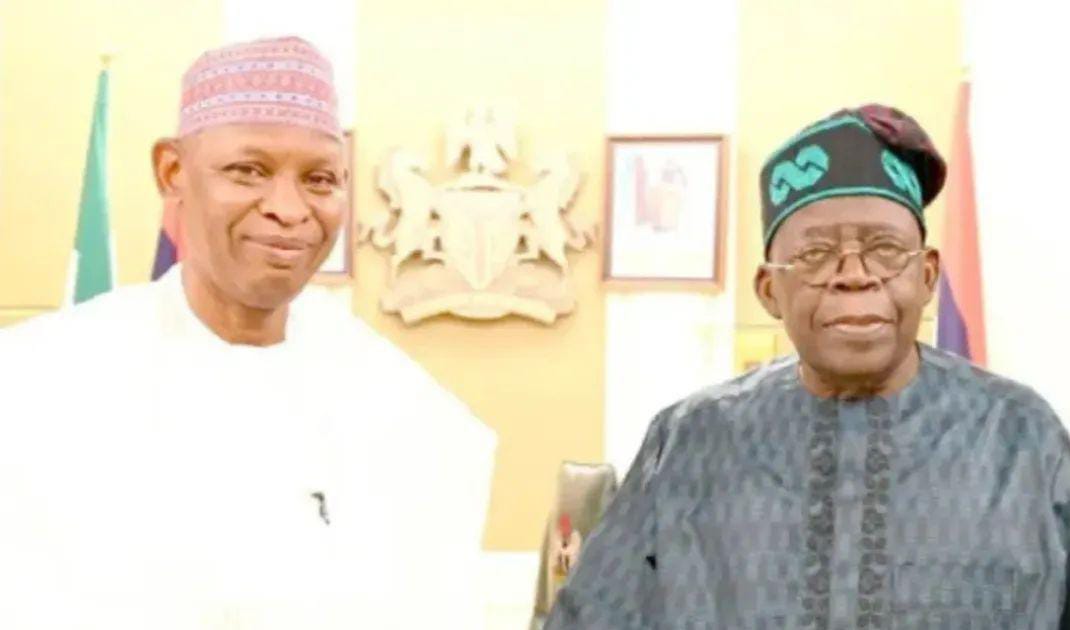
In Nigerian politics, party affiliation is often interpreted through the narrow lens of ambition. But sometimes, it is better understood as strategy. The decision of Kano State Governor, Abba Kabir Yusuf, to leave the New Nigeria Peoples Party (NNPP) and align with the All Progressives Congress (APC) can be framed not as ideological surrender, but as a governance recalibration — one anchored on the imperative to work with the centre and deliver more to the people of Kano.
Kano is not just any state. It is a political heavyweight — demographically influential, economically strategic, and symbolically central to northern Nigeria’s power matrix. Governing such a state requires more than populist energy; it requires structural leverage.
The Reality of Centre–State Dynamics
Nigeria operates a federal system that is, in practice, heavily centralized. Access to major infrastructure financing, security coordination, federal roads, power interventions, and special development programs often flows through collaboration with the presidency and federal institutions.
President Bola Tinubu leads a federal administration whose policy thrust includes economic reform, infrastructure expansion, and fiscal restructuring. For a governor outside the ruling party, engagement with the centre can sometimes be formal yet politically distant. Alignment, on the other hand, often enhances informal access, negotiation power, and responsiveness.
For a state like Kano — with vast urban expansion challenges, youth unemployment pressures, and infrastructure deficits — proximity to federal decision-making is not merely symbolic; it is strategic.
Delivering Beyond Party Lines
Governor Yusuf emerged on a wave of political momentum driven by grassroots mobilization and protest energy. But campaigns and governance operate on different logics. The electorate ultimately measures performance not by party purity, but by tangible results — roads built, jobs created, schools rehabilitated, industries attracted.
If aligning with the APC strengthens Kano’s access to federal-backed infrastructure projects, security support, or investment partnerships, the political cost of defection may be outweighed by developmental gains.
In a state where commercial vibrancy defines daily life, economic pragmatism often resonates more deeply than ideological rigidity.
Political Stability as an Economic Asset
Kano’s political history has experienced periods of tension and rivalry. Realignment with the ruling party at the federal level can reduce friction, ease intergovernmental coordination, and create a more predictable administrative environment.
Investors — both domestic and foreign — prioritize stability. When state and federal governments operate in synergy, large-scale projects move faster. Regulatory bottlenecks are minimized.
Funding approvals accelerate.
A governor seeking to reposition Kano as a northern economic hub would reasonably consider these factors.
The Burden of Responsibility
Leadership sometimes requires difficult decisions that may not immediately satisfy every political loyalist. Those who supported the NNPP platform may feel ideological disappointment.
However, governance demands calculation beyond sentiment.
The core responsibility of any governor is to the people — not merely to party structures. If remaining in opposition constrains fiscal opportunity or limits developmental leverage, then reassessment becomes a matter of duty.
A Strategic Northern Equation
Northern politics is deeply interconnected with federal power structures. Kano’s influence within the broader northern bloc can be strengthened when its governor operates within the ruling coalition. This enhances bargaining capacity not just for projects, but for policy considerations affecting agriculture, trade corridors, education funding, and security architecture.
Such alignment may also position the state more favorably in national conversations about economic diversification and regional development.
From Opposition Symbolism to Governing Realism
The NNPP provided a political vehicle for change. But sustaining transformation often requires integration into larger power frameworks. Political history shows that parties rise and decline, but states endure.
Governors must think in terms of institutional longevity rather than electoral cycles.
In this context, Yusuf’s move can be interpreted as a transition from opposition symbolism to governing realism — a decision to exchange ideological isolation for operational leverage.
The Test Ahead
Ultimately, the legitimacy of this political shift will not be determined by party rhetoric but by outcomes. If Kano witnesses accelerated infrastructure delivery, improved security coordination, stronger federal collaboration, and expanded economic opportunities, then the move will be judged as pragmatic and visionary.
If not, critics will frame it as opportunistic.
But in a federation where resources and authority are deeply centralized, the argument for working closely with the centre is compelling. For Governor Abba Kabir Yusuf, the calculation appears clear: partnership with the federal government may offer the most direct path to delivering measurable progress for the people of Kano.
In politics, as in governance, alignment is sometimes less about ideology and more about impact.