By Jane Okeke
A new survey by Illmi Children’s Fund, a non-profit organisation, has revealed alarming levels of gender-based violence (GBV), including harassment and abuse, among adolescents in public secondary schools across the Federal Capital Territory (FCT).
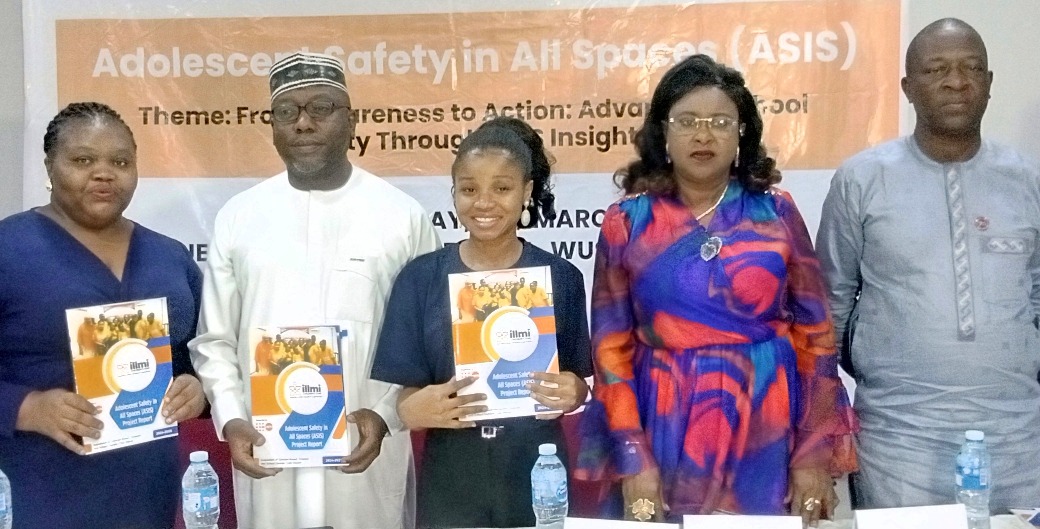
The findings are contained in a report from the Adolescent Safety in All Spaces (ASIS) Project, which examined school-related gender-based violence (SRGBV) in 18 public secondary schools across the territory.
The survey engaged more than 1,530 students aged between 10 and 17 years, with girls accounting for about 85 per cent of respondents.
The initiative placed adolescents at the centre of the research through gender and safety clubs, peer-led discussions and school safety mapping exercises aimed at identifying threats within and around school environments.
The report, presented to stakeholders in Abuja, showed that more than half of reported cases of gender-based violence occurred within school premises.
About 26 per cent took place at home, while 11 per cent occurred during commutes to and from school and seven per cent were reported online.
According to the findings, verbal abuse accounted for the highest proportion of reported incidents at 47 per cent, followed by physical abuse at 13 per cent.
The survey also found that 12 per cent of students reported cases of sexual assault, while 28 per cent experienced attempted or actual rape.
Peers were identified as the leading perpetrators of abuse, accounting for 47 per cent of reported incidents. Strangers were responsible for 29 per cent, while teachers and family members each accounted for 13 per cent.
Speaking during the presentation of the report, Gender Lead at Illmi Children’s Fund, Tovia Muo, said the findings demonstrate that while awareness around gender-based violence is increasing, systemic and cultural barriers continue to limit the ability of adolescents to safely report and resolve such cases.
She stressed the need to place adolescents, particularly girls, at the centre of safety interventions, noting that involving them directly helps stakeholders understand the types of violence they face, the reasons incidents go unreported and the most effective ways to protect them.
Muo also underscored the importance of including boys in awareness programmes to ensure that messages about rights, safety and respect reach all students.
She noted that although Nigeria has legal frameworks such as the Child Rights Act and the Violence Against Persons (Prohibition) Act aimed at protecting children, enforcement remains a major challenge.
“Nigeria has laws like the Child Rights Act and the Violence Against Persons Act meant to protect children. The challenge is implementation. Schools, communities and government agencies must enforce these policies effectively. NGOs alone cannot ensure adolescent safety. Collective effort is essential,” she said.
Acting Executive Chairman of the FCT Universal Basic Education Board (UBEB), Florence Dawon, emphasised the role of school authorities, parents and community structures in safeguarding adolescents.
She said schools continue to monitor students through teachers, principals, counselling officers and Parent-Teacher Associations to identify and address challenges affecting their wellbeing.
“At adolescence, children face many challenges. We observe and guide them through counselling officers, principals and committed teachers, and we encourage them to open up about their problems.
“Collaboration with parents and the community ensures that we can address these challenges effectively,” Dawon said.