By Jane Okeke
The Managing Director/Chief Executive Officer of the Nigerian Independent System Operator (NISO), Engr. Mohammed Bello, has highlighted major milestones recorded within one year of the organisation’s establishment, describing the period as foundational to Nigeria’s ongoing power sector reform.
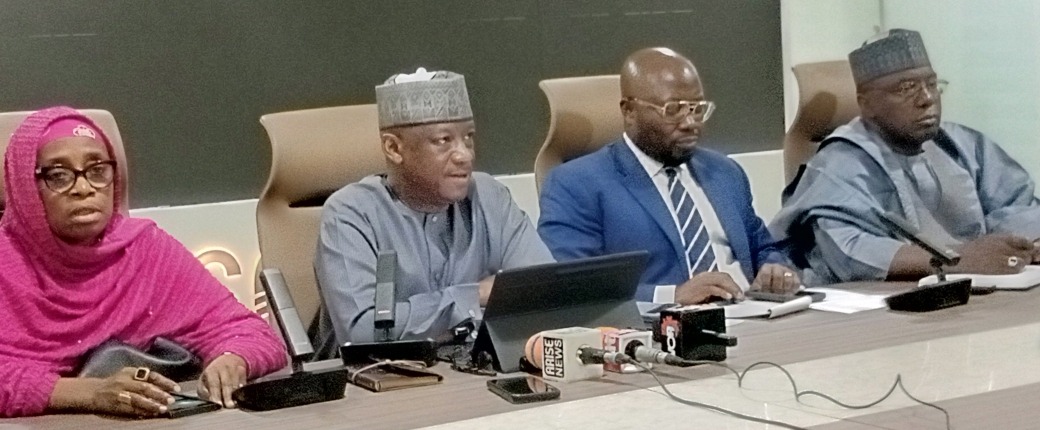
Speaking during a town hall meeting in Abuja to commemorate NISO’s first anniversary, Bello said the agency has made significant progress in strengthening grid operations, improving market coordination, and laying the groundwork for a more reliable electricity system.
NISO was established pursuant to the Electricity Act 2023, with a mandate to oversee system operations, market administration, system planning, and enforcement of regulatory frameworks within Nigeria’s electricity supply industry.
Bello noted that the past year has been marked by deliberate institutional development, aimed at building a credible and independent system operator capable of driving efficiency across the electricity value chain.
“We are not just celebrating one year of existence; we are reflecting on one year of purposeful execution, institutional growth, and measurable impact,” he said.
According to Bello, NISO has established governance and management structures to support independent operations while strengthening coordination across generation, transmission, and distribution segments.
He added that the organisation has also prioritized human capital development through structured onboarding, technical training, and improved staff welfare, aimed at fostering a performance-driven culture.
A major highlight of the agency’s achievements, Bello said, is the ongoing deployment of technologies to enhance real-time monitoring and control of the national grid.
He disclosed that NISO is accelerating the implementation of the SCADA/EMS system in collaboration with the Nigerian Electricity Regulatory Commission, alongside the rollout of telemetry systems across key electricity trading points.
“These initiatives will enable near real-time data acquisition and support more efficient market settlements,” he said.
Bello further revealed that NISO is deploying Internet of Things (IoT)-based monitoring systems across critical infrastructure to achieve full visibility of the grid from generation through transmission to distribution.
On system reliability, the NISO boss acknowledged ongoing challenges with grid instability but noted that the organisation has introduced measures such as grid segmentation and enhanced protection coordination to reduce system disturbances.
He explained that the grid alignment strategy would isolate faults within specific zones, preventing widespread outages and improving resilience.
Bello also raised concerns over high distribution losses, which he said reached nearly 10 percent at inception, costing between ₦5 billion and ₦8 billion monthly.
He said targeted interventions are underway to reduce losses to between 7 and 8 percent, improving efficiency and revenue assurance in the sector.
In the area of market development, Bello said NISO has strengthened monitoring of market participants and improved compliance with market rules, leading to more orderly operations.
He added that upgrades to market management systems are ongoing to enable real-time monitoring, efficient settlement processes, and better data analytics.
The agency is also supporting the transition toward decentralized electricity markets, in line with national reforms that allow states to participate more actively in electricity generation and distribution.
Bello disclosed that NISO has supported the development of the Integrated Resource Plan (IRP) and completed a draft Transmission Expansion Plan (TEP), aimed at ensuring coordinated and cost-effective infrastructure development.
He emphasized that the agency is advancing frameworks for renewable energy integration and has conducted studies on Battery Energy Storage Systems (BESS) to align Nigeria’s grid with global best practices.
On long-term infrastructure, Bello said NISO is refining proposals under the Supergrid Initiative to strengthen Nigeria’s transmission backbone and support future electricity demand.
“As we move forward, our focus remains on delivering a stable grid, a transparent market, and a coordinated planning framework that supports national development,” Bello stated.
The anniversary event brought together key stakeholders across the Nigerian Electricity Supply Industry, development partners, and members of the media to review progress and chart the path forward for the sector.
NISO @1: Nigeria loses ₦8bn monthly to power inefficiencies, says Bello