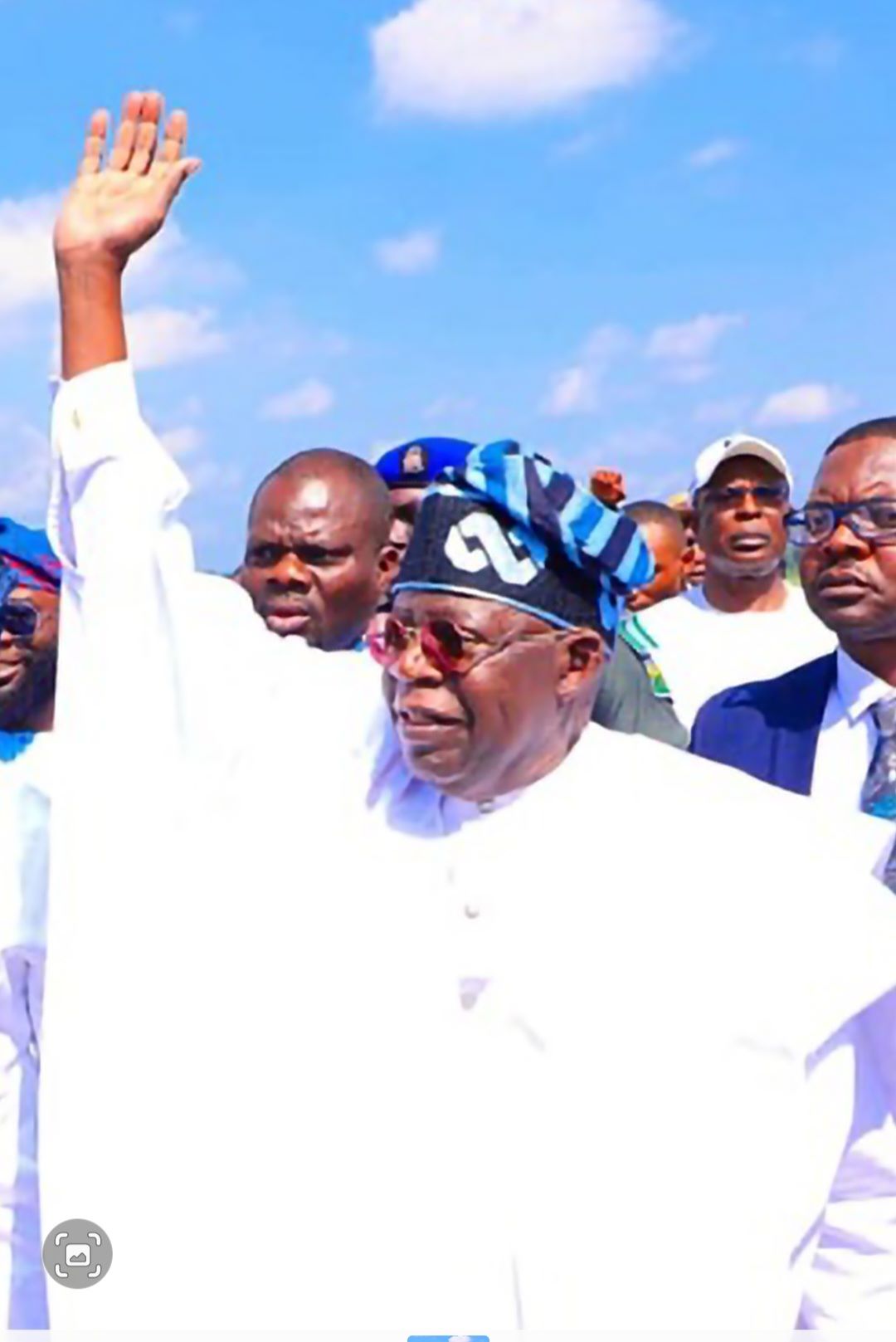
By Chesa Chesa
How time flies! It seems like just yesterday that Asiwaju Bola Ahmed Tinubu was sworn into office as Nigeria’s President and Commander-in-Chief of the Armed Forces. Right there at the Eagle Square, as he took his oath of office, he confidently reeled off his pledges to expectant citizens. Now presents an opportunity for stock-taking.
Standing firm and strong in his assertion and presentation of scorecard of President Tinubu’s two-year stewardship is the Minister of Information and National Orientation, Mohammed Idris, who for instance, has emphatically dismissed critics who say the President has left security to worsen in the country, as he recently explained that the President is collaborating with States and local governments to provide a more secure Nigeria.
In a message to mark the administration’s second anniversary, the Minister reeled out the achievements of the administration geared towards breaking the stranglehold of dysfunction on Nigeria and to replace this with systems that stand out for their efficiency and
productivity. He noted that in just two years of the administration, the government has been able to put his vision into concrete projects that inspire and renew collective hope.
According to him: “That vision for a new Nigeria is playing out as a re-enactment of his 1999 vision for a new Lagos, and I think that it is very important, in understanding this consequential presidency, to rewind a bit and locate its roots in an equally consequential governorship”.
Citing Tinubu’s achievements as two-term state governor of Lagos State between 1999 and 2007 to buttress his points, Minister Idris stated that the President “inherited a megacity in dire need of taming, ridden with poor infrastructure, urban filth, and buffeted by an encroaching ocean.
“He set about imposing a sense of order and vision on this state of aff airs, creating an enduring subnational standard for public sector and governance reform in Nigeria.
“New institutions were created, talent was hired, and bold ideas were very much welcome. No aspect of governance was left behind – judiciary, land use, mass transit, waste management, revenue collection, security — and a standout dedication to true federalism.”
Idris also listed what he described as “revolutionizing of revenue collection”, urban renewal, physical infrastructural development, which he noted has transformed Lekki to the fastest growing city in Africa, adding that President Tinubu came to office fully aware of the immense and unique complexities of the country he’d been elected to run, but is determined to repeat his Lagos magic.
“As with the stint in Lagos, his first order of duty in the Presidential Villa was to tame seemingly intractable monsters. In this case, the twin monsters of petrol and forex subsidies. Not because the concept of subsidies is a terrible one, no, but instead because these two subsidies stand out uniquely for how especially inhibiting and damaging they have been for our national aspiration to be a continental and global model of economic growth, prosperity and efficiency.
“President Tinubu alluded to this in his speech during the recent visit to Anambra State, saying: ‘Like we tamed the Atlantic in Lagos, many of these monsters have been tackled: petroleum and forex subsidies have been tamed; macroeconomic stability has
returned within predictable bounds; tax reforms are on the way, etc. These reforms are difficult, yes, but inevitable.’”
The Minister further boasted that the administration had engaged in “deployment of a new order to replace the old. First the dismantling of dysfunction, and then the laying of new foundations of growth, of investment and jobs, of economic stability and attractiveness”.
He pointed out the emergence of a brand new tax regime, a new omnibus infrastructure program, a new landscape of social welfare schemes, including presidential grants and loans scheme, the Nigerian Education Loan Fund, the
presidential CNG initiative, the Consumer Credit Corporation, stressing that “the common thread here is that these initiatives all have the ordinary people of Nigeria at their very heart: artisans, small businesses, students, transporters,
civil servants, everyday people building their lives honestly and diligently”.
Policy reforms and fiscal stability are paying off, and investors already announced over fi ve billion dollars in Final Investment Decisions (FIDs) for landmark new deepwater projects in the country, he stated.
In the health sector, Idris said there are no fewer than 22 new large-scale private sector pharmaceutical manufacturing projects valued at over $5.5 billion, across the country, as well as an infl ow of multi-billion-dollar investment funding from multilateral partners like Afreximbank and the European Investment Bank.
He eulogized the new Electricity Act, pointing out that is aims “to empower subnational governments and the private sector to wholeheartedly get involved in power generation, transmission and distribution”.
The approval for establishment of new Development Commissions, in the spirit of equitable and decentralized national development, is another fruit of President Tinubu’s dexterity in managing the needs of the citizens and advancing economic and social inclusion and development.
Minister Idris concluded: “The seed planting continues, to guarantee tomorrow’s forests for coming generations.” Nonetheless, in the area of security, more needs to be done, by the Federal Government which is constantly working very closely with States and Local Governments to slay the hydra-headed monster.