By Pwanagba Agabus, Jos
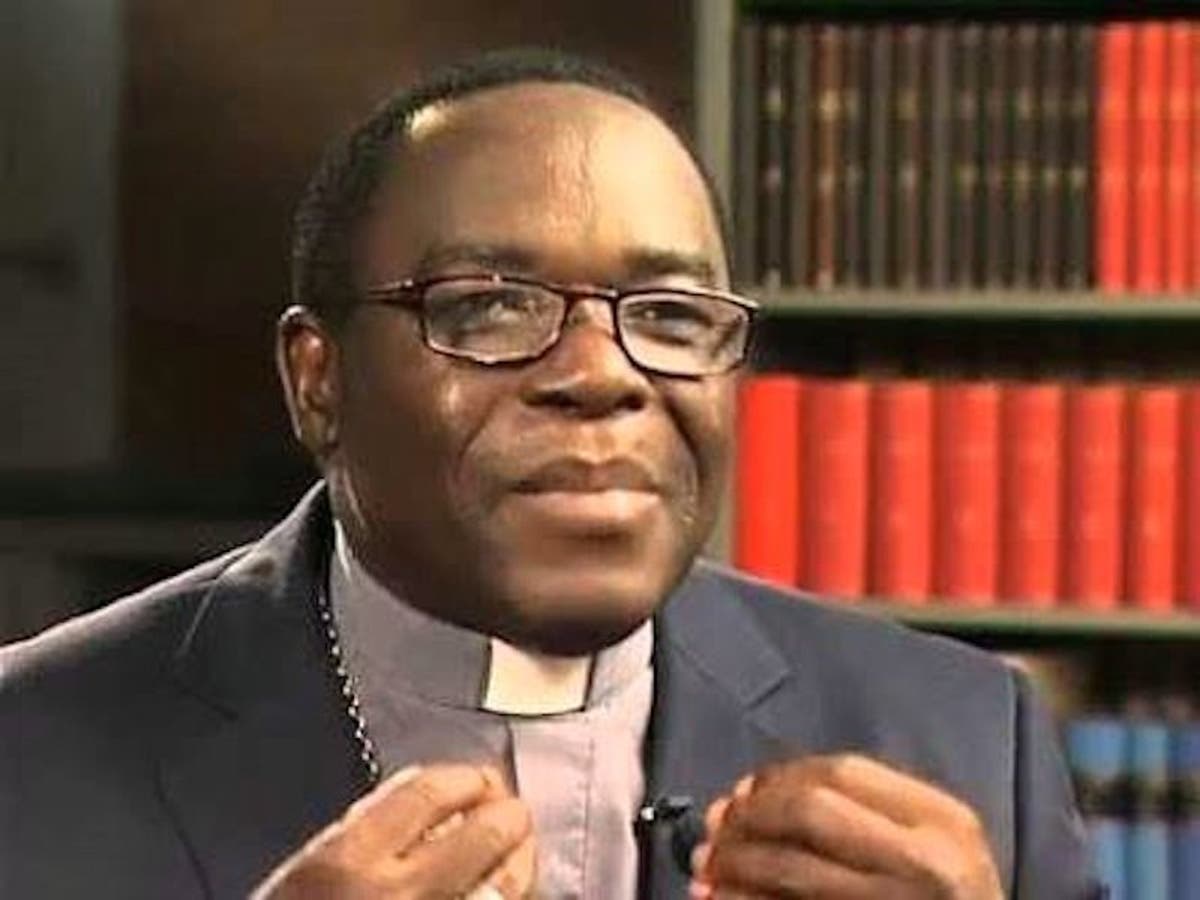
The Bishop of Sokoto Diocese and founder of the Kukah Centre, Most Rev. Mathew Hassan Kukah, said respect for the rule of law is critical in the fight against insecurity.

Adding that the failure of institutions to address injustice only leads to more insecurity
He emphasised that it is essential for a country to adhere strictly to the rule of law to get its bearings, adding that victims of mass activities such as the recent Yelwata killing in Benue State and others are often left behind in the pursuit of justice.
Speaking at the official commissioning of the House of Justice, Jos office complex, the Kukah also said it is possible to have a credible election that is devoid of rancour if the civil service is wired correctly, adding that this will trickle down to having credible elections at all levels.
“It is essential for a country like ours to respect the rules of law, while failure to address injustice only leads to greater insecurity. Also, when mass atrocities occurred, no one considered the long-lasting impacts on the victims and communities; we often focused more on the perpetrators. The rule of law must come into play.”
“If we get the civil service right, we would be able to get free and fair elections, but if you do not have the public service that is wired correctly, you will not get the right answer.
“Public servants in Singapore have a higher salary than that of the bankers and other sectors. As a result of this, only the best brains go to the public service, and there is no way of comparing this situation with Nigeria at the moment.”
The Bishop of Sokoto Diocese therefore charged Nigerians to always seek justice whenever the need arises instead of withdrawing to themselves and discarding the notion that every judge is corrupt and politicians are criminals.
“So going forward, it is not enough that we have the law or we know the law; the fact is that justice is not something that would be given to you as a gift. Court alone cannot deliver justice until someone approaches them. One of the notions that we must discard is that every politician is a criminal and every judge is corrupt.”
In his remark, the chairman of the Nigeria Law Reform Commission, Prof Dakas C.J. Dakas (SAN), pointed out that the experience of the Oputa Panel and other similar panels in Nigeria did not encourage repatriation in line with the problem the country is grappling with.
Dakas expressed disappointment that in spite of the fact that quite a lot of resources went into the panel, none of the recommendations were implemented.
“We therefore need to move to the realm of action so that we can transform lives in profound ways that promote justice. We can learn from the experience of several countries.
“Another thing we can look at is whether we should have a repatriation act. One thing about Oputa is that it was just executive action; there was no enabling law to provide or give room for the recommendations of the panel to be implemented.”
In her opening remark, the CEO of the House of Justice, Gloria Mabeiam, highlighted that Nigeria has gathered a huge justice debt burden, which it continues to promise to deliver but backtracks on.
She explained that in 1999, former President Olusegun Obasanjo attempted to clear the backlog of justice honored in abeyance and breach through the Nigeria Human Rights Violations Investigation Commission, also known as the Oputa Panel, adding that despite the resources, faith, and public acclaim widely invested in the work of the panel, the final report submitted in 2002 was neither officially released to the public nor its findings implemented.
According to her, following the 2007 elections, President Umaru Musa Yar’Adua established the Electoral Reform Committee (ERC), which was chaired by retired Chief Justice Muhammad Lawal Uwais, adding that the report, which was submitted in 2008, offered a blueprint to correct the structural and legal deficiencies that undermined electoral integrity in Nigeria and called for a wide range of reforms, from institutional restructuring to procedural improvements.
Mabeiam said the 2023 general elections laid bare the consequences of the unaddressed issues, adding that the worst-hit state of the annulling of public will was Plateau State.
“The Supreme Court of Nigeria did not mince words in expressing deep displeasure at the miscarriage of justice; ironically, the entrenched maxim of law that states that where there is an injury, there shall be a remedy, was honored in breach,” she said.