The Kogi State Government has concluded plans to raise ₦50 billion through a Sukuk bond to fund the construction of the Kogi State International Airport in Zariagi and the Lokoja International Market.
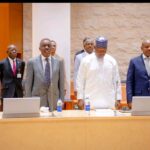
The move was disclosed by Governor Ahmed Ododo, represented by the Commissioner for Finance, Asiwaju Ashiru Idris, during an engagement with investors and capital market stakeholders in Abuja.
According to the governor, the decision to approach the capital market was driven by the administration’s strategic objective of securing sustainable funding for priority infrastructure projects across the state.
“The ₦50 billion Sukuk bond is strictly asset-backed and dedicated exclusively to financing the two projects in full compliance with Sukuk principles,” he said.
Governor Ododo said the proposed international airport is expected to enhance logistics, attract investment, support agro-exports and position Kogi State as a major economic hub. He added that the Lokoja International Market would help formalise trade, boost revenue generation, create employment opportunities and strengthen the local economy.
He further reaffirmed the administration’s commitment to fiscal discipline and governance reforms, noting that Kogi State has been assigned a ‘B’ credit rating with a stable outlook by Fitch Ratings and now benefits from 13 per cent derivation revenue as an oil-producing state.
The governor also assured investors that proceeds from the bond would not be applied to recurrent expenditure but would be used strictly for infrastructure projects aimed at expanding productivity, stimulating commerce and strengthening the state’s long-term repayment capacity.
Also speaking, the Managing Director of AVA Capital Group and a member of the advisory team, Mr. Kayode Fadahunsi, described the offer as a textbook infrastructure Sukuk, noting that the projects are revenue-generating assets capable of servicing the bond.
He explained that the Sukuk, structured as a senior Ijara Sukuk, will be offered at ₦1,000 per unit, with a total size of ₦50 billion and a maturity period of five to seven years, adding that subscription will be via book-building with a minimum investment of ₦50 million.