By Chuks Oyema-Aziken
Nigeria’s Niger Delta remains central to the country’s economic viability and fiscal planning. At the same time, it has long posed one of the most complex internal security challenges due to persistent crude oil theft, illegal refining, and pipeline vandalism.
The recent defence correspondents’ tour of oil installations in Bayelsa State under Operation DELTA SAFE and in Abidawa, Rivers State, offered an opportunity to assess how military operations are being applied to protect critical energy infrastructure and what these efforts imply for national economic stability.
Rather than a ceremonial engagement, the tour functioned as a field-level examination of ongoing security measures in key oil-producing areas. It provided insight into operational methods, coordination structures, and the evolving role of the Armed Forces of Nigeria (AFN) in addressing economic security threats.
Operation DELTA SAFE and the Bayelsa Theatre
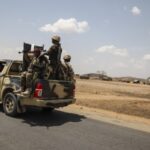
In Bayelsa State, defence correspondents observed the operational environment under Operation DELTA SAFE, the joint task force mandated to curb oil theft and related economic crimes across the Niger Delta. The tour highlighted how the operation has shifted toward sustained area control, particularly in riverine locations previously associated with illegal refining.
Field briefings indicated that patrols, intelligence-led interventions, and the dismantling of illegal refining sites remain central to the operational approach. Rather than isolated raids, the emphasis appears to be on preventing reoccupation of cleared areas through continuous presence and monitoring.
This model reflects a broader recognition that oil theft networks adapt quickly to enforcement gaps. Maintaining operational pressure, therefore, becomes as important as initial interdiction. The Bayelsa segment of the tour suggested that the task force is attempting to close these gaps through forward positioning and coordinated patrols.
Abidawa and Rivers State Operations
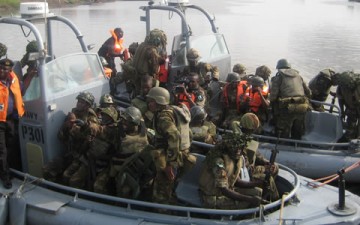
The Rivers State leg of the tour, particularly the visit to Abidawa, provided a contrasting but complementary perspective. The area’s terrain—narrow creeks and dense vegetation—has historically complicated security operations and enabled illegal bunkering activities.
According to briefings provided during the tour, joint operations involving ground troops, maritime elements, and aerial surveillance have been employed to improve oversight of oil infrastructure in the area. Illegal tapping points have been identified and neutralised, while routine patrols aim to deter renewed vandalism.
Strategic Coordination and Command Direction
At the strategic level, the protection of oil infrastructure is treated as part of broader national security planning under the direction of the Chief of Defence Staff (CDS). Oil theft is approached not only as a criminal issue but as a security concern with direct implications for government revenue, foreign exchange earnings, and national stability.
The emphasis on joint operations—integrating the Nigerian Army, Navy, and Air Force—was evident across both Bayelsa and Rivers States. This structure allows for complementary capabilities, particularly important in environments that require land, maritime, and aerial coverage.
While the effectiveness of jointness ultimately depends on consistency and resource availability, the tour suggested that coordination remains a key feature of current operations in the Niger Delta.
Operational Impact and Economic Considerations
The AFN’s activities in the Niger Delta are increasingly framed within the context of economic impact. Oil theft has historically resulted in significant revenue losses, production disruptions, and environmental degradation. From an operational standpoint, reducing these losses is one of the measurable outcomes of security interventions.
Observations during the tour indicated fewer visible illegal refining sites in some locations and reduced interference with oil infrastructure. If sustained, such trends could contribute to more stable production levels and improved revenue inflows.
Media Access and Strategic Communication
The tour was coordinated by the Director of Defence Media Operations, Major General Mike Onoja, reflecting an institutional effort to provide media access to operational areas. From an analytical perspective, this approach serves two functions: it allows journalists to independently assess security conditions, and it places military operations within the public policy discourse on oil theft and economic recovery.
Media access, when managed carefully, can contribute to informed reporting and reduce speculation about operational effectiveness. It also exposes the complexity of securing oil infrastructure, countering simplified narratives about the Niger Delta security challenge.
Limits and Sustainability of Military Solutions
While the tour highlighted ongoing efforts and some observable outcomes, it also raised broader questions about sustainability. Military operations can suppress oil theft, but long-term success depends on addressing structural drivers such as local economic deprivation, environmental damage, and illicit market demand.
The analysis suggests that current operations are most effective when viewed as part of a layered response—one that combines security enforcement with economic and governance reforms.
Conclusion
The defence correspondents’ tour of oil installations in Bayelsa State under Operation DELTA SAFE and in Abidawa, Rivers State, provided a practical lens through which to assess Nigeria’s approach to securing its oil infrastructure. The observations point to a security framework that prioritises joint operations, sustained presence, and infrastructure protection as tools for reducing oil theft.
As Nigeria continues to navigate economic pressures and energy security challenges, the effectiveness of these measures will depend on consistency, coordination, and integration with non-military solutions. The tour underscored that protecting oil assets is no longer viewed solely as a security task, but as a component of broader economic stabilisation efforts.
.