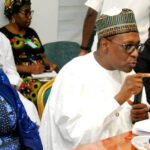
The President of the Nigeria Entrepreneurs Forum (NEF), Dr. Sidney Inegbedion, has called for the adoption of a national policy to support economic diversification and accelerate the development of Nigeria’s economy.
Dr. Inegbedion made the call in Abuja while delivering a keynote address at a one-day National Workshop on Developing a National Bamboo Policy for Nigeria. The workshop was organised by the Federal Ministry of Budget and Economic Planning in collaboration with the Nigeria Entrepreneurs Forum and the National Bamboo Farmers, Processors and Marketers Association of Nigeria.
He described bamboo as a viable agricultural commodity with significant economic potential, noting that the NEF would remain at the forefront of identifying products whose potentials could be effectively harnessed for national development.
“Nigeria Entrepreneurs Forum (NEF) is a private-sector-led economic development organisation committed to promoting enterprise growth and sustainability as the cornerstone of Nigeria’s quest for job creation, wealth generation and broad-based economic development. We enjoy strong support from relevant public institutions, international agencies and partner governments,” he stated.
Dr. Inegbedion while describing the workshop as timely and long overdue commended the organizers of the event.
He said: “I wish to express my profound appreciation to the Permanent Secretary, Federal Ministry of Budget and Economic Planning, and the Director, Economic Growth Department, for approving this workshop and providing visionary leadership in advancing this critical policy initiative and your stewardship, reaffirms the Ministry’s central role in shaping Nigeria’s long-term economic transformation, green industrialisation and sustainable development agenda.
“I also extend sincere gratitude to our strategic partner, the China National Bamboo Research Centre (CNBRC), Hangzhou, Zhejiang Province, China, and the Embassy of the People’s Republic of China in Nigeria for entering into a purposeful partnership with NEF to strengthen bamboo industry development in Nigeria and indeed across the West African sub-region and the presence of the China National Bamboo Research Centre (CNBRC) and the Chinese Embassy today is a powerful demonstration of international cooperation, shared vision and SouthSouth collaboration.
“I equally commend the unalloyed support and commitment of the National Bamboo Farmers, Processors and Marketers Association of Nigeria (NBFPMAN) — the apex national commodity association dedicated to unlocking bamboo’s potential as a sustainable and versatile national economic asset with a strong grassroots following and I must not forget to appreciate the technical support of the West Africa Regional Director, International Bamboo and Rattan Organisation (INBAR), Accra, Ghana.
” INBAR has been a foremost champion of bamboo development in West Africa and continues to provide technical assistance to institutions worldwide.
“Bamboo is no longer a peripheral or niche resource and globally, it is recognised as a fast-growing, renewable, versatile and high-value strategic material with applications spanning construction, energy, textiles, pharmaceuticals, cosmetics, erosion control, furniture, packaging and climate adaptation solutions.”
According to him, Nigeria is endowed with one of Africa’s largest and most underutilised bamboo reserves — a fast-growing, renewable, and exceptionally versatile natural resource with transformative economic potential. Despite this abundance, the absence of a coordinated national policy has led to widespread underutilisation, fragmented efforts, limited private-sector investment, and significant missed opportunities in the rapidly expanding global bamboo economy.
“The global bamboo market was valued at USD 68.8 billion in 2018 and reached USD 98.3 billion by the end of 2025, growing at a robust compound annual rate of 5.2% and this growth is driven by bamboo’s unique ability to serve as a high-value input across dozens of industries: construction materials, engineered wood products, furniture, flooring, textiles, paper and pulp, packaging, bio-energy (pellets, charcoal, bioethanol), handicrafts, pharmaceuticals, cosmetics, and food products (shoots).
“For Nigeria, bamboo offers a powerful pathway to fast-track economic diversification away from oil dependence. It can:
i. Create millions of direct and indirect jobs across rural and urban areas (cultivation, harvesting, processing, manufacturing, export).
ii. Stimulate massive growth in small and medium enterprises (SMEs) through low-capital-entry processing and value-addition clusters.
iii. Drive import substitution by replacing imported timber, pulp, plastics, and packaging materials with locally produced bamboo alternatives iv. Unlock substantial export revenue under African Continental Free Trade Area (AfCFTA) and Economic Community of West African States (ECOWAS) (targeting markets in Ghana, Senegal, Côte d’Ivoire, and beyond).
v. Attract significant domestic and foreign direct investment (FDI) into green manufacturing and agro-industrial zones.
vi. Generate multiplier effects in related sectors (logistics, transport, packaging, furniture design, skill development).
vii. Strengthen rural economies and reduce urban migration through viable off-farm employment in bamboo cultivation and cottage industries.
“With the right policy, investment, and private-sector participation, bamboo can become one of Nigeria’s most powerful engines for non-oil growth, wealth creation, industrialisation, and inclusive economic development — while also contributing modestly to climate resilience through its carbon sequestration and soil stabilisation properties,” he said.
Speaking further, Inegbedion noted that the decision to adopt elements of the China Model is deliberate and strategic as the Asian country represents the world’s most successful example of transforming bamboo from a traditional resource into a highly industrialised, export-driven and innovation-led sector.
“Through clear policies, strong institutions, sustained research, technology transfer and private-sector participation, China has built an integrated bamboo value chain that delivers economic growth, environmental sustainability and social inclusion — closely followed by India and Vietnam and through Nigeria Entrepreneurs Forum’s cooperation agreement with China National Bamboo Research Centre (CNBRC), Nigeria has a unique opportunity to: Learn from proven policy frameworks; Access world-class technical expertise; Adopt tested technologies and industrial applications; reduce the cost and time of policy development; Accelerate implementation, funding and market access,” he said.
” I make a respectful and strategic appeal to our partners from China, China National Bamboo Research Centre (CNBRC) and relevant Chinese agencies through the Embassy of the People’s Republic of China in Nigeria and we seek both financial and technical support, as enshrined under the Forum on China-Africa Cooperation (FOCAC), to expand this engagement beyond the federal level to states and local governments ensuring a bottom-top approach that reflects Nigeria’s federal structure, regional diversity and grassroots realities,” he added.
Earlier, the Permanent Secretary, Ministry of Budget and Economic Planning, Dr. Deborah Odoh epresented by a Director in the Ministry, Mr Awwal Mohammed commended the Nigeria Entrepreneurs Forum, NEF, and the Nationali Bamboo Farmers, Processors and Marketers Association of Nigeria for organizing the one day workshop.
According to her, the outcome of the workshop will enhance the Federal Government’s drive for green economy and diversification for national grown and development.
She therefore called for the support of all stakeholders towards harnessing the potentials in the bamboo sector.
In their separate goodwill messages, Representatives of the Federal Ministry of Industry, Trade and Investment, Ministry of Agriculture and Food Security, Ministry of Environment, Ministry of Arrs, Culture and Creative Economy and other Stakeholders promised their support to the Nationali Bamboo Policy for Nigeria towards boosting the country’s economy.
Highpoint of the one day workshop was the inauguration of a Technical Working Group for the Development of a National Bamboo Policy for Nigeria.