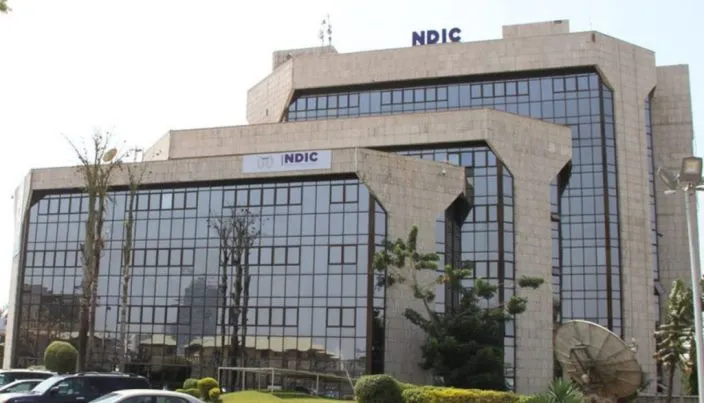
From Maurice Okafor, Enugu
The Nigeria Deposit Insurance Corporation (NDIC) has reassured Nigerians that their savings remain protected, noting that the improved deposit insurance scheme now provides cover for about 99 per cent of depositors nationwide.

The NDIC Executive Director, Operations, Dr. Kabir Katata, restated the assurance during the corporation’s ‘2025 Stakeholders Town Hall meeting’, held in Enugu on Wednesday, February 11, 2026.
He explained that the organisation’s core mandate is to protect small depositors and strengthen stability within the financial system.
Dr. Katata revealed that the increase in insurance limits introduced in 2024 was designed to promote financial inclusion across the country.
His words, “Under the current framework, depositors in Deposit Money Banks, Mobile Money Operators, and Non-Interest Banks enjoy a maximum coverage of N5 million. Meanwhile, those with funds in Microfinance Banks, Primary Mortgage Banks, and Payment Service Banks are insured up to a limit of N2 million, providing a safety net that covers the vast majority of account holders in the country”. Katata said.
He noted that beyond guaranteeing deposits in commercial banks, the NDIC also handles bank supervision, distress resolution, and liquidation processes.
He stressed that while insured sums are paid quickly once a bank’s license is revoked, depositors with balances above the coverage limit are not neglected.
According to him, such customers receive the insured portion immediately, while the outstanding balances are settled as liquidation dividends when assets of the failed bank are realized and debts recovered.
He added that this method ensures a transparent and structured recovery process, even in severe cases of bank failure.
The Executive Director pointed to the recent successful reimbursements to depositors of collapsed institutions, including Heritage Bank Limited, Union Homes Plc, and Aso Savings and Loans Plc, as proof of the corporation’s efficiency.
He stated, “By utilizing the Bank Verification Number (BVN) as a unique identifier, the NDIC was able to locate alternate accounts and credit claims within days of the banks’ closure, significantly reducing the waiting period for affected customers”.
Dr. Katata advised all bank customers in the country to ensure their BVNs are properly linked to their identity records, warning that access to insured deposits during financial distress depends largely on the accuracy of such data.
“The BVN serves as the essential link that allows the corporation to fulfill its ‘Protecting your bank deposits’ promise without the administrative bottlenecks that characterized liquidations in the past.
The Executive Director also underscored the importance of collaboration in maintaining financial stability, stating that the NDIC works closely with the Central Bank of Nigeria (CBN). “This partnership focuses on rigorous prudential regulation and supervision to ensure that licensed financial institutions adhere to high standards of corporate governance
“By enforcing robust risk management practices, the regulators aim to prevent bank failures before they occur, though the NDIC remains fully prepared to intervene should any institution’s license be revoked”. Katata emphasised.
Dr. Katata said responsibility for a stable financial sector is shared by regulators and depositors alike, urging the public to remain alert and informed about their rights and the condition of the institutions they patronize.
His words, “The presence of CBN representatives and commercial bank officials at the Enugu forum can be described as a move to provide the public with firsthand insights into consumer protection and the evolving responsibilities of the modern depositor”.
He noted that feedback from such grassroots forums is crucial for improving the corporation’s public awareness programmes and service delivery.
“By listening to the concerns of student groups, women’s organizations, and trade associations, the NDIC aims to become more responsive and better equipped to handle the nuances of the Nigerian financial landscape”. He said.
Dr. Katata reassured Nigerians that the banking system remains a dependable channel for savings and economic growth, adding that the NDIC continues to serve as a safeguard, particularly for vulnerable citizens who rely on their savings.