By Habib Haruna
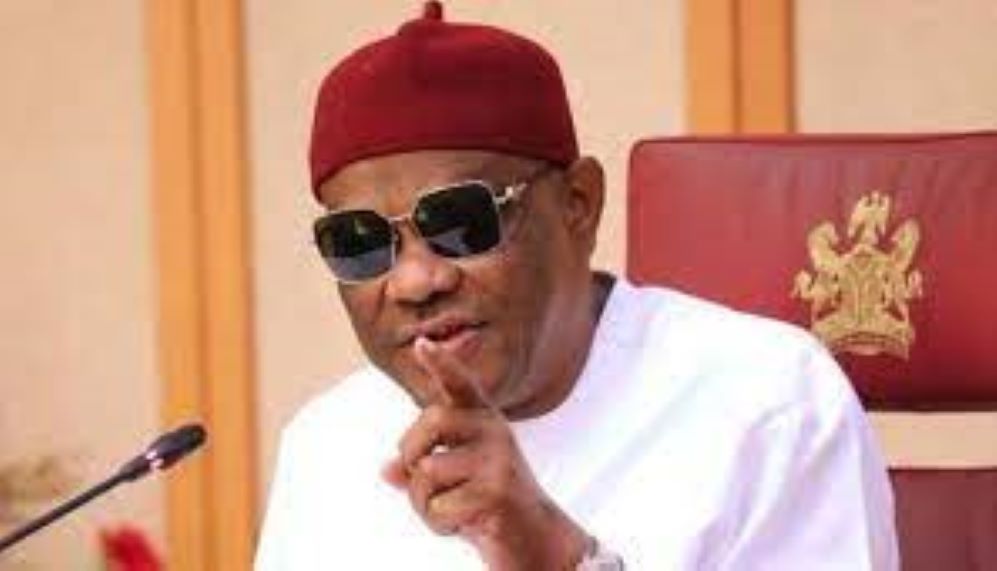
In Nigeria’s recent political history, few public office holders have generated as much attention, debate, and controversy as the current Minister of the Federal Capital Territory (FCT), Barrister
Nyesom Ezenwo Wike. Whether as Governor of Rivers State or as Minister in the present administration, Wike has emerged as one of the most visibly active and consequential political figures of his generation, particularly in the areas of infrastructure development, administrative control, and internal security. These attributes, taken together, have positioned him as a formidable political force whose influence extends beyond his immediate constituency.
Measured against the yardstick of performance—especially infrastructural renewal, urban transformation, and enforcement of governmental authority—Wike’s tenure in public office presents a record that is difficult to dismiss. His approach to leadership reflects a firm grip on the levers of power and a readiness to deploy state authority decisively. Such traits, while applauded by supporters as evidence of strong leadership, have equally made him a target of intense political hostility. In Nigeria’s political environment, performance rarely insulates a leader from opposition; rather, it often intensifies resistance, especially when such performance translates into growing political capital.
It is therefore unsurprising that Minister Wike has, in recent times, been subjected to sustained campaigns of calumny. These attacks, largely orchestrated by political opponents and others unsettled by his rising influence, have sought to recast his leadership narrative from one of achievement to one of controversy. This phenomenon is not unique to Wike. Nigerian political history is replete with examples of high-performing public officials who, by virtue of their success, attracted relentless opposition. Figures such as successive Lagos State governors, Governor Babagana Zulum of Borno State, Rabiu Kwankwaso, Abdullahi Ganduje, former Central Bank governors Professor Charles Soludo and Sanusi Lamido Sanusi, former Kaduna State Governor Nasir El-Rufai, Dr. Ngozi Okonjo-Iweala, and Dr. Oby Ezekwesili all illustrate
how competence and assertiveness often provoke resistance rather than consensus.
Ironically, the current wave of hostility directed at Wike has found fertile ground within Nigeria’s social media space—a domain increasingly populated by politically uninformed but highly vocal participants. Social media, while democratizing access to information, has equall become a powerful tool of manipulation in the hands of political actors. Simplistic narratives, stripped of context and nuance, are easily amplified, shaping public opinion in ways that often distort reality. The controversy surrounding Wike’s relationship with the Governor of Rivers State, Sir Siminalayi Fubara, exemplifies this dynamic.
A sober examination of the Wike–Fubara political relationship is therefore imperative. What is beyond reasonable dispute is that Governor Fubara’s emergence was largely facilitated by Nyesom Wike. Against formidable odds and entrenched political interests within Rivers State,
Wike singlehandedly championed Fubara’s candidacy and navigated the complex political terrain that ultimately produced his victory. At the time, Fubara was widely regarded as a technocrat with limited political visibility, minimal grassroots structure, and virtually no independent political following. His ascension to the governorship was neither inevitable nor self-propelled; it was the result of deliberate political engineering by Wike.
This context raises profound questions about the prevailing narrative that casts Wike as the villain and Fubara as the victim. How did opposition figures succeed in reframing the story so effectively? More fundamentally, what does this episode reveal about political loyalty, gratitude, and power in Nigeria’s democratic experience? Is it reasonable to assume that a political benefactor suddenly becomes an antagonist within months of an ally assuming office— particularly when that alliance endured for nearly a decade?
The more plausible interpretation is that power itself often alters political behaviour. History demonstrates that individuals elevated from relative obscurity to positions of immense authority may, upon acquiring power, seek autonomy at all costs—even if it means severing ties with those who facilitated their rise. This is not merely a personal failing; it is a structural feature of Nigerian politics, where loyalty is frequently transactional and short-lived.
However, the Wike–Fubara saga is ultimately not an end in itself. Rather, it serves as a precursor to a broader and more troubling pattern within Nigeria’s political elite: the deliberate weaponization of misinformation and moral outrage as tools for political rehabilitation. Time and again, political actors who presided over periods of national decline reposition themselves as messiahs once they exit office. Figures who were integral to administrations between 2015 and 2023—an era marked by severe economic contraction, rising insecurity, institutional decay, and
disregard for the rule of law—now seek to reinvent themselves as champions of national rescue.
The irony is profound. Individuals such as former ministers and senior party officials, who wielded immense power and resources for years without delivering commensurate progress, now appeal to Nigerians for renewed trust. This pattern reflects not only political cynicism but also an underestimation of public intelligence. While Nigerians remain vulnerable due to economic hardship and information asymmetry, the recycling of failed political actors under the banner of “rescue missions” is increasingly losing credibility
Every political narrative, like every drug, has an expiry date. The persistent reliance on recycled slogans, selective amnesia, and manufactured outrage has reached a point of diminishing returns.
The Nigerian electorate must begin to interrogate not just the promises of political actors, but their historical records. Those who failed to rescue Nigeria for over two decades cannot plausibly present themselves as its saviours today.
In conclusion, Nigeria’s democratic future depends on a decisive break from the politics of deception and personality assassination. The nation must resist the temptation to be swayed by emotionally charged but historically hollow narratives. More importantly, Nigerians must demand accountability, competence, and renewal—qualities unlikely to be found among the same political actors who have dominated the system for decades. If meaningful change is to occur, it must be driven by a new generation of leaders unburdened by the failures and contradictions of the past.
Habib Haruna is a public affairs commentator