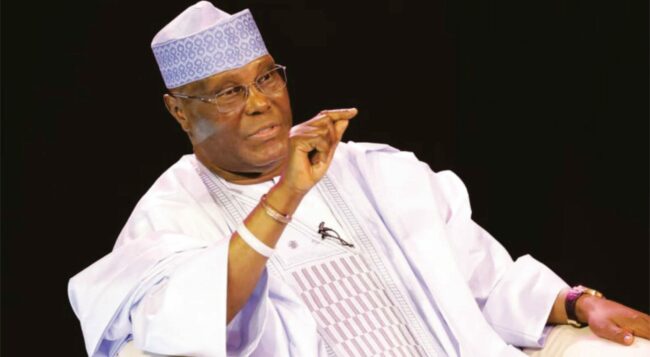
By Myke Uzendu
Former VicePrewident Atiku Abubakar has criticised the Federal Government’s claim of a final resolution in the long-running OPL 245 dispute, describing it as misleading and premature, following the emergence of a fresh legal challenge by Malabu Oil and Gas Limited.
In a statement issued in Abuja on Sunday, Atiku through his media office said the pre-action notice filed by Malabu, through its counsel, Chief R. O. Atabo (SAN), contradicts earlier claims by the Attorney-General of the Federation, Lateef Fagbemi, that the matter had been conclusively settled.
According to the statement, the dispute remains active in multiple courts, including the Supreme Court and the Federal High Court, indicating that the issue is far from resolved.
The former Vice President also expressed concern that Malabu, identified as a principal stakeholder in the oil block, was not consulted or involved in the purported resolution process, raising questions about the legality and transparency of the agreement reportedly executed at the Presidential Villa.
“A government that sidelines critical stakeholders and disregards pending judicial processes demonstrates recklessness rather than strength,” the statement said.
It further alleged that the development reflects a broader pattern within the administration of Bola Ahmed Tinubu, accusing the government of prioritising political optics over due process and accountability.
The statement also raised concerns about developments in Nigeria’s oil and gas sector, including reports of a planned sale of up to 30 percent of joint venture assets under NNPC Limited. It warned that such assets are critical to the country’s revenue base and should not be disposed of without transparency and public scrutiny.
Atiku called on key industry stakeholders, including Petroleum and Natural Gas Senior Staff Association of Nigeria and Nigeria Union of Petroleum and Natural Gas Workers, to remain vigilant against what it described as opaque transactions.
It also questioned reports surrounding the relocation of NNPC Upstream Investment Management Services to Lagos, allegedly at an annual rental cost exceeding ₦9 billion, describing the move as inconsistent with fiscal discipline at a time of rising national debt.
The statement noted that Nigeria’s debt servicing burden has increased significantly in recent years, warning that continued borrowing without visible improvements in infrastructure and public services could worsen economic conditions.
Beyond the oil sector, the media office linked the controversy to broader governance challenges, including insecurity and economic hardship across the country.