By Daniel Achimugu.
In the heart of Adamawa State, the arithmetic of Nigerian politics is being rewritten. For decades, the path to the Government House in Yola was paved not with good intentions, but with the heavy currency of “settlement”—a brutal system where a few thousand delegates in a hotel ballroom decided the fate of millions, turning party primaries into auctions reserved for the highest bidder.
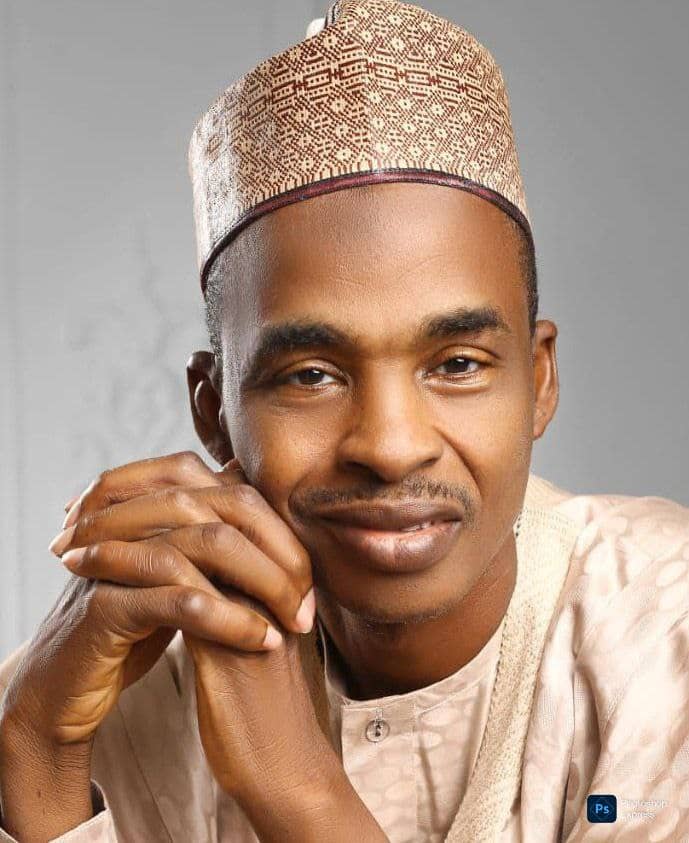
But if you listen to the voices gathering in the conference halls of Yola North, or the market women in Ganye, or the youths in Guyuk, you will hear the sound of a new calculus. They are talking about Dr. Salihu Bakari Girei, a governorship aspirant of the All Progressives Congress (APC), who believes that the soul of Nigerian democracy was saved with the stroke of a pen on February 18. That was the day President Bola Tinubu signed the new Electoral Act into law, mandating direct primaries and effectively abolishing the feudal delegate system that Bakari describes as a relic.
Now, as political activities intensify across Adamawa, Bakari is positioning himself as the first true test of the “Tinubuist” philosophy: that grassroots trust can finally defeat slush funds.
For Bakari, the shift is not just procedural; it is personal. He is a survivor of the old order. In 2015, when the governorship seat was within his grasp, when the masses clamored for him to be their “messiah,” he walked away. “If you want to lead people, you shouldn’t do so when you are under stress,” he explained at the time, an act of discipline so rare in Nigeria’s political landscape that it became legend.
Now, he is stepping back into the ring, and he believes the rules have fundamentally changed to favor his style of politics.
“The indirect system is not democratic due to what happened in the last election,” Bakari told TheCable, his voice carrying the calm assurance of a man who has waited for this moment. “We saw moneybags. If you don’t have money, you won’t be elected.”
Under the old regime, an aspirant needed to bribe a few thousand delegates. Under the new direct primary system, that calculus becomes impossible. To bribe millions of party members across Adamawa’s 21 local government areas is a logistical and financial impossibility. Money, for the first time in a long while, loses its vote.
This sentiment was palpable at a recent gathering in Yola, where a coalition of stakeholders from the southern senatorial zone converged to declare their support for Bakari. The event, held at the main conference hall, was not the typical political rally filled with loud music and handouts. It was a strategic assembly of community leaders who argued that their regions had already tasted Bakari’s leadership and were hungry for more.
Alhaji Hamman Kogoli, the chairman of the gathering, said the meeting was convened to inform communities about Bakari’s vision—a vision they believe is already proven. They pointed to his tenure as Chairman of the State Universal Basic Education Board (SUBEB), where he left a footprint in rural communities that is still visible today.
Jona Palta, a participant from Guyuk Local Government Area, described the moment as a crucial opportunity that should not be missed. “Dr. Girei is a grassroots-oriented leader,” Palta said, noting that during his SUBEB days, Bakari brought impactful projects to remote areas like Guyuk—places often forgotten by leaders who rise through the old delegate system.
Alhaji Shito Adamu from Shelleng Local Government Area went further, arguing that Bakari’s contributions have touched virtually every part of the state. “We will return to our communities to mobilize support,” Adamu vowed. “We are anticipating a new style of leadership that promises progress—not the usual transactions.”
Perhaps the most significant endorsement came from a female participant from Ganye, who brought prayers and goodwill from the women of her region. In a state where women and youth often feel sidelined by the financial barriers to political participation, her presence underscored the potential of direct primaries to democratize the process.
Bakari’s candidacy is now a litmus test for the new democratic order. If he succeeds, he will represent a new archetype of Nigerian politician—one whose currency is grassroots trust rather than slush funds. He argues that having acquired the requisite experience to govern, the only obstacle left is the will of the people, unmediated by the “moneybags.”
“The elimination of indirect primaries will ensure that whoever has the grassroots support will win,” Bakari said.
In Adamawa, the old order is fading. The era of the delegate is over. The era of the grassroots has begun. As Alhaji Hamman Kogoli closed the gathering with prayers for the attendees’ safe return to their homes, the message was clear: for the people of Adamawa, they are no longer gambling with their future. They are betting that the man who walked away from power to preserve his integrity is the one best suited to lead them into this new era.
And for the first time in a long while, they believe their vote will be the only one that counts.