By Cyriacus Nnaji
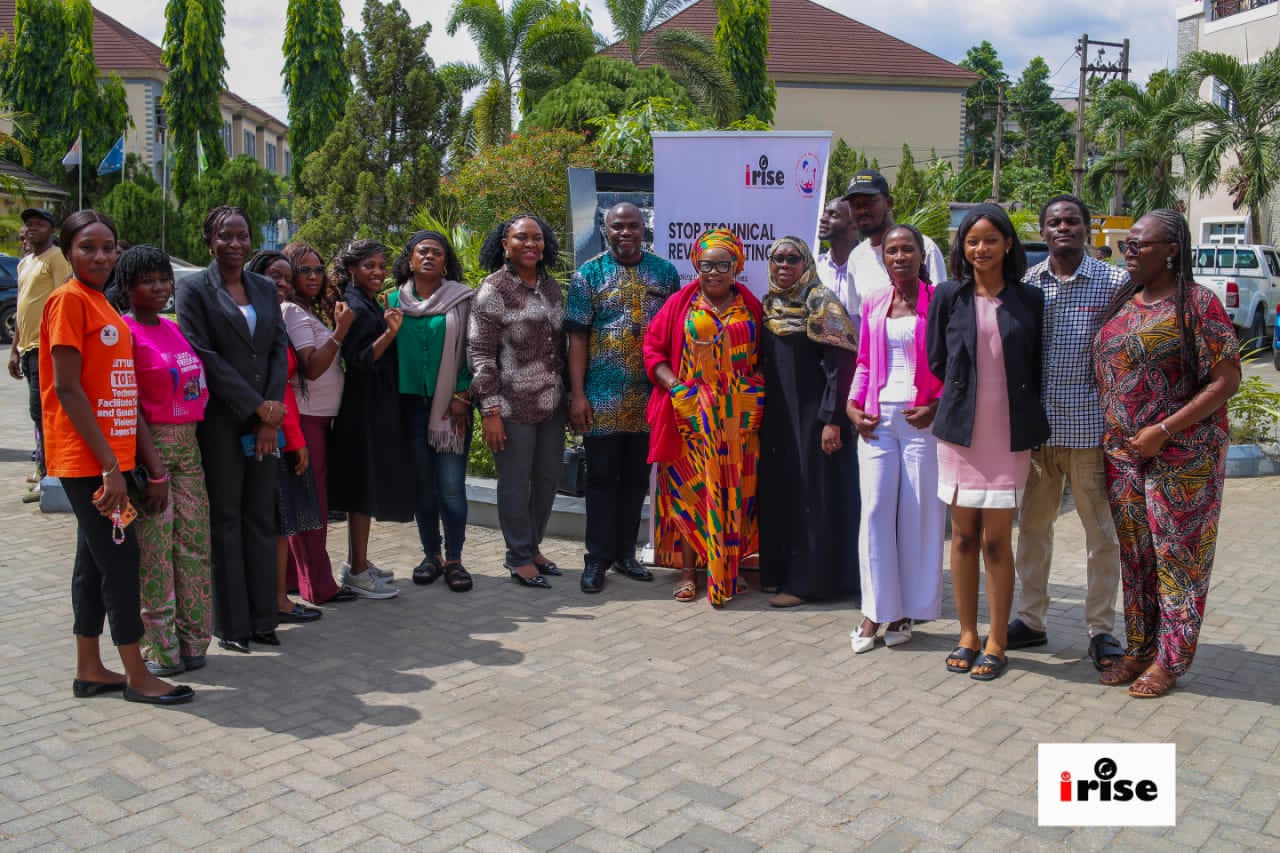
On Thursday, March 26, 2026, Key stakeholders in the health sector, including representatives from the Ministry of Health (MOH), Primary Health Care Board (PHCB), Domestic and Sexual Violence Agency (DSVA), Health Service Commission (HSC), and other health professionals, convened in Lagos for a Technical Review Meeting aimed at strengthening Sexual Reproductive Health Rights (SRHR) and the Lagos State Safe Termination Of Pregnancy (STOP) Guidelines.
The meeting which was organized by the Initiative to Resist Institutional Slavery and Exploitation (IRISE) in collaboration with the Society of Gynaecology and Obstetrics of Nigeria (SOGON), was held at Amber Residence, Ikeja GRA, and brought together policymakers, practitioners, and development partners committed to improving sexual and reproductive health outcomes in the state.
Speaking at the opening of the session, Mrs. Omodele Ibitoye Ejeh, Executive Director, IRISE, emphasized the need to bridge the gap between policy and practice. She noted that while guidelines and policies exist, many women and girls still face barriers in accessing clear, timely, and quality reproductive health services.
She said, “This meeting is about identifying what is not working, where the bottlenecks are, and how we can collectively develop practical solutions that ensure these guidelines truly serve the people they are meant for,” she stated.
Ejeh went further to inform the gathering about the nature of activities by her organisation. “At IRISE, we do a lot of our work in communities, in markets, in small group conversations, in safe spaces where women and girls speak honestly about their realities. And what we hear, again and again, is this: policies exist, guidelines exist, but access, clarity, and implementation still feel far away for the people who need them most. This gap, that space between what is written and what is lived is why we are here today.”
She said the meeting is not about rewriting what has already been done, but it is about asking honest questions: Where are the bottlenecks? What is not working as intended, where are we losing people along the way, and more importantly, how do we fix it, together? She said the STOP Guideline is not just a document, but a promise. A promise that women and girls in Lagos State can access, safe, respectful, and timely reproductive health services without confusion, stigma, or delay.
She challenged the participants to be practical and down to earth in their contributions to the discussions. “Today is about translating that promise into something practical, clear roles, realistic timelines, accountable systems, and Communication that actually reaches people.”
In appreciation, Ejeh expressed deep satisfaction with the level of participation and sincere contributions which were revealing. “What we have begun to shape today a clear implementation roadmap with defined roles, timelines, monitoring frameworks, and Communication strategies, this is where impact lives. This is where intentions become outcomes. But beyond the technical outputs, I want to bring us back to the human reason behind this work. Somewhere in Lagos, a young girl is trying to make a decision about her body and her future, a woman is navigating a system she does not fully understand. A service provider is trying to do the right thing within unclear or constrained structure. What we have done here today has the power to make those journeys clearer, safer and more dignified.
Ejeh called on all and sundry to join hands with her organisation in the onerous assignment of strengthening and improving Sexual Reproductive Health Rights and improve women’s health outcomes. “As IRISE, we are proud to hold this space, but we know clearly that this work does not belong to us alone, it belongs to all of us in this room, and to the systems we represent. So as we leave here, the real work continues, not just in documents, but in implementation, in follow-through, and in accountability to the communities.
Facilitating the session, Dr. Kehinde Okunade of SOGON highlighted that the STOP Guideline, first initiated in June 2022, represents a critical step toward addressing maternal health challenges in Lagos State. He stressed the importance of moving beyond policy development to effective implementation through coordinated stakeholder engagement.
Discussions during the meeting focused on the burden of Sexual Reproductive Health and Right (SHRH), Sexual Gender Based Violence, and the need for clearer operational structures. Participants noted that Nigeria continues to bear a significant share of global maternal mortality, with unsafe termination of pregnancies remaining a key contributor.
A major outcome of the session was the identification of critical bottlenecks affecting the use and implementation of the STOP Guidelines.
Participants agreed to address the bottlenecks in sexual reproductive health and right based healthcare services.
The meeting also resulted in a consensus on priority areas for improvement, including provider protection, supervision mechanisms, and clearer communication of legal and clinical indications.
IRISE reaffirmed its commitment to continued engagement with stakeholders on issues of sexual and reproductive health, sexual gender-based violence, maternal health, and women’s empowerment.
The Technical Review Meeting marked a significant step toward ensuring that the improvement of Sexual Reproductive Health Care evolve from policy documents into practical tools that improve access, safety, and outcomes for women and girls across Lagos State.