By Chesa Chesa
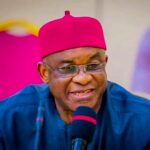
The Executive Chairman of the Nigeria Revenue Service, Zach Adedeji, on Tuesday lauded the sweeping fiscal and economic reforms of President Bola Ahmed Tinubu, describing them as the foundation for Nigeria’s ongoing institutional transformation.
Speaking at the commissioning of the Nigeria Revenue Service headquarters in Abuja, Adedeji said the new facility represents more than a physical structure, but a symbol of disciplined reform, institutional renewal, and a renewed fiscal vision for the country.
He noted that the Tinubu administration inherited a fragile economic environment marked by limited fiscal space, low investor confidence, and structural imbalances, but responded with what he described as a “comprehensive reset” of Nigeria’s economic architecture.
According to him, key policy decisions—such as the unification of the foreign exchange market, clearance of financial backlogs, and the restoration of transparency—have helped rebuild confidence in the economy and reposition Nigeria as a credible market-driven system.
Adedeji highlighted sweeping tax reforms undertaken by the administration, including the harmonisation of over 60 fragmented tax laws into a more coherent framework. He said the reforms have strengthened compliance, improved predictability, and boosted efficiency without increasing tax burdens.
“The outcome speaks for itself,” he said, noting that Nigeria has recorded historic domestic revenue performance as a result of improved systems, broader coverage, and enhanced governance.
He also cited improvements in fiscal governance through better remittance systems, tighter financial controls, and increased transparency, alongside trade modernisation initiatives such as the National Single Window. In the energy sector, he said the introduction of crude oil sales in naira has helped reposition the sector as a stabilising force for the economy.
Describing the reforms as transformative, Adedeji identified macroeconomic stabilisation, revenue system reform, and institutional strengthening as the three key pillars driving Nigeria’s recovery and long-term growth.
He praised President Tinubu’s leadership, noting that only a leader with “clarity of purpose, courage of conviction, and commitment to long-term national interest” could implement reforms of such scale and complexity.
The new headquarters, a 16-floor, three-tower complex with capacity for over 3,000 staff, is expected to enhance operational efficiency and service delivery within the Nigeria Revenue Service.
He emphasised that the building should serve as a centre of excellence, promoting transparency, innovation, and improved engagement between government and citizens.
“This is not an endpoint, but a foundation,” Adedeji said, adding that the true value of the facility would be measured by the efficiency it enables and the trust it builds.