From Maurice Okafor, Enugu
The Enugu State Government has called for a multi-sectoral approach to tackle and achieve the goal of ending open defecation across the state.
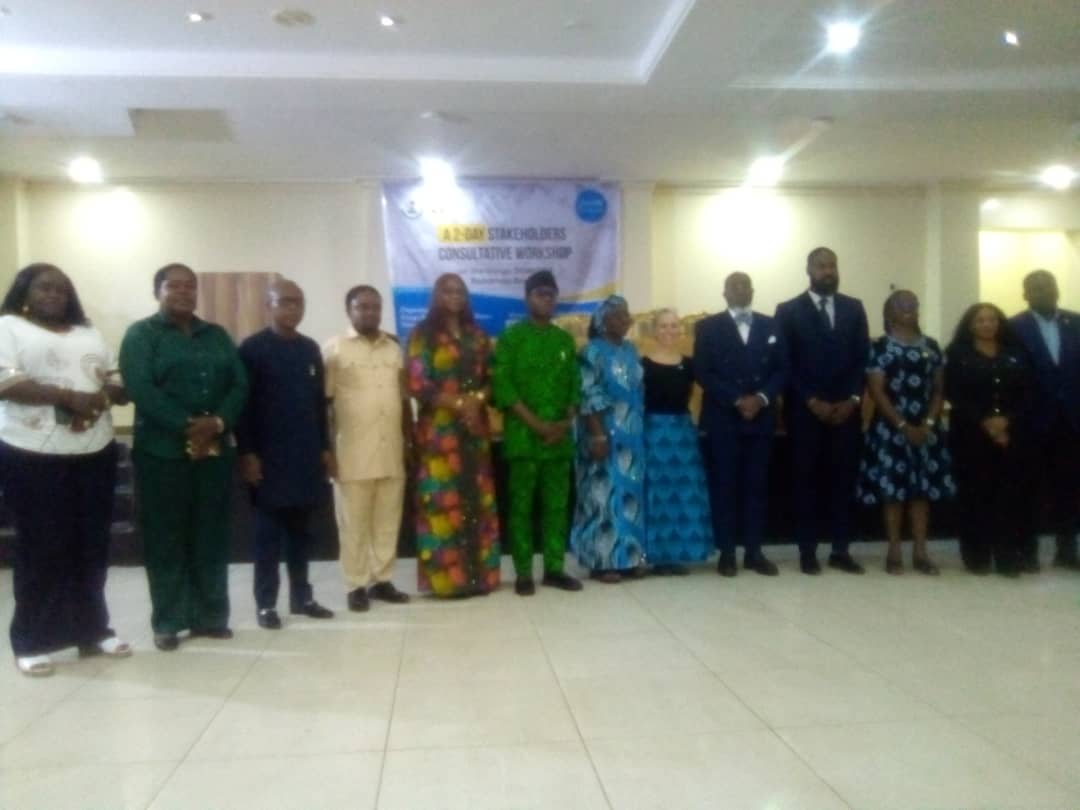
The Secretary to the State Government (SSG), Prof. Chinedu Onyia, made the call while declaring open a stakeholders’ consultative workshop on the state’s Open Defecation Free (ODF) roadmap review, held in Enugu from April 21 to April 22.
The workshop, organised by the State Ministry of Water Resources in partnership with UNICEF, aims to achieve total eradication of open defecation in all parts of the state between 2025 and 2030, following the conclusion of the first phase (2020–2025).
Prof. Onyia described the workshop as timely and stressed the need for collective ownership of the ODF agenda.
“The issue of open defecation is not merely an environmental concern; it is a public health emergency. It is also a major challenge for us as a state that prides itself on being development-focused, and it is a matter of human dignity,” he said.
“Its impact on sanitation, water quality, child health and community well-being cannot be overstated. Therefore, the validation of this roadmap is both timely and catalytic for us as a state.”
He noted that the practice runs contrary to Governor Peter Mbah’s zero tolerance for actions that undermine public health and environmental sustainability, urging participants to contribute expert and practical solutions to achieve ODF status in the shortest possible time.
“So, collectively, this plan must be owned by all stakeholders. I have made a commitment to the WASH team on how the state will intensify efforts, building on our track record of having open defecation-free local government areas,” Onyia added.
He emphasised that achieving an open defecation-free state requires collaboration among government, communities, development partners and the private sector, noting that discussions at the meeting highlighted the importance of private sector engagement.
The SSG disclosed that the government is developing strategies to involve private investors in establishing water, sanitation and hygiene (WASH) facilities in emerging urban centres across the state.
“We reaffirm our commitment to providing leadership, policy direction and an enabling environment necessary to achieve this goal,” he said.
Onyia commended UNICEF for its partnership with the Ministry of Water Resources in advancing the ODF agenda in the state.
In his welcome address, the State Commissioner for Water Resources, Engr. Ben Collins Ndu (Jnr), reiterated the commitment of the Mbah administration to ending open defecation, urging participants drawn from various local government areas to make meaningful contributions.
Speaking with newsmen, UNICEF WASH Chief, Engr. Emily Rand, said the organisation’s involvement stems from concern for the well-being of children. She expressed optimism that the 2025–2030 roadmap would record greater improvements than the previous phase.
Rand added that UNICEF is supporting the state through capacity building for officials involved in water, sanitation and hygiene programmes.
Also speaking, a representative of project consultants, Mangrove and Partners, Mr. Timeyin Uwejamomere, called for a review of existing laws on toilet provision in households, public institutions, commercial and social centres.
The consultants recommended the construction of improved public toilets with handwashing facilities in major urban areas, including Enugu metropolis, Nsukka, 9th Mile, Obollo-Afor and Agbani, in collaboration with private sector players.
They also stressed the need to prioritise sanitation services for vulnerable and underserved households, proposing the establishment of an Enugu State Sanitation Pool Fund, as well as savings and loan schemes to finance sanitation investments.
Similarly, the Coordinator of the Clean Nigeria Campaign, Mrs. Chioma Okpara, advocated a country where all citizens have access to water and use hygienic toilet facilities. She noted that the campaign is working to develop a unified ODF action plan across federal, state and local levels.
It will be recalled that in 2010, the United Nations General Assembly and the Human Rights Council recognised access to water and sanitation as a fundamental human right and a key determinant of development.
However, Nigeria continues to face significant challenges in the sector. According to UNICEF, about 60 million Nigerians lack access to basic water supply, while approximately 112 million do not have adequate sanitation, with about 47 million practising open defecation.