By Chuks Oyema-Aziken
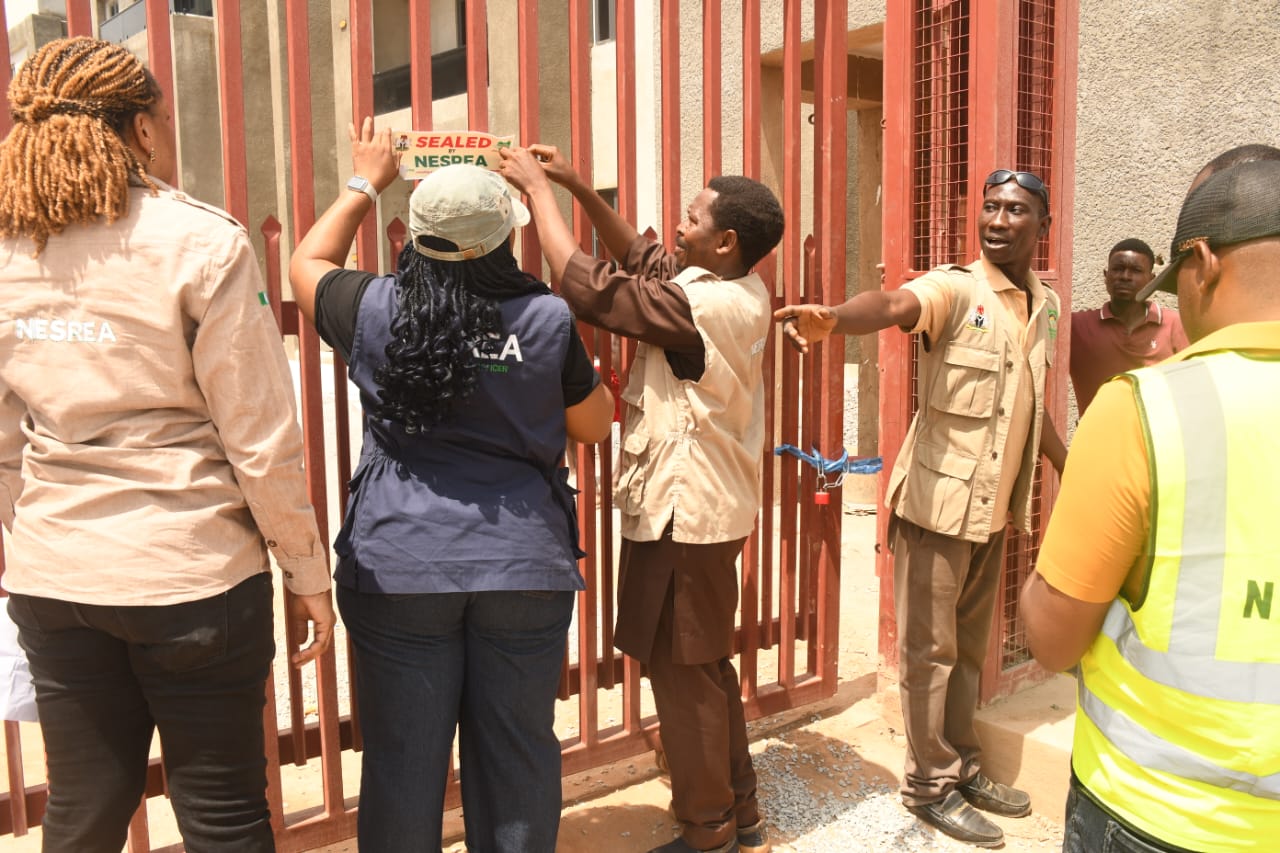
The National Environmental Standards and Regulations Enforcement Agency (NESREA) has sealed 30 construction sites across the Federal Capital Territory (FCT) for breaching the National Environmental (Construction Sector) Regulations, 2011.
The enforcement action, carried out on Tuesday, targeted operators accused of failing to comply with environmental standards guiding construction activities. The agency said the move was part of efforts to curb environmental degradation and ensure sustainable development within the nation’s capital.
Speaking through a statement issued by Assistant Director (Press), Nwamaka Ejiofor, the Director-General of NESREA, Innocent Barikor, expressed concern over what he described as the poor compliance culture among construction firms. He noted that several operators failed to meet regulatory requirements, particularly in environmental documentation and responsiveness to official compliance directives.
Barikor explained that although the construction sector plays a vital role in national development, it must be properly regulated to prevent hazards such as improper waste disposal, building on floodplains and environmentally sensitive areas, excessive dust emissions, unsafe handling of construction materials and chemicals, poor drainage systems, erosion, and other negative impacts on surrounding communities.
He warned that failure to comply with clearly communicated and time-bound regulatory requirements constitutes a serious breach, adding that such actions pose risks to both public health and the environment.
“The Regulations are designed to prevent harm before it occurs and to ensure that construction activities are managed responsibly from the onset. Environmental compliance is not a choice,” he said.
The agency assured that it would continue to enforce environmental laws fairly and consistently across the country, while urging stakeholders in the construction sector to cooperate in improving compliance and environmental performance.
The affected sites are located across key districts in Abuja, including Wuye, Jabi, Katampe, Jahi, Asokoro, and Airport Road, among others.