By Chesa Chesa
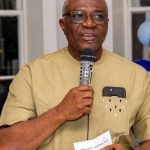
Senator Ede Dafinone, representing Delta Central Senatorial District in the National Assembly, says Nigeria’s democracy is gradually improving as citizens increasingly understand the power of their votes.
Dafinone, who is Chairman of the Senate Committee on Federal Character and Intergovernmental Affairs, said although Nigeria’s democratic journey remained far from perfect, successive elections since the beginning of the Fourth Republic in 1999 had shown significant progress.
Speaking on the Nigerian Television Authority’s (NTA) One on One programme with Cyril Stober, the senator said Nigerians were becoming more conscious of their civic responsibilities, particularly the need to register, obtain their Permanent Voter Cards (PVCs) and participate in elections.
He said: “The journey is a long one, and we are, in my opinion, still at the beginning of that journey. There are many Western democracies that are 200-plus years old. Nigeria, in that scheme, is still a very young democracy, and we are still learning to get it right.”
According to him, the country’s electoral process had witnessed gradual improvements from 1999 to the 2023 general elections. “Look at the elections that have been held from 1999 till date. There is a significant improvement with each passing election,” he said.
Dafinone recalled that the 2003 elections were characterised by allegations of irregularities, noting that the situation had changed considerably by 2023, when more Nigerians demonstrated greater awareness of the importance of participating in elections.
He said citizens now understood that they could use their votes to influence who represented them in government.
“Nigerians appreciate that they should register to vote, get the Permanent Voter Cards, and step out and vote on Election Day. The turnout of Nigerians coming out to vote with each election and understanding the issues to which they vote for is growing with each passing election”, he said.
The senator explained that the growing awareness had strengthened citizens’ understanding that they possessed a voice capable of determining the direction of government.
“Citizens appreciate that they do have a voice, and they do have a vote that they can use to control, direct, and put those in office who would speak for them,” he stressed.
While acknowledging that Nigeria’s democracy was “not perfect”, Dafinone expressed optimism that the country was gradually moving in the right direction.
He, however, noted that democratic participation in Nigeria extended beyond the Western-style electoral system, pointing to the role of traditional institutions and community governance structures.
According to him, traditional rulers continue to provide an additional avenue through which citizens can participate in governance and have their concerns represented; even as he cited his Delta Central Senatorial District as an example, explaining that communities operate through traditional structures in which community leaders report to dukes, who in turn report to the king.
“So we can talk about Western democracy and elections and voting and government, but there are other channels for people having a voice as well,” Dafinone said.
He stressed that these traditional governance structures remained relevant to the Nigerian context and complemented the formal democratic system.
Dafinone, a chartered accountant, industrialist, environmentalist, farmer and exporter, also serves as Vice Chairman of the Senate Legislative Compliance Committee.