By Myke Uzendu, Abuja
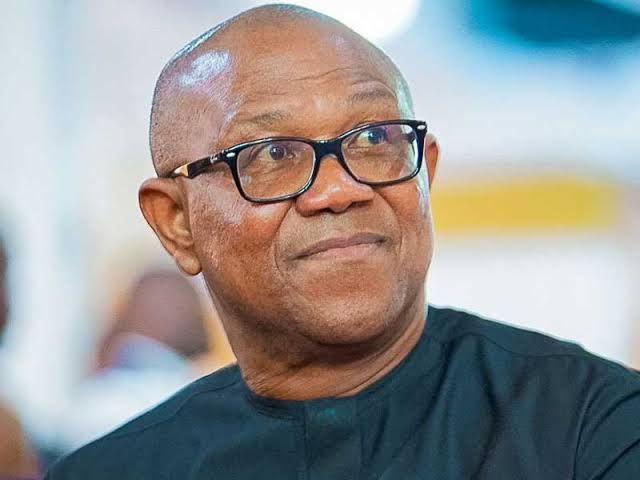
The presidential candidate of the Nigeria Democratic Congress (NDC), Peter Obi, has unveiled an economic and governance blueprint for the 2027 presidential election, promising to move Nigeria from consumption to production, tackle insecurity, reduce poverty and strengthen human capital development.
Obi, who spoke at a press conference on Friday to mark the commencement of the 2027 Presidential and National Assembly campaigns, said Nigeria could overcome its current challenges if led by competent, disciplined and accountable leadership.
He declared: “Nigeria can work, and Nigeria must work,” insisting that the country had the human and material resources required to achieve sustainable development.
The former Anambra State governor said the 2027 election offered Nigerians an opportunity to critically examine the records, competence and policy proposals of presidential candidates at a time the country was facing severe economic and security challenges.
According to him, more than 140 million Nigerians were living at or below the national poverty line, while millions faced food insecurity, displacement, unemployment and rising living costs.
“These are more than statistics,” Obi said. “They reflect the daily realities of Nigerian families, farmers, workers, students, and businesses.”
He argued that government must be judged by its ability to improve the lives of citizens, stressing that public office should be treated as a responsibility rather than a reward.
‘Nigeria must invest in its people’
Obi said his experience in the private sector and as governor of Anambra State had strengthened his conviction that public resources must be managed responsibly and directed towards clearly defined priorities.
He listed education, healthcare, infrastructure, fiscal discipline and institutional capacity as areas he prioritised while serving as governor.
He also highlighted the governing experience of his running mate, Senator Rabiu Musa Kwankwaso, particularly his emphasis on education, technical training, scholarships, infrastructure and human-capital development during his tenure as Kano State governor.
“Our experiences are different, but our conclusion is the same: Nigeria must invest in its people and manage public resources with discipline,” he said.
On the economy, Obi said his administration would prioritise production, investment, enterprise and human capital, while creating an environment where businesses could expand and create jobs.
He promised to improve agricultural productivity through better security, irrigation, rural roads, storage facilities, finance and market access.
He also pledged to strengthen manufacturing and agro-processing to enable Nigeria to export finished products and derive greater value from its natural resources.
“Every naira should have a clear purpose, and major public investments should have measurable outcomes,” he said.
Obi further declared that Nigeria could not “import its way to prosperity,” promising policies aimed at producing more of what Nigerians consume and processing more of what the country produces.
On insecurity, the NDC candidate said no country could prosper when citizens could not safely farm, travel, trade or conduct businesses.
He proposed improved intelligence gathering, better coordination among security agencies, stronger policing and border management, and greater use of technology.
He also advocated the decentralisation of security management, supported by strong coordination among the different levels of government.
“Farmers cannot produce food if they cannot reach their farms safely. Children lose the chance to learn when they cannot attend school safely. Businesses cannot create jobs when they cannot move goods securely,” he said.
Obi rejected the description of Nigeria’s large youth population as a burden, describing it instead as “an enormous opportunity.”
He promised to strengthen basic education, universities and technical and vocational training to equip young Nigerians with skills required by the modern economy.
According to him, Nigeria needs not only professionals such as doctors, engineers, scientists and lawyers, but also technicians, mechanics, nurses, farmers, programmers, artisans and entrepreneurs.
On healthcare, he promised to strengthen primary healthcare, improve maternal and child health, expand access to essential medicines and improve the capacity of healthcare workers.
He also outlined region-specific economic priorities, saying every part of Nigeria must become productive and benefit from the country’s economic transformation.
Obi urged Nigerians to reject political campaigns based on ethnicity, religion, elitism and cronyism.
He said the 2027 contest should instead be determined by “capacity, competence, compassion, character, and commitment.”
“Our campaign will focus on the urgent concerns of Nigerians and not on ethnicity or religion,” he said.
The NDC candidate also challenged other presidential candidates to make themselves available to Nigerians and subject their records and policy proposals to public scrutiny.
“No candidate should hide behind the high walls of power, send proxies or surrogates to the hustings, and expect Nigerians to entrust them with the leadership of the country,” he said.
Obi declared that presidential candidates must have the courage to travel across the country, meet citizens and respond directly to their concerns.
“True leadership requires presence and empathy,” he said, adding that leaders could not effectively govern communities they were unwilling to visit, listen to and understand.
He pledged that he and his running mate would personally take their campaign message to Nigerians rather than delegate the responsibility to proxies.
“I make this clear commitment: my running mate and I will take our message directly to Nigerians. We will listen to them, understand their concerns, and engage them openly,” Obi said.
He called on Nigerians to scrutinise every candidate’s record, demand evidence behind campaign promises and participate actively in the democratic process.
“Democracy does not end on election day,” he said. “Citizens must continue to demand transparency, accountability, and results from those entrusted with the mandate to govern.”
Obi concluded by promising to begin the process of “resetting Nigeria” by uniting the country, improving security, promoting inclusive economic growth and moving the nation from consumption to production.
“A New Nigeria is possible,” he declared.