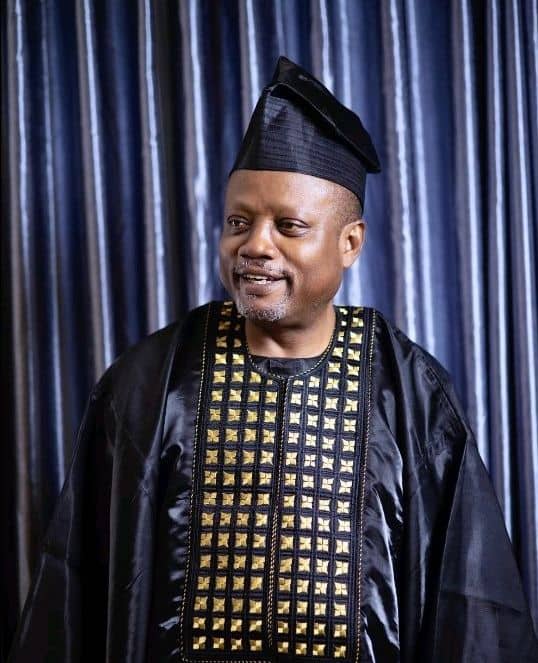
Pastor Peters Omoragbon
In the vibrant, often volatile marketplace of Nigerian politics, the voices of our religious leaders carry immense weight. When a man of God speaks, millions listen—not merely for spiritual guidance, but often for a compass by which to navigate the murky waters of civic duty. It is precisely because of this profound influence that the recent utterances and actions of the Catholic Bishop of Nsukka Diocese, Prof. Godfrey Onah, demand a sober, patriotic reflection.
Without prejudice to the constitutionally guaranteed freedom of expression or the right of every Nigerian—clergy included—to hold political opinions, there is a fine line between prophetic advocacy and partisan entanglement. Recently, the Bishop, reacting to the political climate, was quoted as saying, “Now that we all have been called infidels by a lunatic Sheikh, let do our 35 million votes count!” Furthermore, his disposition during a recent meeting between President Bola Ahmed Tinubu and the Catholic Bishops was seen by many as a public berating of the current administration regarding corruption and inefficiency.
While the frustration regarding governance in Nigeria is a sentiment shared across board, the methodology and tone of this engagement raise critical questions about the role of the clergy in a fractured democracy.
The Disingenuous Shepherd
The first point of concern is the apparent partisanship hidden under the guise of civic education. A Bishop is, by theological definition, a “father to all.” The flock in his diocese cuts across party lines—APC, PDP, Labour Party, and the undecided. When a spiritual leader subtly instigates a voting pattern based on a perceived slight from one individual (the so-called “lunatic Sheikh”), he risks reducing the sacred civic duty of voting to a tool of sectarian revenge.
It is one thing to encourage a congregation to register to vote, to get their PVCs, and to exercise their franchise. It is entirely another to cleverly marshal the “35 million votes” as a monolithic bloc to fight a religious war. This is not civic engagement; it is the weaponization of faith for political ends. It is disingenuous. The Bishop was not merely saying “go and vote your conscience”; he was saying “go and vote against them.” That is the language of a political operative, not a neutral arbiter of moral conscience.
Beyond the Numbers: The Failure of Leadership
Perhaps the most disappointing aspect of the Bishop’s charge is the shallow nature of the proposed solution. The call to “make the numbers count” suggests a strategy of numerical dominance rather than qualitative leadership. If the Christian community, or any religious group, feels marginalized, the solution is not merely to vote as a bloc for whoever the leadership points to.
A true leader would have said: “Our numbers are strong, but our participation is weak. I urge you to pick forms, join parties, contest for councillorship, chairmanship, governorship, and the presidency. Let us infiltrate the system with integrity and change it from within.”
Instead, the call seemed to end at the ballot box. This reduces the congregation to political pawns—useful for casting votes to make up numbers for an already chosen candidate, but not equipped to govern. If the Bishop truly wanted to liberate his people from bad governance, the pulpit should be converting congregants into candidates, not just voters.
The meeting at Aso Rock with the President should have been a golden opportunity for the Church to present a non-partisan blueprint for national healing. Instead, the optics suggested a confrontation.
One must ask: What parameters did the Bishop use to gauge the competence of the current administration versus the competence of whoever he is perceived to be supporting? Nigeria’s current economic woes—inflation, subsidy removal pains, and insecurity—are empirical realities. However, when criticism comes from a place of perceived ethnic or religious slight, the validity of the message is lost in the noise.
A Better Way: Constructive Engagement
As revered men of God with easy and unfettered access to the corridors of power, the expectation from the Bishops should be higher than public grandstanding.
Why did the Bishops not seek a private audience with the President to present the specific grievances of their flock? In diplomacy and in scripture (Matthew 18:15), we are taught to address offenses privately before public rebuke. A private, written memo detailing the economic suffering of the people, the security fears of the flock, and specific actionable requests would have been far more effective and statesmanlike than a public show that only serves to rile up ethnic sentiments.
Actionable Solutions for National Progress
As a Nigerian who is not a member of the President’s political party, but who has a patriotic duty to speak the truth, I offer these recommendations to the Church, the State, and the citizenry:
The Church as an Incubator, not a Campaign Ground: Religious bodies should institute leadership schools within their structures. Teach political science, public policy, and ethics. Encourage young professionals to join parties—not as “Christian candidates,” but as competent Nigerians who happen to be Christian.
From Protest to Proposal: Instead of public berating, religious leaders should compile “Policy White Papers.” The Catholic Bishops Conference has the intellectual capacity to produce a detailed socio-economic blueprint and submit it to the government. Let the debate be about ideas, not identities.
Interfaith Diplomacy: The clergy must actively preach against the “Us vs. Them” narrative. The Bishop’s comment about a “lunatic Sheikh” feeds the fire of religious conflict. Religious leaders must model how to disagree without disrespect.
Voting Beyond Sentiment: The laity must grow up. We must stop waiting for a Bishop to tell us who to vote for. We must analyze the candidates’ track records. We must ask: What is their economic policy? What is their stance on education? Our votes must be based on competence, not the religious affiliation of the candidate or the instruction of a cleric.
Government’s Open Door: The Federal Government should institutionalize regular, structured dialogues with religious bodies—not just during election seasons or crises, but as a standing advisory forum to build trust.
Conclusion
Nigeria’s unity is fragile, held together by the thin threads of tolerance and patriotism. When those who are supposed to be the salt of the earth and the light of the world become sources of division, we all stumble in the dark. The Bishop’s passion for his flock is acknowledged, but passion must be tempered with wisdom and fairness. The road to a better Nigeria is not paved with the bricks of ethnic or religious voting blocks, but with the cement of competence, justice, and a shared national vision.
Let us hold our leaders accountable—yes—but let us do so with clean hands and pure hearts, ensuring that our quest for power is not merely to replace one form of bigotry with another.
*Pastor Peters Omoragbon, a concerned Nigerian Diaspora Patriot rites from the United Kingdom