By Chuks Oyema
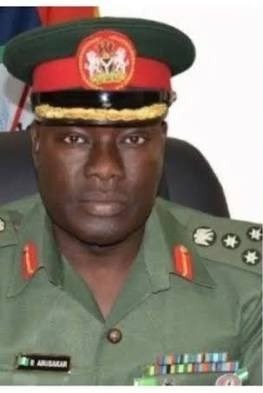
The death of retired Major General Rabe Abubakar in bandits’ captivity may prove to be more than another tragic statistic in Nigeria’s long-running security crisis. For many observers, it could become a defining moment that forces Northern Nigeria to confront the menace of banditry and terrorism with renewed urgency.
For years, communities across the North-West and North-East have suffered relentless attacks by bandits, terrorists and kidnappers. Thousands of citizens have been killed, abducted or displaced, while entire communities have lived under the shadow of fear and uncertainty.
Yet the death of Major General Abubakar appears to have struck a particularly sensitive nerve. The former Director of Defence Information was not an ordinary victim. He was a retired senior military officer who spent decades serving the country and was deeply familiar with Nigeria’s security architecture.
His abduction and eventual death have triggered a wider conversation about whether Northern Nigeria’s political, traditional and religious establishment will finally unite behind a more comprehensive strategy to defeat banditry and terrorism.
For many years, insecurity in parts of the North was often viewed as a problem affecting remote villages and poor communities. However, the kidnapping and death of a retired General has reinforced the reality that criminal gangs no longer distinguish between the powerful and the powerless.
If a retired Major General, former Defence spokesman and respected national figure could be abducted and die in captivity, many ask what protection exists for ordinary farmers, traders, students and rural residents who face similar threats every day.
The tragedy has also revived difficult questions about the root causes of insecurity in Northern Nigeria and whether enough has been done to address them.
Some analysts argue that while governments have spent enormous resources on military operations, insufficient attention has been devoted to the social and economic conditions that continue to feed criminality, radicalization and violent extremism.
One of the most controversial aspects of that debate concerns the almajiri system. While many scholars and community leaders regard the traditional system as an important avenue for religious education, critics contend that decades of neglect transformed parts of it into a social challenge involving millions of vulnerable children lacking access to adequate formal education, welfare and economic opportunities.
According to this school of thought, generations of young people have been left exposed to exploitation by criminal networks, extremist organizations and political actors willing to manipulate poverty and ignorance for their own purposes.
Some critics go even further, alleging that influential political and social elites have not done enough to reform the situation because a poorly educated and economically dependent population is easier to influence and mobilize. While such claims remain contentious and are strongly disputed by many Northern leaders, they have become an increasingly common feature of discussions about the region’s development challenges.
For those who hold this view, the death of Rabe Abubakar should serve as a wake-up call not only on security but also on education, poverty and governance.
They argue that defeating banditry will require more than military operations. It will require investments in schools, skills acquisition, job creation, social welfare and community development on a scale capable of reducing the pool of vulnerable youths available for recruitment by criminal groups.
Others believe the incident should compel Northern elites to speak with one voice against insecurity. They argue that too often political divisions, ethnic rivalries and local interests have prevented a unified response to a threat that affects everyone regardless of status or background.
History shows that societies sometimes experience turning points when violence reaches influential figures. Such moments often generate stronger public pressure for change than years of reports and casualty figures.
The death of the retired General has therefore become symbolic of a broader reality confronting the North: no individual, community or social class is immune from the consequences of insecurity.
For military veterans and serving personnel, the tragedy carries even deeper significance. Many see it as an attack on a man who dedicated his life to defending the nation and helping shape Nigeria’s security institutions.
The Defence Headquarters has already declared that the incident strengthens the resolve of the Armed Forces to intensify operations against terrorists, bandits and kidnappers. Security agencies have similarly vowed to pursue those responsible and dismantle the networks behind such crimes.
However, many observers insist that military action alone cannot provide a lasting solution. They argue that the battle must also be fought in classrooms, communities, religious institutions and economic development programmes.
The North possesses some of Nigeria’s most influential traditional rulers, respected religious leaders, accomplished professionals and experienced political figures. The question being asked in the aftermath of Abubakar’s death is whether these stakeholders will now mobilize with the same intensity against insecurity as they do during political contests and electoral campaigns.
In many respects, the challenge goes beyond banditry. It is about whether the region can confront decades-old structural problems that have contributed to cycles of poverty, exclusion, illiteracy and violence.
As tributes continue to pour in for Major General Rabe Abubakar, many Nigerians are hoping that his death will not merely be mourned but will become a catalyst for meaningful action.
Ultimately, the significance of his passing may not be measured only by the sadness it has generated, but by whether it inspires a broader movement across Northern Nigeria to confront both the symptoms and the root causes of insecurity.
If that happens, the late General’s final sacrifice may help galvanize a stronger regional and national resolve against banditry, terrorism and the social conditions that allow them to thrive.
Chuks Oyema wrote in from Abuja