By Abbanobi-Eku Onyeka
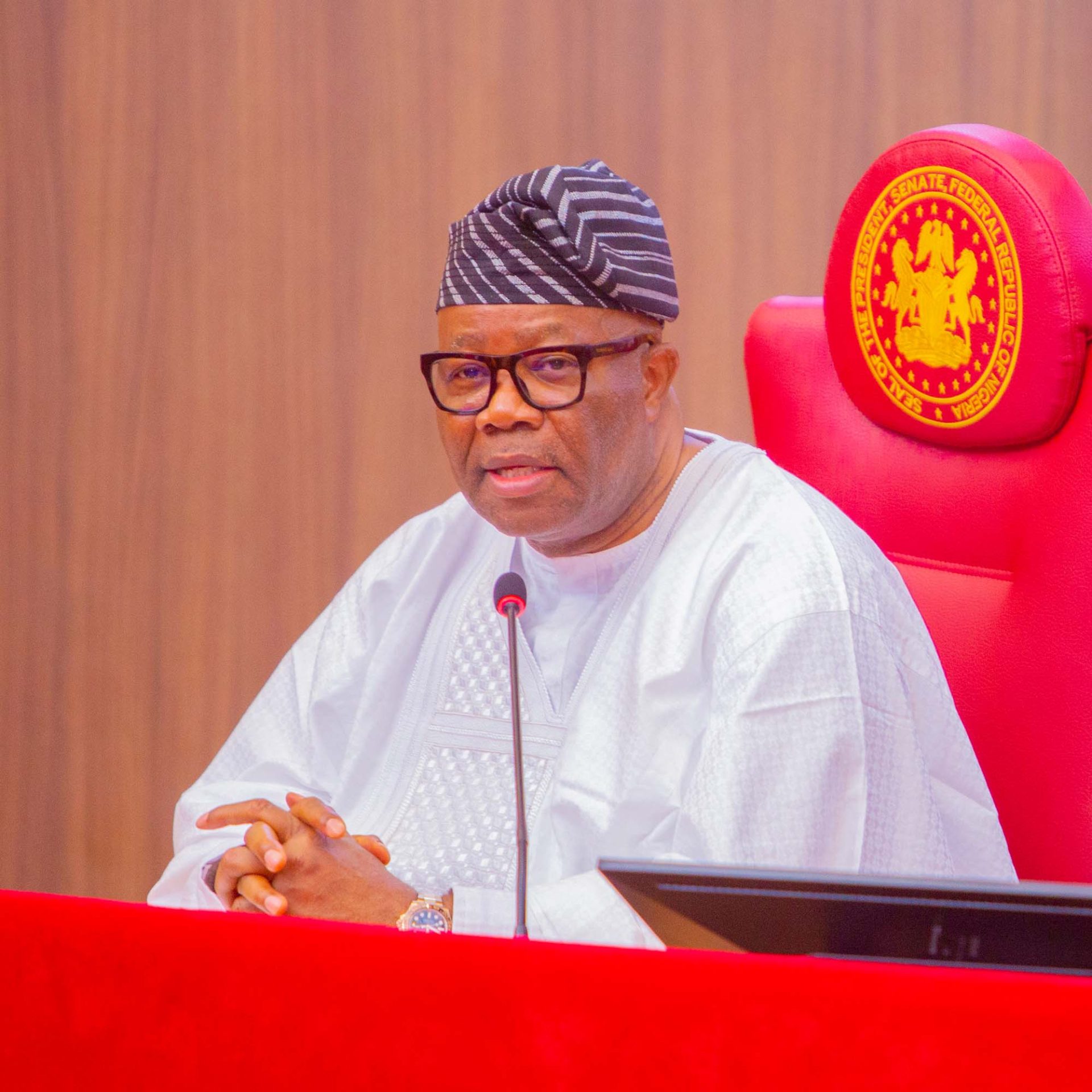
President of the Senate, Senator Godswill Akpabio, has challenged journalists covering the National Assembly to raise the standard of parliamentary journalism in Nigeria through accurate, professional and responsible reporting of legislative activities.
Akpabio stressed that effective parliamentary reporting requires a sound understanding of the Constitution, parliamentary rules, legislative procedures and the responsibilities of the legislature to the Nigerian people.
He gave the charge at the 2026 Capacity-Building Workshop organised by the Senate Press Corps at the National Assembly, with the theme, “Leveraging Legislative Oversight and Media Collaboration to Safeguard the National Budget from Unlawful Insertions.”
Represented by the Chairman of the Senate Committee on Media and Public Affairs, Senator Yemi Adaramodu, the Senate President described the workshop’s theme as one that went to the heart of representative government.
He said journalists covering the Senate had a special responsibility because the legislature played a central role in lawmaking, representation, oversight and the management of public resources.
According to him, parliamentary reporters must be thorough, knowledgeable and responsible in reporting proceedings and explaining legislative activities to the public.
“The public depends heavily on the media to understand what happens within the legislature. That responsibility requires professionalism and accuracy,” he said.
Akpabio emphasised that journalists could not accurately report an institution they did not understand, urging National Assembly correspondents to familiarise themselves with the Constitution, Standing Orders, parliamentary procedures and legislative processes.
He explained that such knowledge would enable reporters to interpret proceedings correctly rather than merely reproduce isolated statements made by lawmakers.
“Parliamentary journalism requires context. A reporter must understand why a motion is being moved, what a committee’s mandate is, how legislative oversight works and the procedures through which bills, budgets and other matters pass,” he said.
On the workshop’s focus on preventing unlawful insertions into the national budget, Akpabio said the subject was fundamental to representative democracy, noting that the legislature and the media had complementary responsibilities in promoting accountability.
“Parliament must guard the public purse, while the press must illuminate the public record. Both institutions ultimately answer to the Nigerian people, from whom all public authority comes,” he said.
He described the national budget as a critical instrument of governance, explaining that it determines the allocation of public resources and provides the framework for funding government programmes and projects.
He, therefore, urged journalists covering the budget process to develop the skills required to scrutinise budgetary issues, report them accurately and explain their implications to Nigerians.
Akpabio also underscored the importance of media participation in legislative oversight, saying the public deserved to understand the activities of Parliament, including investigations conducted by committees and the findings arising from them.