By Pwanagba Agabus, Jos
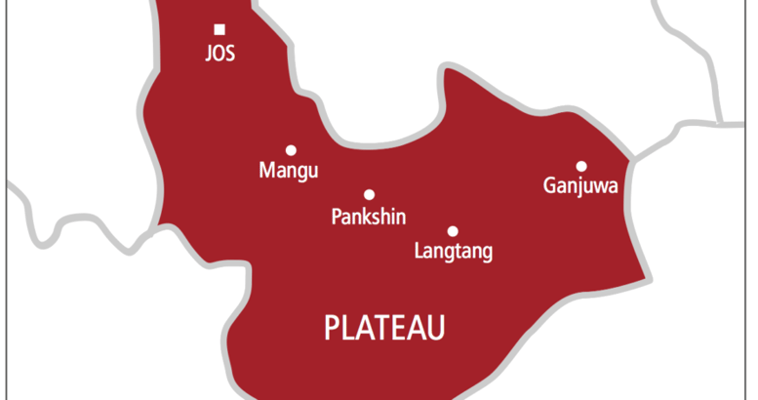
Governor Caleb Mutfwang of Plateau State, has delivered a thought-provoking lead paper outlining practical strategies for addressing the persistent security challenges confronting Nigeria and other African countries, drawing from the experiences of rural communities in the State.
Mutfwang delivered the lead paper at a crisis management seminar organised by the Directorate of Simulation and Crisis Management in collaboration with the National Institute for Security Studies, NISS, for participants of the Executive Intelligence Management Course 19, EIMC 19, 2026.
The seminar, themed “Crisis Management Strategies for Addressing Ethnic Militias and Resource Competition in Africa: Implications for National Security,” held at the Rivers Learning Centre, National Institute for Security Studies, Bwari, Abuja.
Taking participants through the historical evolution of human settlements and social organisation, Mutfwang traced contemporary security challenges to the complex relationship between population growth, competition for resources and the struggle for survival.
He explained that as human communities expand, pressure on available resources intensifies, often creating tensions that, if left unmanaged, can escalate into violent conflicts.
Mutfwang observed that the convergence of resource competition with the desire of communities to preserve their existence, protect their identities and secure political influence has frequently resulted in violent contestations.
He explained that ethnic militias often emerge within these circumstances, although their roles and the implications of their activities vary according to the context and the interests they serve.
The Governor emphasised that ethnic militias and competition over natural resources constitute a global security challenge, affecting countries across different continents, including parts of Asia and Africa.
He noted that such conflicts often result in communal violence, forced displacement, destruction of property, the breakdown of social cohesion and ethnic segregation, with far-reaching consequences for national stability and human security.
Drawing from the State’s experience, Mutfwang cautioned against mischaracterising the nature and underlying causes of violent conflicts.
He observed that although some interpretations have framed the violence in Plateau as herder-farmer clashes, a comprehensive understanding of the situation requires a careful examination of the circumstances, patterns and motives behind individual attacks.
He challenged security practitioners and policymakers to interrogate the realities on the ground, asking how attacks on sleeping communities and the forcible displacement of indigenous populations from their ancestral lands could be adequately explained without a thorough investigation of the actors, motives and broader context involved.
The Governor cited the March 2010 attack on Dogo Nahawa, also known as Dyemburuk, in which more than 500 people were reportedly killed, as a tragic reminder of the devastating consequences of communal violence.
He also recalled the coordinated attacks on communities in Bokkos Local Government Area on Christmas Eve in 2023, which left families bereaved, communities traumatised and residents in deep anguish.
He stressed that such incidents demand a security response informed by accurate intelligence, a clear understanding of local realities and an unwavering commitment to protecting innocent lives and property.
Mutfwang identified several interconnected factors driving communal conflicts and insecurity across Africa. These include competition for scarce natural resources; population growth and demographic pressure; migration and population movements; the political manipulation and sponsorship of ethnic militias; struggles for political power and territorial control; and the proliferation of small arms and light weapons.
To address these challenges, the Governor outlined a range of practical measures, including strengthening good governance and inclusive political participation; ensuring the equitable distribution of resources; improving early-warning and early-response mechanisms; promoting dialogue, mediation and reconciliation; enhancing the capacity and responsiveness of security institutions.
Others also include; curbing the proliferation of small arms and light weapons. He further advocated deliberate action to address poverty, unemployment and youth radicalisation, alongside stronger political will, improved inter-agency coordination, strategic communication and decisive measures to counter misinformation.
The Governor stressed that effective crisis management requires more than reactive security operations, noting that sustainable peace can only be achieved when governments confront the root causes of conflict while building public trust, strengthening institutions and promoting inclusive development.
He commended the professionalism of the Department of State Services, DSS, Plateau State Command, for intensifying intelligence gathering and maintaining a professional approach in responding to the prevailing security situation.
He emphasised that timely intelligence, effective collaboration and responsible communication remain indispensable to preventing violence, protecting vulnerable communities and restoring public confidence in security institutions.
He called for a deliberate shift from reactive interventions to preventive strategies that address the underlying drivers of conflict and create conditions for lasting peace and stability.
The Commandant of the National Institute for Security Studies, J. O. Odama, commended Governor Mutfwang for his thought-provoking presentation, expressing confidence that the insights shared would deepen participants’ understanding of the complex security challenges confronting Nigeria and the wider African continent, while enriching their capacity to develop practical and sustainable approaches to crisis management.
Mutfwang outlines security strategies, warns against mischaracterising Plateau violence