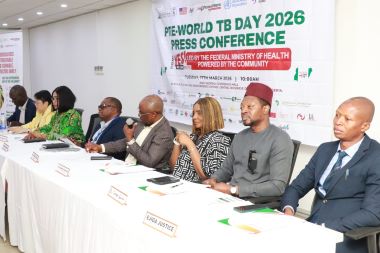
Despite the success and the progress made in the fight against Tuberculosis (TB) over the years, the burden of the disease still remains high in the country.
This was the consensus of the federal government and critical stakeholders in the fight against TB at a media briefing to mark the World TB Day in Abuja, yesterday.
Speaking, the Director, Public Health at the Federal Ministry of Health and Social Welfare, Dr. Charles Nzelu, announced that even though Nigeria has witnessed significant increase in TB case notification, the federal government is, however, not comfortable with the high burden.
He, however, revealed that the federal government has introduced innovations in an effort to bridge the gap, hence, checkmate the high burden.
Dr. Nzelu revealed that: “This year, the National Tuberculosis and Leprosy Control Programme (NTBLCP) is spearheading the national rollout of the Pluslife Mini Dock diagnostic platform.
“This near-point-of-care technology is a game-changer, allowing us to bring molecular-grade testing to the most remote communities, ensuring that no Nigerian is left behind due to geography. Nigeria is rolling out over a thousand of this diagnostic equipment.
“But technology is only as strong as the systems that support it. We are currently focused on strengthening our electronic reporting systems to ensure real-time data flow from the facility level to the national dashboard. This transparency allows us to manage our supply chain effectively and prevent stock-outs of life-saving medicines.”
While commending the support of partners through the Global Fund, the Director Public Health reiterated that: “No Nigerian should pay for TB services at any government-approved facility.”
On her part, the Board Chair, Stop TB Partnership Nigeria, Dr. Queen Ogbuji-Ladipo, said despite the challenges faced in the fight against the disease, Nigeria has made remarkable progress through partnerships, innovation and sustainable advocacy.
She applauded the increasing commitment from state governments, parliamentarians, and community leaders who, according to her, “are increasingly recognising TB not only as a health issue but also as a development and economic challenge that requires urgent and sustained action.”
While noting that much more still needs to be done, Dr. Ladipo lamented that the global health financing landscape is changing, and donor support is becoming increasingly constrained.
This reality, she stressed, “makes domestic resource mobilization for TB more important than ever before. Sustainable financing from government budgets, private sector contributions, and innovative financing mechanisms will be critical to sustaining TB programs and ensuring that no Nigerian is left behind in accessing TB prevention, diagnosis, and treatment services.”