By Chuks Oyema-Aziken
Nigeria is ramping up its clean cooking programme as a key pillar of its climate strategy, targeting up to $3 billion annually in climate finance over the next decade, while tightening regulatory oversight of carbon projects to rebuild investor confidence.
The push follows heightened scrutiny of voluntary carbon markets over weak verification standards, transparency gaps and risks of double counting, especially after setbacks in Africa, including the collapse of a carbon project developer in Kenya.
In response, Nigeria is strengthening its carbon market framework under the National Carbon Market Activation Policy and supporting regulations aimed at improving credibility and accountability.
At the centre of this framework is the National Council on Climate Change, which serves as the approving authority for carbon projects and issues Letters of Authorisation required for emissions reductions to be formally recognised.
These approvals ensure that carbon credits generated within Nigeria are properly accounted for under the Paris Agreement, particularly within its Article 6 provisions governing international carbon trading.
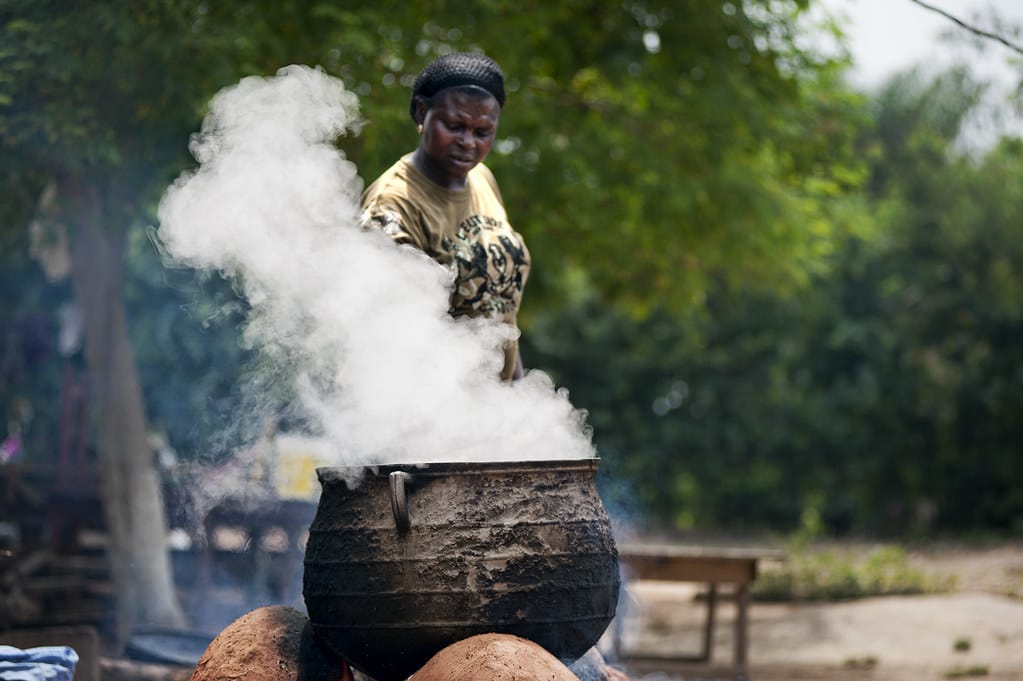
Clean cooking has emerged as a flagship component of the policy, reflecting both Nigeria’s emissions profile and development challenges, with more than 80 per cent of households still dependent on biomass fuels such as firewood and charcoal.
“This policy is not just a framework; it is a clarion call for collective action and investment in our future,” said Adebayo Lawrence Thomas, Director of Press, Information and Public Relations at the Ministry of Information and National Orientation. “Our efforts reflect our ambition to create a replicable model for carbon market development across Africa.”
To bridge affordability gaps, carbon finance is being deployed to subsidise cleaner cooking technologies, making them accessible to low-income households while reducing emissions and health risks.
One of the major players in the sector is BURN, which produces fuel-efficient stoves and generates revenue by selling verified emissions reductions as carbon credits.
The company has operated in Nigeria for about five years, distributing roughly one million cookstoves and reaching more than 1.4 million people, using carbon finance to significantly reduce end-user costs.
At a recent roundtable, Olamide Fagbuji, Senior Special Assistant to the President on Climate Technology and Operations, described clean cooking as a practical transition capable of delivering both climate and health benefits if properly scaled.
He noted that aligning technology, financing, standards and local manufacturing could accelerate Nigeria’s climate and energy commitments.
Also speaking, Senior Special Assistant to the President on Climate Finance and Stakeholder Engagement, Ibrahim Shelleng, said the priority is converting policy momentum into bankable programmes backed by credible monitoring and clear rules.
The Federal Ministry of Industry, Trade and Investment has also backed the initiative, stressing that regulatory clarity and investment incentives will be key to expanding private sector participation.
Despite the progress, Nigeria still faces the challenge of translating its policy framework into large-scale implementation, particularly in expanding access to clean cooking solutions nationwide.
Globally, inefficient cooking accounts for nearly one gigatonne of carbon dioxide-equivalent emissions annually, making it one of the largest untapped climate mitigation opportunities in developing economies.