By Felix Khanoba
The Federal Government has commenced payment of the Consolidated Academic Tools Allowance (CATA) and Consolidated Non-Teaching Tools Allowance (CONTA) to eligible staff of tertiary institutions across the country, in a move aimed at improving workers’ welfare and strengthening industrial harmony.
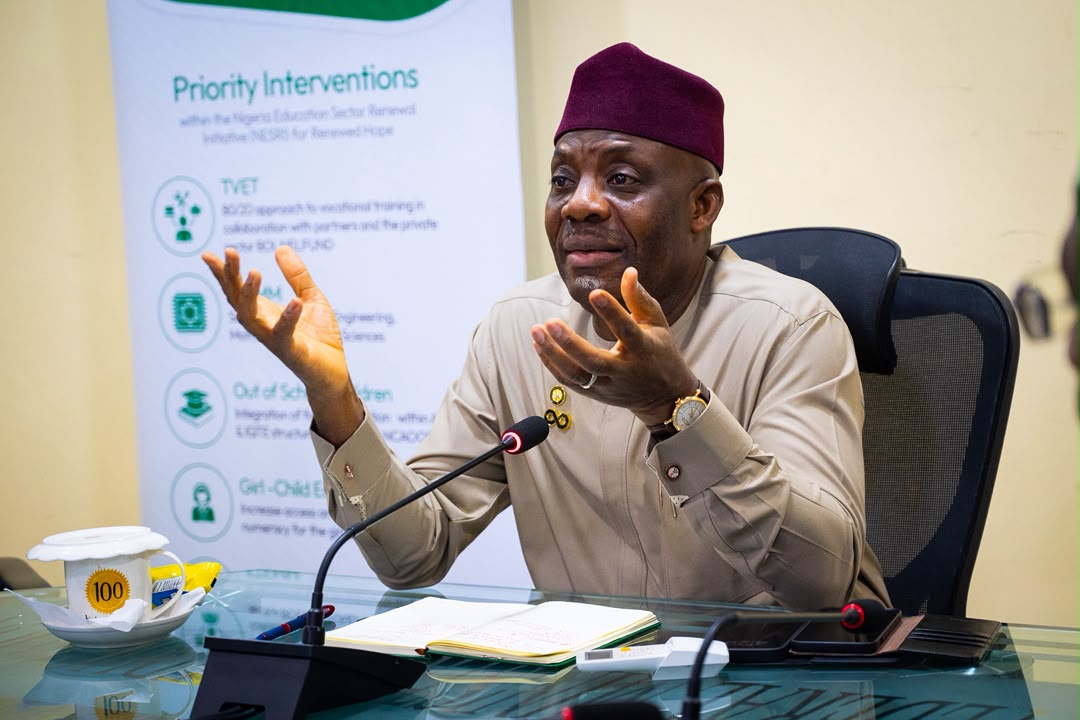
The Minister of Education, Dr Tunji Alausa, disclosed this on Tuesday in Abuja during the unveiling of the 2026 agreements between the Federal Government and academic and non-academic staff unions in tertiary institutions.
Alausa said the allowances, which took effect from January 2026, were introduced to support the professional and operational needs of eligible personnel in universities, polytechnics and colleges of education.
He described the unveiling of the agreements as a significant step towards addressing longstanding disputes between the government and unions, restoring mutual confidence and ensuring stability in the tertiary education system.
The minister acknowledged that previous agreements had suffered implementation setbacks, leading to recurring disagreements and prolonged industrial actions that disrupted academic activities across the country.
“For decades, agreements between government and staff unions were followed by delays, incomplete or unfulfilled commitments.
“Trust weakened, disputes resurfaced, and prolonged industrial actions repeatedly disrupted the academic calendars of our universities, polytechnics and colleges of education,” he said.
According to him, the consequences of the disruptions extended beyond the institutions, as students lost valuable learning time, families incurred additional expenses and teaching and research activities were affected.
He said the latest agreements were expected to address some of these challenges and support President Bola Tinubu’s commitment to ensuring that students complete four-year academic programmes within four years.
Alausa assured the unions that the government would honour its obligations under the agreements, stressing that effective monitoring would be essential to achieving the intended results.
As part of the implementation measures, he announced plans to expand the existing committee responsible for monitoring the implementation of agreements with the Academic Staff Union of Universities (ASUU).
“Government has decided to expand the existing implementation and monitoring committee established for the Academic Staff Union of Universities (ASUU) into a single committee responsible for monitoring all agreements with academic and non-academic staff unions across tertiary institutions.”
The minister explained that the expanded committee would accommodate a wider range of unions and relevant stakeholders to improve oversight and ensure that outstanding issues were addressed promptly.
He added that the government would consider making the committee permanent to strengthen its capacity to monitor compliance and resolve implementation challenges.
Alausa urged government agencies, governing councils and managements of tertiary institutions to comply with the implementation guidelines, keep accurate records and cooperate with the monitoring committee.
He also advised union leaders to use established channels to resolve grievances instead of resorting to public confrontations or strikes.
“I urge all parties to remain committed to the principles of fairness, transparency, discipline and industrial harmony,” he said.
The minister commended the leadership of ASUU, the Academic Staff Union of Polytechnics (ASUP), the Colleges of Education Academic Staff Union (COEASU) and non-teaching staff unions for their contributions to the negotiations.
He said the agreements would be reviewed after three years, in accordance with provisions allowing either the government or the unions to initiate further discussions.
Earlier, the Chairman of the Federal Government Tertiary Institutions Expanded Negotiation Committee, Alhaji Yayale Ahmed, praised both parties for reaching agreements through dialogue and mutual understanding.
Ahmed said the negotiations were conducted through collective bargaining, mutual respect and a willingness to accommodate the concerns of the government and the unions.
He urged the unions to exercise patience during implementation, noting that government administrative processes could take time.
He also called for the harmonisation of identified discrepancies in the agreements to prevent any union from feeling disadvantaged.
In his remarks, the President of the Senior Staff Association of Nigerian Universities (SSANU), Mr Mohammed Ibrahim, commended Alausa for his role in addressing longstanding issues affecting workers in tertiary institutions.
Ibrahim said the payment of outstanding salary arrears and the implementation of the allowances had boosted workers’ morale.
However, he urged the Federal Government to ensure that all provisions of the agreements were fully implemented, emphasising that the payment of allowances should not overshadow other outstanding commitments.
He expressed optimism that the inauguration of the joint implementation and monitoring committee would help facilitate the timely resolution of pending issues and improve relations between the government and unions.