By Felix Khanoba
The Universal Basic Education Commission (UBEC) says it has entered a new phase of reforms aimed at transforming Nigeria’s basic education sector, with more than N100 billion in previously unaccessed matching grants now unlocked for states and the Federal Capital Territory to improve school infrastructure.
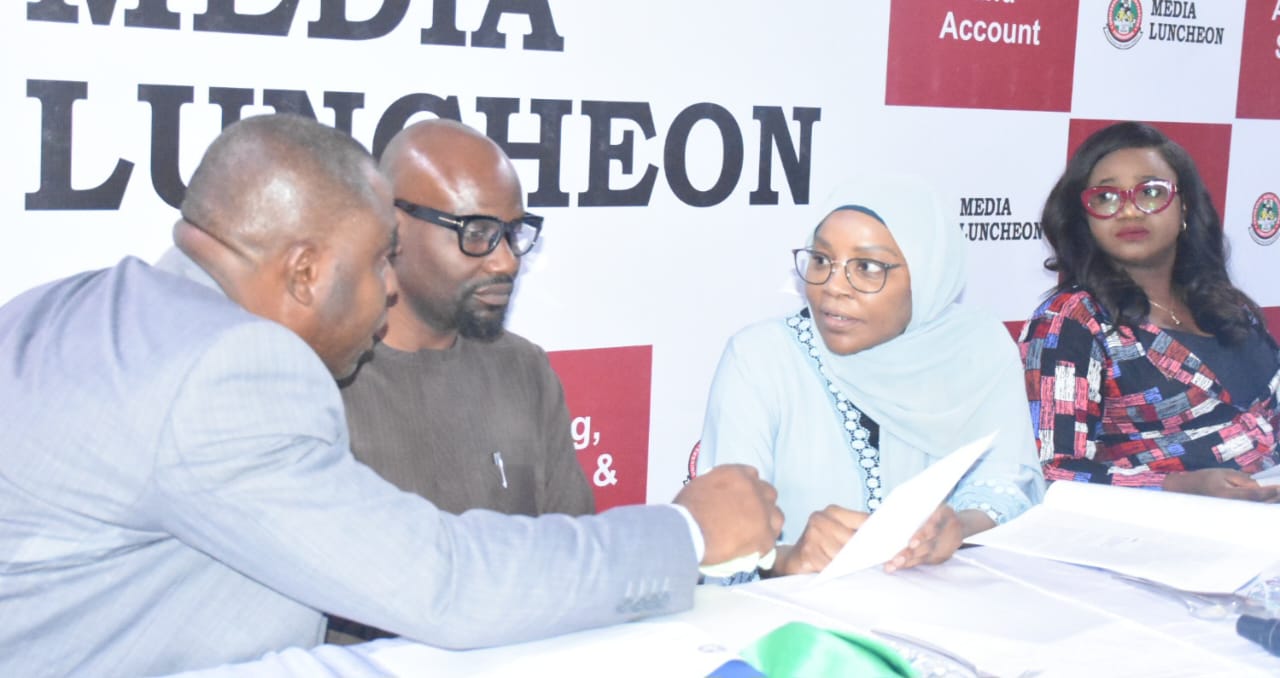
Speaking at a media luncheon with education correspondents in Abuja on Thursday, the Executive Secretary of UBEC, Aisha Garba, said the intervention forms part of the commission’s 2025–2031 Strategic Blueprint, which aligns with the Federal Government’s Renewed Hope Agenda to improve learning outcomes across the country.
Garba said the commission had shifted its focus from policy reforms to measurable results, stressing that the recovered funds were already being channelled into upgrading schools and creating a more conducive learning environment for millions of pupils.
According to her, the intervention, implemented in partnership with State Universal Basic Education Boards (SUBEBs), has resulted in the construction of over 4,600 classrooms and the renovation of more than 6,100 others nationwide.
She added that the projects also include the provision of 2,780 toilets, 678 boreholes and over 334,000 pieces of classroom furniture to improve teaching and learning conditions in public schools.
Garba disclosed that UBEC has also established more than 2,300 Early Childhood Care Development and Education (ECCDE) centres to provide young learners with a solid educational foundation before entering primary school.
Highlighting efforts to improve education quality, the UBEC boss said the commission invested over ₦20.4 billion in teacher professional development, school leadership and accountability initiatives, including the Effective Schools Programme and strengthened School-Based Management Committees.
She noted that the commission is also preparing pupils for the future through the expansion of Digital Literacy Centres, Smart Schools and programmes in Artificial Intelligence, coding and robotics.
To complement these initiatives, she said UBEC has distributed more than 7.8 million instructional materials to schools across the country to strengthen literacy, numeracy and foundational learning.
Garba said the commission’s intervention extends beyond infrastructure to promoting inclusive education through Open Schooling, Integrated Qur’anic and Tsangaya Education, girl-child education and programmes targeting children with special needs.
She explained that institutional reforms introduced by the commission are designed to improve transparency, project monitoring and data-driven decision-making to ensure greater value for investments in basic education.
The Executive Secretary, however, stressed that the gains recorded in the sector would require stronger financial commitment from state governments.
With about 40 million pupils enrolled in basic education and millions more still out of school, she urged state governments to increase education funding beyond the current five per cent intervention level.
Garba explained that half of UBEC’s intervention funds are dedicated to infrastructure development, school maintenance and service delivery, while advocating the adoption of direct school financing to enable school administrators undertake routine maintenance and address urgent needs promptly.
She also called for closer collaboration among governments, communities, parents and development partners to boost school enrolment, improve learning outcomes and ensure that every Nigerian child has access to quality basic education.
Describing the media as a strategic partner, Garba said journalists play a vital role in promoting transparency, accountability and public confidence in education reforms.
“As we continue this journey, we count on the media as trusted partners. We look forward to regular engagement through media briefings, project visits and success stories that showcase both our achievements and the work that still lies ahead,” she said.
Earlier, Chairman of the Nigeria Union of Journalists (NUJ), FCT Council, Grace Ike, commended UBEC for creating a communications department and urged the commission to sustain regular engagement with education correspondents through periodic briefings, training programmes and project inspection visits.
Similarly, Chairman of the Education Correspondents Association of Nigeria (ECAN), Chuks Ukwuatu, welcomed the initiative, describing it as the commission’s first direct interaction with education reporters. He appealed for greater inclusion of journalists in field visits outside Abuja to enhance accurate and comprehensive reporting of UBEC projects nationwide.