By Chuks Oyema-Aziken
The Office of the National Security Adviser (ONSA) and the Defence Correspondents Association of Nigeria (DECAN) have pledged to strengthen collaboration aimed at promoting responsible journalism, enhancing public understanding of national security issues and building public confidence through effective communication.
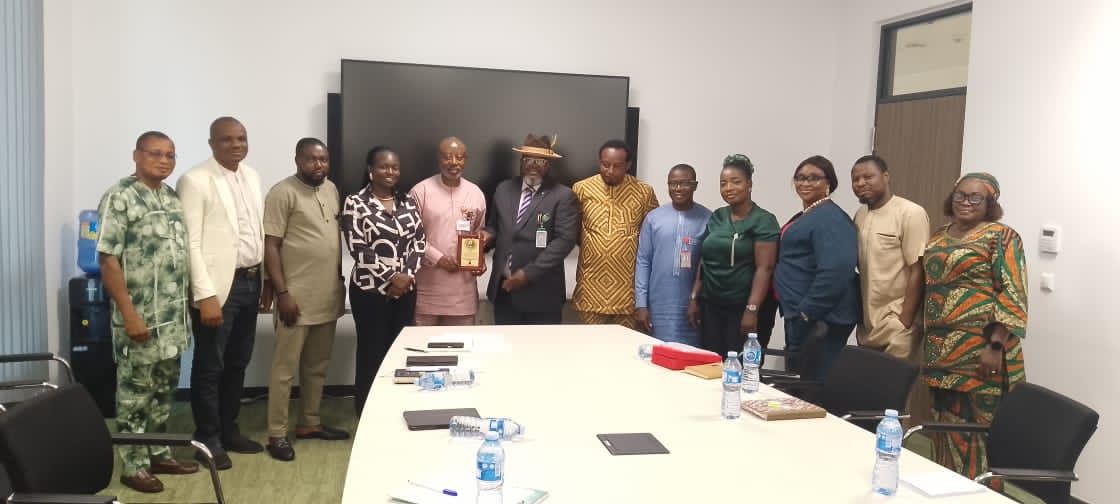
The commitment was reaffirmed during a courtesy visit by the leadership of DECAN, led by its President, Chief Odita Sunday, to the Special Adviser on Strategic Communication and Civil Society Liaison to the National Security Adviser, Dr. Chido Onumah, in Abuja on Wednesday. The visit formed part of the association’s efforts to deepen engagement with critical stakeholders in the defence and security sector.
Speaking on the outcome of the meeting, DECAN General Secretary, Musa Umar Bologi, said the association remains committed to supporting the Office of the National Security Adviser through professional, factual and balanced reportage. He noted that the visit provided an opportunity to discuss ways of strengthening cooperation between journalists and security institutions for the benefit of national development.
Addressing the meeting, Odita expressed appreciation to Dr. Onumah for receiving the delegation and reiterated DECAN’s readiness to partner with the ONSA in ensuring that activities of the office are adequately communicated to Nigerians through credible and responsible reporting.
He called for greater access to official activities, increased inclusion of journalists who regularly cover the ONSA in official engagements, specialised training opportunities for defence correspondents and the establishment of a dedicated media centre to facilitate interactions between journalists and officials.
According to him, journalists assigned to cover the ONSA should be given opportunities to participate in official engagements alongside their editors to enhance the quality and depth of reports on national security matters.
Odita further proposed the establishment of a dedicated press centre outside the ONSA complex to improve media operations while maintaining the security integrity of the facility. Such a centre, he said, would provide a structured environment for media engagements and dissemination of information.
The DECAN President also underscored the importance of continuous professional development for defence correspondents, particularly in emerging security threats, intelligence reporting and other evolving aspects of national security coverage.
As part of efforts to enrich public discourse on defence and security issues, Odita announced that the association would unveil its quarterly publication, The Defence Correspondent, in October 2026. He expressed confidence that the publication would serve as a platform for informed analysis and reporting on defence and national security matters.
Responding, Dr. Onumah commended the DECAN leadership for the visit and acknowledged the important role defence correspondents play in fostering public understanding of security issues and government efforts to address them.
He assured the delegation that all requests and proposals presented during the meeting would be conveyed to the National Security Adviser, Malam Nuhu Ribadu, for consideration.
Dr. Onumah also stressed the need for sustained capacity building for journalists covering the security sector, noting that well-trained reporters contribute significantly to national security by providing accurate, balanced and responsible information to the public.
According to him, regular training and exposure would equip defence correspondents with the knowledge and expertise required to report complex security issues with greater professionalism and understanding.
He reaffirmed the commitment of the Office of the National Security Adviser to maintaining a productive relationship with the media and ensuring timely, accurate and effective communication on national security matters, describing the media as a critical partner in advancing national peace, stability and development.