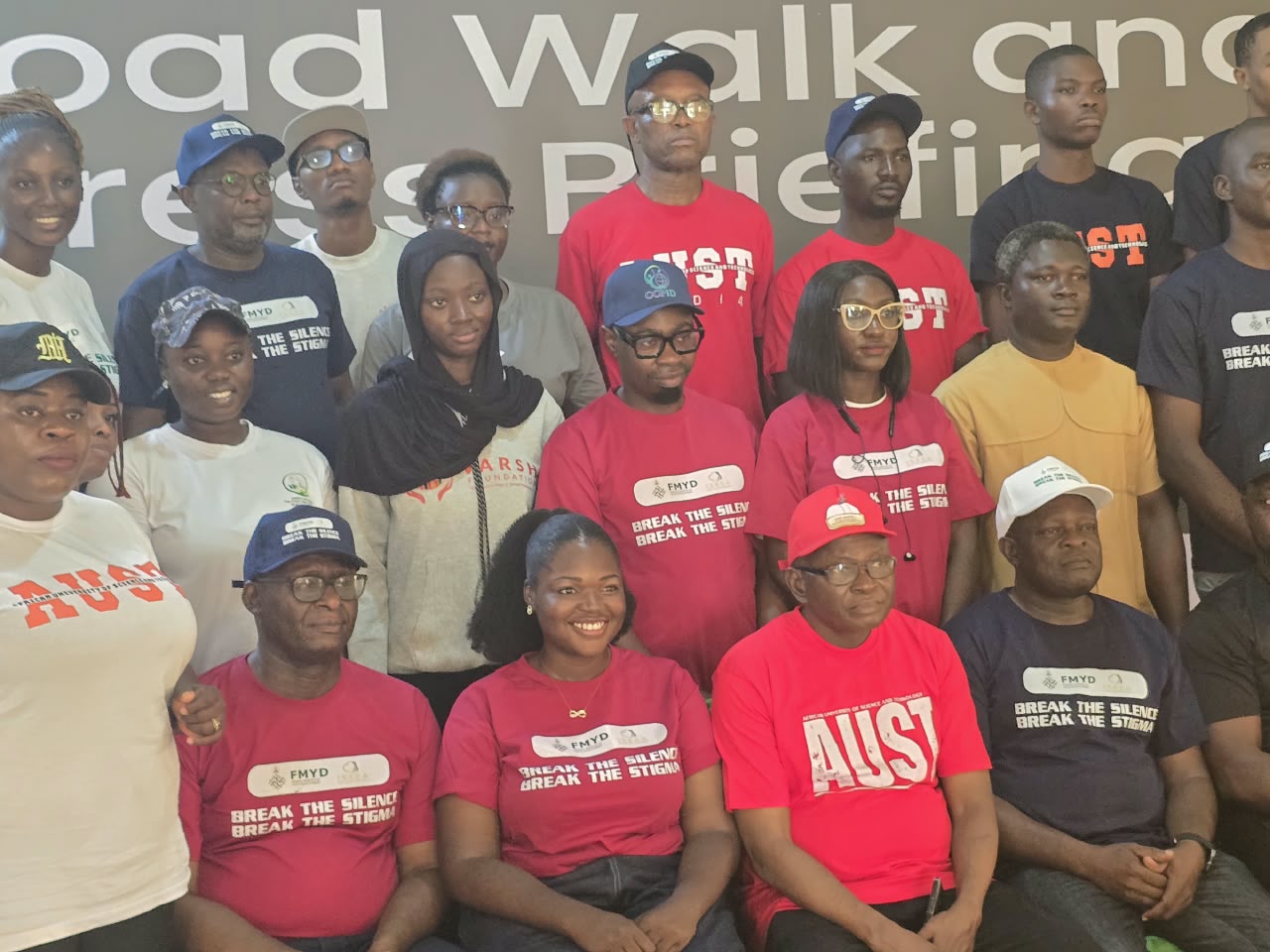
A non-governmental group, the Initiative for Self Esteem Education and Advocacy (ISEEA) has called on the Federal Government, schools, parents and other stakeholders to provide accessible mental health support for adolescents and young people in Nigeria.
The founder and Executive Director of ISEEA, Rosemary Ochiwu, made the call in Abuja on Saturday after a one-hour awareness road walk and press conference to mark the 2026 National Adolescent and Youth Mental Health Week.
Ochiwu urged government institutions, healthcare professionals, civil society organisations, development partners, the private sector and the media to make youth mental health a shared priority.
She said the initiative was designed to translate international mental health observances into practical action within the Nigerian context.
Ochiwu urged policymakers to demonstrate their commitment by providing adequate funding and accessible support services for young people experiencing mental health challenges.
She also called on schools and parents to create safe environments where adolescents could discuss their struggles and seek help without fear of judgement.
“To the media, we ask that you challenge stigma and tell stories that inform rather than harm. And to our young people, please remember that your experiences matter. Asking for help does not diminish your worth,” she said.
The ISEEA founder warned that efforts to promote mental health awareness must not end with public events and campaigns.
“As we conclude today’s road walk and press briefing, let us remember that the work does not end when the placards are put away or the cameras stop recording.
“It continues in our homes, schools, communities and institutions, through the choices we make and the support we provide,” she said.
Also speaking, the Minister of Youth Development’s representative, Mr Akim Olanipekun, the ministry’s Director of Mental Health, said mental health should be treated as a fundamental component of youth development, public health and human capital development.
He said young people should not merely be the subjects of mental health programmes but should actively participate in developing solutions to challenges affecting them.
“We believe that young people should not merely be the subject of mental health programmes. They must be active participants in shaping the solutions that affect their lives,” he said.
Olanipekun stressed the need to move beyond public discussions to concrete action.
“The central message is clear: it is time to move from conversation to commitment, and from awareness to action,” he said.
He added that mental health was essential to healthy development, educational attainment, productive engagement and meaningful participation in society.
According to him, adequate attention to mental health would help young people realise their full potential.
In his welcome remarks, the President of the African University of Science and Technology, Abuja, Prof. Azikiwe Peter Onwualu, said mental health was an essential part of overall well-being and that seeking help should be seen as a sign of strength.
He said no young person should be left to face mental health challenges alone.
“Mental health is an essential part of overall health. It affects how young people learn, build relationships, make decisions and realise their potential,” Onwualu said.
He noted that many adolescents and young people experienced stress, anxiety, depression and other mental health challenges in silence because of stigma, fear of judgement and difficulties accessing appropriate support.
The university president called on families, schools, universities, communities and government institutions to work together to address the problem.
“We must help change that. A young person who is struggling should be met with understanding, listened to with respect and guided towards appropriate help,” he said.
Onwualu added that public awareness campaigns must be backed by supportive environments, reliable information, trained professionals and accessible mental health services.
He urged stakeholders to sustain the campaign beyond the event by taking the message to homes, schools, campuses and communities.