By Chuks Oyema-Aziken
A coalition of African civil society organisations has rejected moves to integrate wildlife conservation into global carbon markets, accusing developed countries of using climate initiatives to promote a new form of colonialism and exploit Africa’s natural resources.
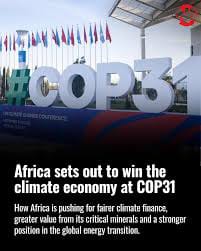
The coalition, under the banner of the No REDD in Africa Network (NRAN), made its position known in a declaration issued at the United Nations Climate Change Summit in Antalya, Türkiye.
The groups argued that incorporating Africa’s wildlife habitats, forests and marine ecosystems into carbon offset schemes would allow major polluters, particularly in Europe and the Global North, to continue emitting greenhouse gases while claiming to compensate for their environmental impact.
They maintained that Africa’s lions, elephants, whales and other wildlife should be protected as part of the continent’s natural heritage rather than converted into financial assets for international carbon traders.
The declaration, titled Declaration of African Civil Society on the Defence of Our Continent Against Carbon Colonialism, described the proposed integration of wildlife conservation into global climate policy as a potential threat to African sovereignty, community land rights and environmental justice.
The coalition also criticised an October 2026 European Parliament resolution reportedly seeking to formally integrate wildlife conservation into global climate policy, arguing that the initiative could facilitate the conversion of wildlife habitats and migratory corridors into carbon offset projects.
It expressed concern over the expansion of Reducing Emissions from Deforestation and Forest Degradation (REDD+) initiatives across Africa, alleging that some projects could undermine customary land ownership, women’s rights, community livelihoods and national sovereignty.
According to the organisations, carbon offset arrangements that restrict communities’ access to their traditional lands while allowing corporations to profit from conservation undermine the interests of indigenous populations and other local communities.
The coalition also questioned the World Bank’s Rhino Bond initiative, describing it as a flawed conservation financing mechanism that encourages private investors to profit from nature.
It argued that financial instruments such as nature bonds and debt-for-nature swaps risk turning environmental protection into another avenue for financial speculation and external control over African resources.
The organisations further maintained that carbon offsetting through forests, wildlife habitats and marine ecosystems was not a substitute for reducing greenhouse gas emissions at their source.
They called on the United Nations to recognise the limitations of natural carbon absorption, arguing that the increasing volume of greenhouse gas emissions was placing growing pressure on the capacity of ecosystems to absorb carbon dioxide.
Citing studies, the coalition claimed that nature’s capacity to absorb carbon dioxide had peaked nearly two decades ago and that global forests had shifted from carbon sinks to carbon sources in both 2023 and 2024.
Consequently, the groups called on the Conferences of the Parties to the United Nations Framework Convention on Climate Change (UNFCCC) to abandon the development of global carbon markets based on the commodification of nature, including wildlife offsets and REDD+ mechanisms under Articles 5 and 6 of the Paris Agreement.
They also demanded immediate reductions in greenhouse gas emissions at source and a gradual phase-out of fossil fuels.
The declaration further urged the United Nations Special Committee on Decolonization to expand its mandate to address what the organisations described as carbon colonialism.
The coalition warned against using wildlife conservation campaigns and merchandise, including stuffed animal toys, to promote carbon offset schemes, arguing that the emotional appeal of Africa’s iconic wildlife should not be exploited to legitimise continued pollution.
It insisted that Africa’s wildlife must remain part of the continent’s ecological heritage rather than become instruments for promoting the commercial interests of multinational corporations and major polluters.
Among the organisations that endorsed the declaration are the Health of Mother Earth Foundation (HOMEF), Oilwatch Africa, Oilwatch International, Power Shift Africa, Corporate Accountability and Public Participation Africa, Earthlife Africa Johannesburg, Policy Alert, Environmental Justice, the African Climate Justice Collective and the Climate Change and Environmental Defender Network.
Others include the South Durban Community Environmental Alliance, Oilwatch Nigeria, Oilwatch Ghana, Oilwatch South Sudan, the FishNet Alliance Network and several community-based environmental and development organisations across the continent.
The coalition reaffirmed its position that climate justice must prioritise the protection of African communities, national sovereignty and ecological heritage, insisting that developed countries should address their emissions rather than rely on African ecosystems to offset their pollution.