Stakeholders in Northern Nigeria have called on President Bola Tinubu’s administration to adopt a strategic investment-driven approach to the region’s economic development, insisting that Northern Nigeria needs investment, not sympathy, to unlock its vast economic potential.
They identified agriculture, agro-processing, manufacturing, commerce, infrastructure, tourism and cultural industries as critical sectors requiring targeted investment, alongside improved access to affordable capital to stimulate industrialisation, create jobs and strengthen the region’s contribution to national economic growth.
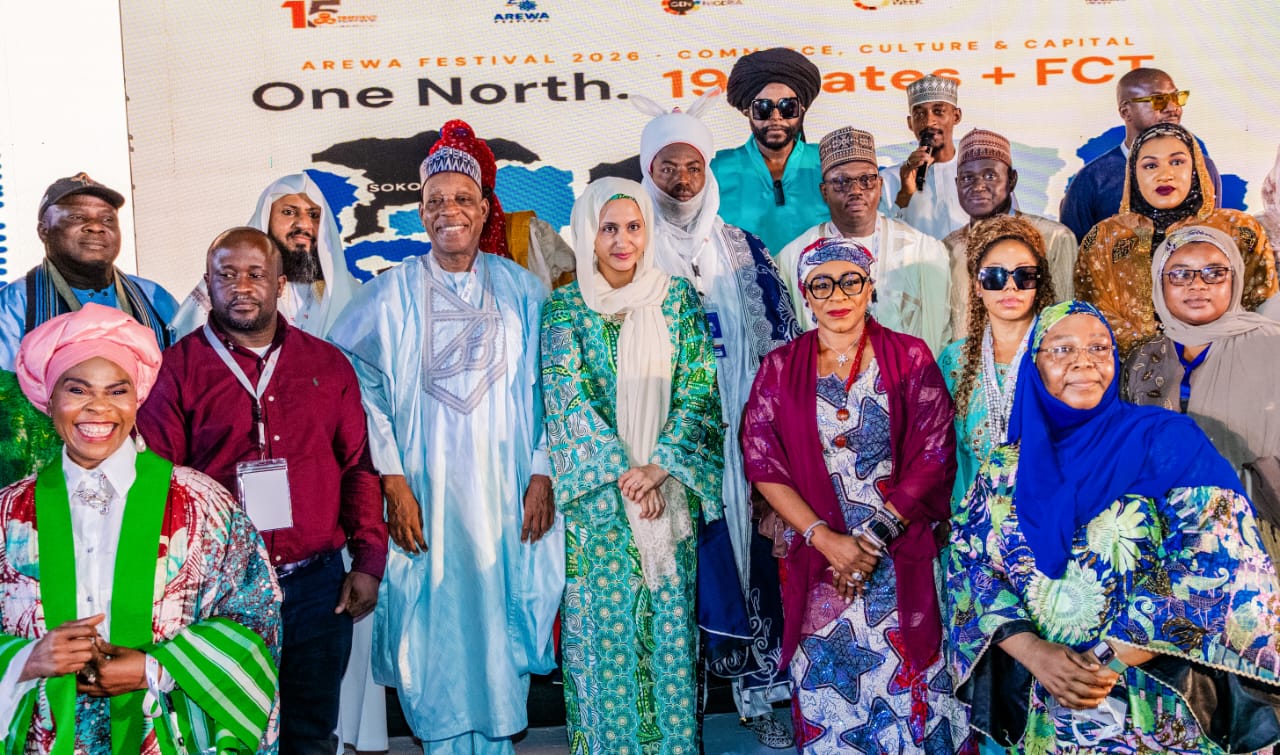
The stakeholders made the call at the weekend in Abuja during the 2026 Arewa Festival, where they advocated a shift from short-term interventions and humanitarian responses to sustainable investments that would transform the region’s abundant resources into productive enterprises.
Leading the call, Executive Director of Greenwich Bank, Dr Goni Umar Farouk, said Nigeria’s ambition to build a diversified trillion-dollar economy would remain difficult to achieve without harnessing the productive capacity of Northern Nigeria.
“How do we build a resilient, diversified trillion-dollar Nigerian economy without unlocking the full productive balance sheet of Northern Nigeria? From a finance perspective, the answer is straightforward: you cannot,” he said.
Farouk warned that portraying the North primarily as a humanitarian challenge rather than an investment destination could discourage long-term capital and undermine its economic prospects.
“When capital views a region purely as a problem to be managed rather than an enterprise to be financed, capital flows in as short-term aid rather than long-term equity,” he said.
He identified agriculture, commerce, manufacturing, tourism and cultural industries as major opportunities for wealth creation, employment generation and expansion of Nigeria’s non-oil economy.
According to him, the region’s extensive arable land, established trading networks, craftsmanship in leather, textiles and metalwork, as well as its large youthful population, provide a strong foundation for economic transformation.
He, however, stressed the need to move beyond the export of raw materials to local processing, value addition and industrial production.
Farouk identified cold storage, milling, food dehydration, dairy processing, packaging and logistics as areas where investment could reduce post-harvest losses, improve farmers’ incomes and strengthen linkages between agriculture and manufacturing.
He also advocated the development of strategic trade corridors, particularly along the Abuja-Kaduna-Kano axis, to facilitate the movement of goods, connect producers to markets and stimulate regional commerce.
He said stronger regional value chains and cross-border trade with neighbouring countries, including Niger, Chad and Cameroon, could further expand business opportunities under the African Continental Free Trade Area.
Using Nigeria’s petroleum industry as an example of the consequences of inadequate domestic processing capacity, Farouk cautioned against the continued exportation of raw materials and subsequent importation of finished products at higher costs.
“We produce things in Africa, we take them to Europe. It is returned to us. Look at what has been happening to our fuel. We have the crude oil. We turn it abroad. It is refined, and it is returned to us. And then we buy at exorbitant prices,” he said.
On the leather industry, he called for investments across the value chain to enable local producers to manufacture and market finished products rather than surrendering the greater economic value to foreign markets.
“Why should another high-quality product born in Sokoto and tanned in Kano have to travel to Milan before it becomes a luxury asset?” he asked.
Farouk also urged stakeholders to recognise Northern Nigeria’s cultural heritage as an important economic asset capable of generating tourism revenue, employment and foreign exchange.
He listed festivals, traditional textiles, indigo-dyed fabrics, embroidery, architecture, music, film, cuisine and leathercraft as cultural resources that could be developed into globally competitive brands.
“Culture is our competitive moat. Nobody else can replicate Northern Nigerian heritage. When we commercialise it with pride and precision, it becomes a non-oil foreign exchange earner that never runs dry,” he said.
On financing, the Greenwich Bank executive identified the high cost of borrowing as a major constraint to industrial development, arguing that conventional commercial lending rates of between 28 and 30 per cent were unsuitable for long-term productive investments.
“You cannot build an agro-processing factory, a tannery finishing line or a modern textile mill using a commercial bank overdraft priced at 28 to 30 per cent interest,” he said.
He called for a financing framework that combines development finance, concessional lending, credit guarantees and blended capital to support businesses with long-term growth potential.
He also urged entrepreneurs to formalise their businesses through proper registration, sound corporate governance and intellectual property protection, while calling on governments to provide predictable policies, functional roads, broadband connectivity, harmonised taxes and transparent land administration.
“The greatest subsidy you can give private enterprise is predictability and enabling infrastructure. When the state lowers the cost of doing business, private capital will naturally grow,” he said.
Farouk said sustainable economic transformation required deliberate collaboration among governments, financial institutions, businesses and communities.
“Northern Nigeria does not need sympathy, and it does not need shortcuts. What it needs is intentional alignment, placing our commerce on modern value chains, elevating our culture into global brands, and structuring our capital to reward innovation, governance and scale,” he said.
Also speaking, Managing Director of the Global Entrepreneurship Network (GEN) Nigeria, Dr Olawale Anifowose, called for stronger institutional and financial support for entrepreneurs and small businesses, stressing that enterprise development should not be concentrated in major commercial centres.
“What we have always believed is that entrepreneurship is not confined to one city or one region. It belongs to the trader in Kano or Jigawa, the farmer in Katsina and the young designer in Abuja,” he said.
Anifowose described the festival as an important platform for connecting entrepreneurship with culture and investment, particularly as it coincided with activities marking Global Entrepreneurship Week, celebrated in about 200 countries during the third week of November.
He said the gathering offered entrepreneurs, traders, farmers, creatives and investors opportunities to showcase their products, exchange ideas and establish business partnerships.
Urging participants to patronise exhibitors, he said: “The village of exhibitors is here, and I encourage all of you to open your wallets and support them.”
He explained that the festival’s three pillars — commerce, culture and capital — were interconnected, with commerce providing the markets, culture supplying creative and heritage assets, and capital providing the financing needed to transform those assets into viable businesses and employment opportunities.
Describing the event as more than a cultural gathering, Anifowose said its masterclasses, keynote sessions and business pitch presentations were structured to promote enterprise development and investment.
“This is a working programme for growth and not just decoration,” he said.
In her welcome remarks, Chief Executive Officer of Tripoint Travels, Shuhda Mohammed, said the festival was conceived to challenge narrow and often negative perceptions of Northern Nigeria by showcasing its cultural diversity, tourism potential and entrepreneurial capacity.
She observed that the region was frequently portrayed through the challenges of insecurity, poverty and educational disadvantage, while its achievements, natural attractions, cultural assets and economic opportunities received less attention.
“With Nigeria experiencing growing insecurity, economic fluctuations and several challenges, we are aware that Northern Nigeria is often referred to as the poorest and least educated region in the country. Arewa Festival is here to debunk that narrative,” she said.
Mohammed said the festival was also designed to promote more balanced narratives about the North by highlighting its diverse communities, languages, traditions and economic activities.
“For far too long, the single story about Arewa has overshadowed the amazing landscapes, the vibrant cultures and the diverse communities that make up Arewaland,” she said.
She stressed that Northern Nigeria was not a monolithic society but a diverse region comprising 19 states across the North-West, North-East and North-Central geopolitical zones, with distinct ethnic groups, cultures and economic strengths.
“Arewa Festival is a yearly reminder that Northern Nigeria is not a monolith. We are here to tell the different stories constituting Arewaland: a diverse group of people, languages, cultures, economies and heritage,” she said.
The second edition of the festival, themed “Commerce, Culture and Capital,” brought together approximately 1,000 participants and more than 200 exhibitors, including entrepreneurs, investors, cultural practitioners and other stakeholders.
Organised by Tripoint Travels and Tripoint Academy for Tourism and Enterprise Development, the two-day event at the Arts and Crafts Village, Abuja, featured exhibitions, panel discussions, business sessions, cultural performances, fashion and food showcases, poetry and other activities aimed at promoting regional enterprise, tourism and investment.