By: Zagazola Makama
The debate over the proposed establishment of state police has taken a fresh turn in Plateau State following remarks by prominent Islamic cleric, Sheikh Sani Yahaya Jingir, who cautioned against the initiative and alleged attempts by political actors to destabilise the state.
Jingir, the National Chairman, Council of Ulama, Jama’atu Izalatul Bid’ah Wa’Ikamatis Sunnah (JIBWIS), headquartered in Jos, expressed reservations over granting states the authority to establish their own police formations.
The cleric warned that, in a politically polarised environment like Plateau, state-controlled security outfits could be misused against perceived political opponents.
“Tell us, when he was in power, who has become rich? How many Berom has he killed? How many Fulani has he killed? How many Hausas and Christians has he killed? Even those that are close to him, some people said that he was the one that led to the harvesting of their kidney. It was alleged. We have been hearing so. He removed the kidney of those close to him, talk more of you,” said Jingir.
He urged President Bola Ahmed Tinubu to exercise caution in considering proposals for decentralised policing, arguing that safeguards must be firmly in place to prevent abuse.
Jingir’s intervention comes amid renewed national conversations on restructuring Nigeria’s security architecture. Proponents of state police argue that decentralisation would enhance rapid response and local intelligence gathering. Critics, however, fear potential politicisation in states with deeply divided political and ethno-religious landscapes.
In his remarks, Jingir suggested that certain political actors in Plateau might exploit state police structures to target individuals perceived as unsympathetic to their ideology. He emphasised the need to prioritise peace and stability over partisan interests.
“Some certain issues, they will pretend as if everything has gone down, but they will just raise it up when the security outfit is established. They say they should establish police in every state. If anyone says he will accept this, are we going to accept it?” worshippers chanted, “Not at all.” “You know how they cheated us. President Bola Ahmed Tinubu, some of these politicians are not as good as you, they are not as good as someone like Kashim Shettima. Wallahi, if you grant them the permission to establish police, they will start killing those that are not inclined with their political ideology.”
The cleric also alluded to alleged efforts by a former governor of the state to foment instability for political advantage, though he did not provide specific evidence. He expressed the view that the current governor should not be held responsible for recent tensions and urged him to remain focused on governance and peacebuilding.
“Even before giving them the police, they are already killing people,” he said, apparently referring to the former governor. He added that it could be possible that he was the one who orchestrated his people (Berom youths) to attack innocent commuters on the road.
Jingir exonerated the present Governor, Mutfwang, saying: “In my own thinking, the governor does not have any hand in the crises. This new governor that became the governor (Mutfwang), was it the old governor that put him there? If the former one could make him become governor, then why did he not continue as governor?”
Despite his criticisms, Jingir reiterated the importance of peace and coexistence in Plateau, urging leaders across divides to avoid actions capable of reigniting crisis. He called on both Muslim and Christian communities to prioritise dialogue and mutual respect.
He prayed that the wickedness allegedly being planned against the present governor would be exposed and brought to shame. He urged the governor to continue working in the way of God and not allow anyone to intimidate him into actions that could bring crisis into the state.
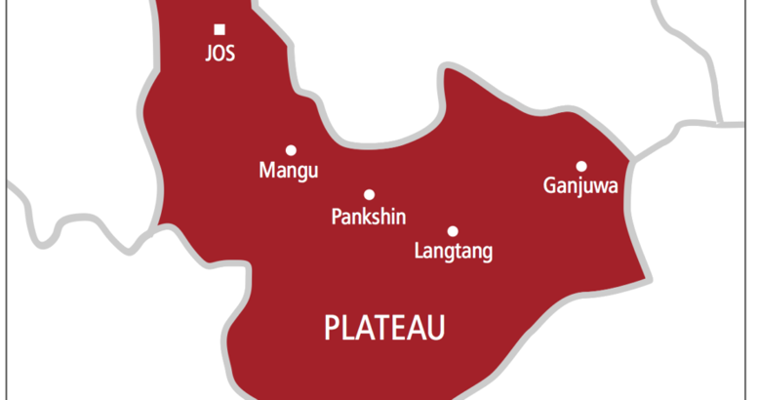
Zagazola reports that political alignments in Plateau have undergone notable shifts in recent years, with cross-party movements and alliances reshaping the state’s landscape. Analysts note that such realignments often intensify rhetoric, particularly as stakeholders begin positioning ahead of the 2027 general elections.
Plateau’s politics has historically reflected the state’s complex ethno-religious composition, especially in Jos North, where questions of indigeneship and political representation have shaped contestations for decades.
While the state has experienced relative calm compared to earlier periods of widespread violence, underlying tensions remain sensitive. Public statements by influential religious and political figures therefore carry significant weight in shaping public perception and intergroup relations.
Zagazola cautions that in a fragile environment, inflammatory or accusatory rhetoric regardless of source can heighten suspicion and polarisation, stressing the need for measured communication and fact-based engagement, particularly when discussing sensitive security reforms such as state policing.
As discussions on security restructuring continue at the national level, Plateau remains a microcosm of the broader debate: balancing local autonomy with safeguards against politicisation, while ensuring that peace and public trust are not compromised.
For many residents, the overriding concern remains stability. With political activities gradually building toward 2027, stakeholders say the tone and substance of public discourse will play a critical role in determining whether Plateau consolidates calm or re-enters a cycle of heightened tension.