By Abbanobi -Eku Onyeka
Abuja
Nigerians at a stakeholders’ engagement have identified key areas for reform in Nigeria’s correctional system, including overcrowding, prolonged pre-trial detention, and gaps in legal frameworks.
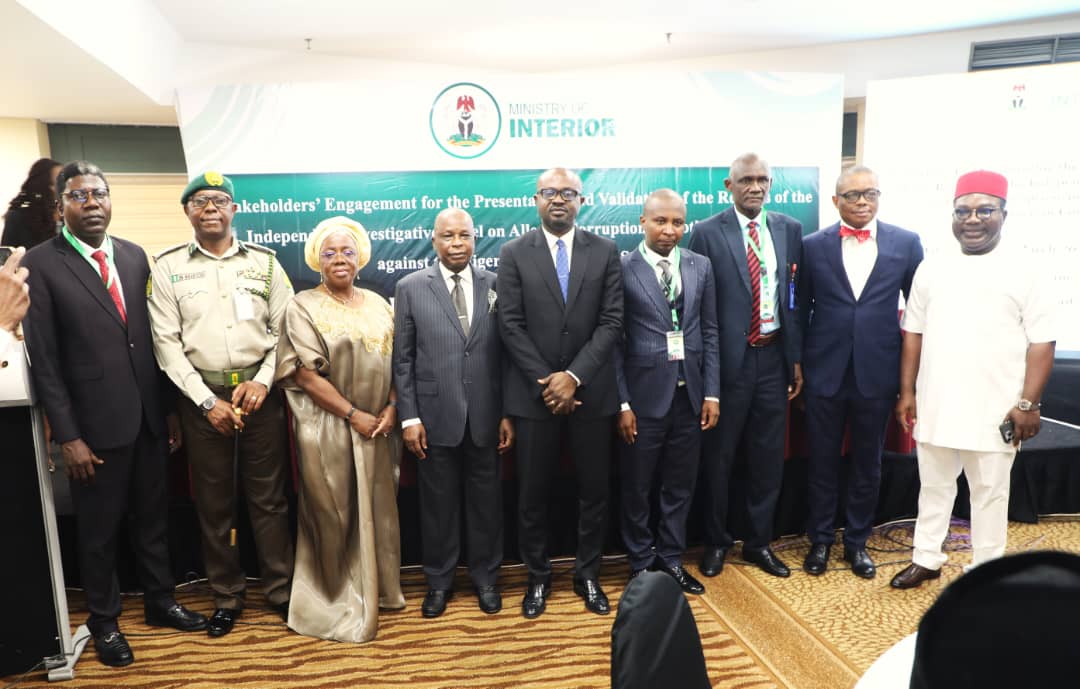
The event, convened by the Ministry of Interior, brought together government officials, justice sector stakeholders, security agencies, civil society organisations, and development partners to validate the report of the Independent Investigative Panel on alleged corruption and other violations against the Nigerian Correctional Service.
The Ministry therefore organized an event to that effect on Tuesday in the Transcorp Hilton, Abuja to examine the report of the private investigators.
The stakeholders recommended expansion of non-custodial measures, improved access to justice, protection of vulnerable groups, strengthening of oversight and accountability mechanisms, and enhanced welfare and working conditions for correctional personnel.
The Minister of Interior, Dr Olubunmi Tunji-Ojo, emphasized that the decision to establish the panel was guided by a deliberate choice to undertake a thorough and honest assessment of the issues.
The panel, inaugurated on November 24, 2024, concluded its assignment after 16 months of rigorous investigation, stakeholder engagement, and analysis.
“The work of this panel represents a significant step toward strengthening transparency, accountability, and institutional integrity within our correctional system,” Dr. Tunji-Ojo stated.
The investigation was initiated in response to serious allegations, including corruption, abuse of authority, and human rights violations within correctional facilities.
The findings underscore the urgent need to align the operations of the Service with principles of justice, professionalism, and respect for human dignity.
Dr. Tunji-Ojo emphasized that correctional facilities must evolve beyond custodial roles to become centres of reformation, rehabilitation, reintegration, and societal transformation.
The Attorney-General of the Federation, Prince Lateef Fagbemi, SAN, commended the Minister for his leadership in facilitating the process and reaffirmed the government’s commitment to upholding human rights.
The Permanent Secretary and Chairperson of the Investigative Panel, Dr. Magdalene Ajani, in his welcome address, highlighted the importance of the engagement as a platform for dialogue, reflection, and collective ownership of reform outcomes.
Stakeholders have resolved to build a correctional system that is humane, efficient, transparent, and aligned with national priorities and international human rights standards, with decisive and measurable action to be taken on the report’s recommendations.