By Jane Okeke
The Medical and Health Workers Union of Nigeria, MHWUN, has warned the Federal Government to resolve the outstanding Joint Health Workers Union of Nigeria, JOHESU demands or risk further industrial action in the health sector.
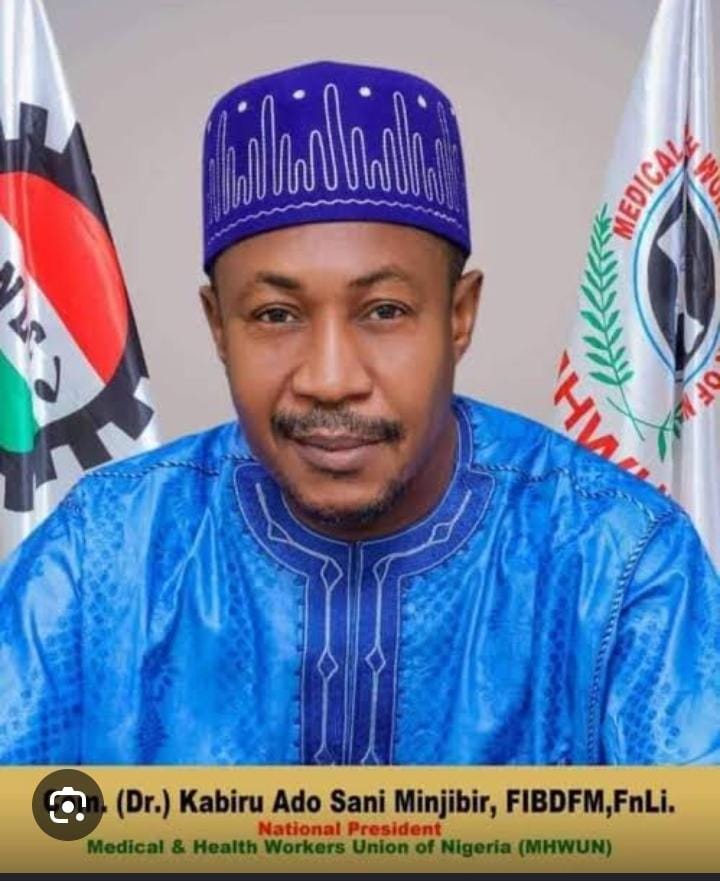
MHWUN National President, Comrade Dr Kabiru Ado Sani Minjibir, issued the warning at the 48th Session of the Tertiary Health Institutions National Consultative Forum, THINCF, held at the University of Abuja Teaching Hospital, Gwagwalada.
The meeting, themed “Strengthening Trade Unionism: Panacea for Effective Leadership in a Changing Economy,” brought together union leaders and delegates from tertiary health institutions to deliberate on workers’ welfare, union administration and challenges confronting the sector.
Minjibir said the CONHESS salary adjustment and other collective bargaining agreements remained unresolved, despite the progress recorded after the 84-day JOHESU strike which commenced on November 15, 2025.
He disclosed that JOHESU would, in the coming weeks, convene meetings of its organs, including an expanded National Executive Council meeting, to review the outstanding issues and take what he described as a resolute action to fast-track its demands.
The MHWUN President called on the Ministries of Labour and Employment, Health and Finance, as well as other stakeholders, to take urgent steps to resolve the issues before the planned meeting, saying another disruption of health services would be ill-timed.
Earlier, the National Chairman of THINCF, Comrade Dr Davidson Akilaiya, called for stronger leadership training and strict adherence to the MHWUN Constitution, particularly in branch administration, elections, membership matters and dispute resolution.
Akilaiya also urged branch executives to intensify membership recruitment and charged union leaders to use social media responsibly, warning against abusive language, personal attacks and unverified information capable of undermining the unity of the union.
Minjibir further raised concerns over inflation, brain drain, insecurity, poor healthcare facilities and worsening welfare among health workers, urging government to address the conditions driving skilled professionals out of the country.
The four-day THINCF meeting is expected to adopt resolutions aimed at strengthening trade unionism, improving workers’ welfare and addressing administrative and operational challenges confronting tertiary health institutions across the country.