By Myke Uzendu, Abuja
The Independent National Electoral Commission (INEC) has disclosed that Nigeria’s voter register has risen to more than 103 million, with Lagos, Kano and Kaduna emerging as the three states with the highest number of registered voters ahead of the 2027 general elections.
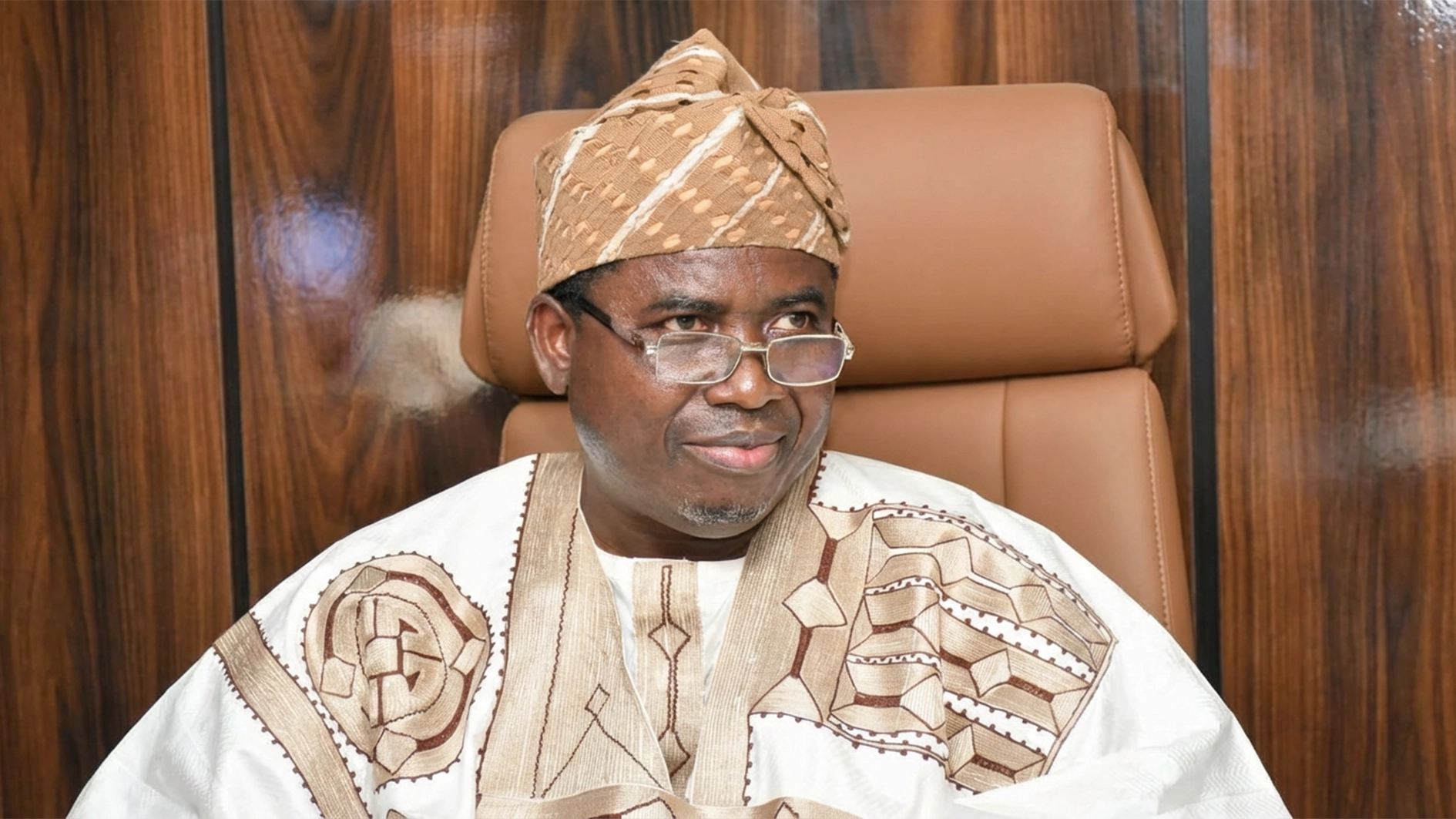
INEC Chairman, Prof. Joash Amupitan (SAN), made the disclosure on Tuesday in Abuja while unveiling the Commission’s 100-day operational plan for the elections at a World Press Conference and National Stakeholders’ Meeting.
Amupitan said the Commission had moved from the planning stage into full-scale execution, with sensitive and non-sensitive election materials being prepared, technology undergoing quality assurance and electoral personnel being trained for deployment across the country.
He said nine of the 14 major statutory milestones contained in the Commission’s revised timetable had been completed.
According to him, the voter register now contains 103,428,715 registered voters, following the completion of three phases of the Continuous Voter Registration exercise between August 2025 and July 2026.
The three phases, he said, produced 10,772,421 new registrations after biometric verification.
Lagos tops the register with 7,488,633 voters, followed by Kano with 6,570,276 and Kaduna with 4,662,640.
Other states among the 10 with the highest number of registered voters are Katsina, Rivers, Oyo, Delta, Benue, Ogun and Bauchi.
Amupitan said the Register of Voters would be displayed nationwide from October 9 to 15 to enable citizens scrutinise the register and raise claims and objections.
He added that the distribution of the first phase of Permanent Voter Cards to Local Government Centres would commence on October 9, while the final register would be presented to political parties on December 15.
The chairman said INEC had also introduced online registration and printable PVC technology to reduce the difficulties associated with distance, time and delays in the voter registration process.
On technology, Amupitan disclosed that the Commission had acquired 57,000 new Bimodal Voter Accreditation System (BVAS) devices for the elections.
He said the devices had undergone software hardening, battery optimisation and biometric calibration, while a nationwide inventory and functionality audit had also been conducted.
“A six-day stress test of configured BVAS devices is scheduled for October 23 to 28,” he said, adding that state-level training of Registration Area Technical Support personnel would take place in November.
He also announced a nationwide mock accreditation and election simulation to test the readiness of personnel, hardware and network systems under operational conditions.
On results transmission, the INEC chairman said the enhanced eEC8A system would enable polling-unit result sheets to be verified, cryptographically authenticated and uploaded to the Commission’s public result-viewing portal, IReV.
Amupitan said INEC had established a dedicated Artificial Intelligence Division within its ICT Department to address emerging technological threats to the electoral process.
According to him, AI auditing tools are being integrated into the Commission’s results verification architecture under a five-pillar AI governance framework, with mandatory human oversight.
He said the Commission was also working with international technology partners to deploy AI-driven anomaly detection tools capable of monitoring database traffic and protecting public portals against cyber intrusions and unauthorised alterations.
The chairman warned that generative artificial intelligence, voice cloning and deepfake videos represented growing threats to the integrity of electoral information.
He therefore urged media organisations to establish fact-checking desks, deploy digital forensic tools and verify election-related information with INEC before publication.
He further warned against the declaration of privately collated election results by media organisations or other individuals, stressing that the legal authority to declare election results rests with the Commission.
“In national elections, it is far more important to be right than to be first,” Amupitan said.
The INEC chairman said the Commission had also strengthened its logistics arrangements, including agreements with transport unions for the mobilisation of more than 100,000 vehicles and 4,000 boats.
He said specialised transportation would be deployed to difficult terrains, including riverine communities in the Niger Delta, the Lake Chad Basin and mountainous areas in the North-East and North-West.
According to him, sensitive election materials would be moved from Central Bank of Nigeria vaults to Local Government Areas 72 hours before polling, with materials expected to reach Registration Area Centres by 4pm on the eve of election day.
He said reverse logistics arrangements had also been developed for the secure retrieval, auditing and archiving of BVAS devices, result sheets and unused ballot papers after voting.
Amupitan explained that 707,384 personnel would be required for each of the two election days, covering the country’s 176,846 polling units.
He said recruitment through the INEC Portal for Recruitment of Election Staff opened on September 18 and would close on November 18, 2026.
He urged serving and former National Youth Service Corps members, tertiary institution students, qualified public servants and ICT professionals to apply early and provide accurate information.
The INEC boss said INEC would work with the Ministry of Justice, EFCC, ICPC and NFIU to monitor illicit campaign spending and vote-buying.
He said joint financial monitoring and undercover surveillance teams would be deployed to track campaign spending and financial inducements during the electoral process.
The chairman also disclosed that INEC would deploy Braille materials, assistive devices and sign-language interpreters to improve access for persons with disabilities.
He said the register contains 232,658 registered persons with disabilities, while voter education would be expanded through radio and television programmes, local-language jingles, town-hall meetings, mobile cinema and community outreach.
He added that the Commission had moved decisively from planning to execution.
“Our materials are in production, technology is undergoing rigorous quality assurance, our register is finalised for public display, and our workforce is being systematically trained,” he said.
“As we begin this 100-day sprint to the 2027 General Election, we reassure the nation and the international community of our total commitment to neutrality, operational excellence, and the sacred integrity of the ballot box.”
A representative of the Inspector-General of Police, AIG Police Mobile Force, Alinyenu Idu, acknowledged the security challenges that could affect the elections, saying the geography of Nigeria’s security crisis had created “pockets of fear” across the country.
He said the police was currently conducting clearance operations in parts of Kogi, Niger, Benue and Taraba states to stabilise areas affected by security threats.
“The upcoming election is particularly most interesting, in the sense that the geography of the security crisis has created pockets of fear here and there.
“What the police is doing currently is to stabilise the various arenas of development and citizens’ activityIdu said.”
He said the security agencies would review their operations by November and work towards providing a comprehensive security picture by the end of December.
“We will continue to interact with members of our sister services to ensure the operational framework is reviewed, fused in for the citizens to feel free to come out and vote,” he said.
He assured Nigerians that the security agencies were working to tame violence and guarantee citizens the freedom to exercise their democratic rights.
The European Union also pledged continued support for Nigeria’s democratic process, saying its assistance was aimed at strengthening electoral institutions rather than supporting any candidate or political party.
Also in its good-will message, the representative of European Union (EU) said its support to democratic governance in Nigeria had continued to strengthen INEC and other stakeholders.
“Ours is a friendly partnership, respectful of Nigerian sovereignty,” the representative said.
“We don’t impose any view or orientation, and needless to say, we don’t support specific candidates or parties. We rather try to empower the different actors to strengthen the electoral process as a whole.”
The EU disclosed that it would deploy an electoral mission comprising experts to monitor preparations for the election, the conduct of the ballot and its immediate aftermath.
It urged all stakeholders to prevent electoral violence and warned against the dangers posed by fake news.
“Freedom and acceptance of peaceful expression is the right alternative and antidote to political violence,” the representative said.
Also in it message, Chairman of the Senate Committee on INEC and Electoral Matters, Senator Simon Lalong, said the credibility of the 2027 election was a collective responsibility involving political parties, candidates, security agencies, the media, civil society organisations, voters and electoral institutions.
He urged political parties and candidates to respect electoral rules, engage in issue-based campaigns and conduct themselves peacefully.
“The media also has a particularly important role to play through accurate, balanced and responsible reporting,” Lalong said.
He added that the media could strengthen public understanding, counter misinformation and promote confidence in democratic institutions.
However, Chairman of the House of Representatives Committee on Electoral Matters, Hon. Adebayo Balogun, raised concerns over what he described as INEC’s failure to act promptly on certain constitutional and legal matters.
Balogun specifically referenced Section 225A of the Constitution and said the current crisis was partly caused by what he described as “inaction of INEC in taking decisions where necessary.”
He said the House committee had written to INEC seeking enforcement of a recent Supreme Court judgment relating to Section 74 of the Electoral Act.
“We believe it will urgently be attended to swiftly,” he said.