By Felix Khanoba
The Minister of Education, Dr Maruf Olatunji Alausa, has called for expanded investment in specialised medical training and stronger partnerships between government, private institutions and Nigerian professionals in the diaspora to equip local surgeons with the skills required for advanced healthcare delivery.
Alausa made the call at the launch of the Redeemer’s Health Village (RHV) RoboMed Robotics Academy and the unveiling of its Robotic Surgery Programme in Redemption City, Ogun State, on Thursday. He described the initiative as an opportunity to strengthen Nigeria’s capacity for advanced surgical practice and reduce the need for medical professionals to travel abroad to acquire specialised skills.
The minister said the initiative aligned with President Bola Ahmed Tinubu’s Renewed Hope Agenda, which prioritises human capital development and the acquisition of relevant skills to drive national development.
According to a statement signed by his Special Adviser on Media and Communications, Ikharo Attah, Alausa stressed that Nigeria’s education system must prepare professionals to respond to emerging technological developments and the changing demands of their respective fields.
He commended Tinubu for his support for the education sector, noting that sustained investment in skills development, institutional infrastructure and quality training was necessary to build a workforce capable of meeting the country’s growing needs.
Alausa disclosed that the Federal Government had invested more than ₦250 billion in medical education to improve the capacity of institutions to train healthcare professionals.
He explained that the investment included the establishment of medical simulation laboratories and the rehabilitation of facilities, including hostels, across more than 24 medical schools nationwide.
However, the minister said public funding alone would not be sufficient to meet the demand for specialised medical training, urging private sector organisations and Nigerian professionals abroad to complement government efforts.
He identified the RHV RoboMed Robotics Academy as an example of how collaboration among private investors, educational institutions and clinical professionals could translate technological investment into practical skills development.
According to him, the availability of advanced medical equipment must be matched by adequate training to ensure that healthcare professionals can operate the technology competently and responsibly.
He consequently called for stronger collaboration among universities, teaching hospitals, specialist training institutions and private organisations to promote practical instruction, joint research, faculty development and exposure to emerging surgical techniques.
The minister also highlighted the Federal Ministry of Education’s BRIDGE programme, an initiative designed to connect Nigerian professionals in the diaspora with opportunities to contribute to national development.
BRIDGE, which stands for Bridging Research, Innovation, Development and Global Engagement, is being implemented in collaboration with the Tertiary Education Trust Fund (TETFund).
Alausa said the programme provides a platform for Nigerians abroad to support local institutions through teaching, research, mentorship and capacity building.
He encouraged Nigerian surgeons, medical educators, researchers and other professionals in the diaspora to register on the ministry’s BRIDGE portal and contribute to specialist mentorship, curriculum development and collaborative research.
The minister further urged the RoboMed Academy to work with the National Postgraduate Medical College of Nigeria, relevant professional bodies and teaching institutions to establish structured training programmes backed by appropriate approvals, supervised practice, assessment and continuing professional development.
He emphasised that patient safety must remain a priority as Nigeria adopts robotic-assisted surgery, warning that technological advancement must go hand in hand with clinical competence, sound judgement, ethical responsibility and compassionate care.
Addressing surgeons and trainees expected to benefit from the programme, Alausa urged them to approach their training with discipline and humility, develop their skills responsibly and share their knowledge with other professionals.
He said access to modern training and meaningful professional development could make careers in Nigeria more attractive while helping the country retain and develop highly skilled personnel.
Earlier, the Chief Executive Officer of Redeemer’s Health Village, Dr Adedamola Dada, described the establishment of the academy and the introduction of the Robotic Surgery Programme as a major investment in medical technology and workforce development.
Dada said the initiative would develop local expertise in robotics, artificial intelligence, automation, biomedical engineering and robotic-assisted healthcare.
He explained that the programme would provide students, healthcare professionals, engineers and researchers with opportunities to acquire skills that could compete with international standards.
According to him, the initiative is also designed to improve access to advanced minimally invasive surgical care in Nigeria and strengthen the country’s capacity for healthcare innovation.
Dada expressed appreciation to Alausa, academic partners and other stakeholders for supporting the programme, which brings education, technology and clinical practice together.
The launch featured presentations on the academy’s training pathways and remarks from academic partners. It also included the signing of a training Memorandum of Understanding involving Redeemer’s Health Village, the National Postgraduate Medical College of Nigeria, Redeemer’s University and RoboMed Global.
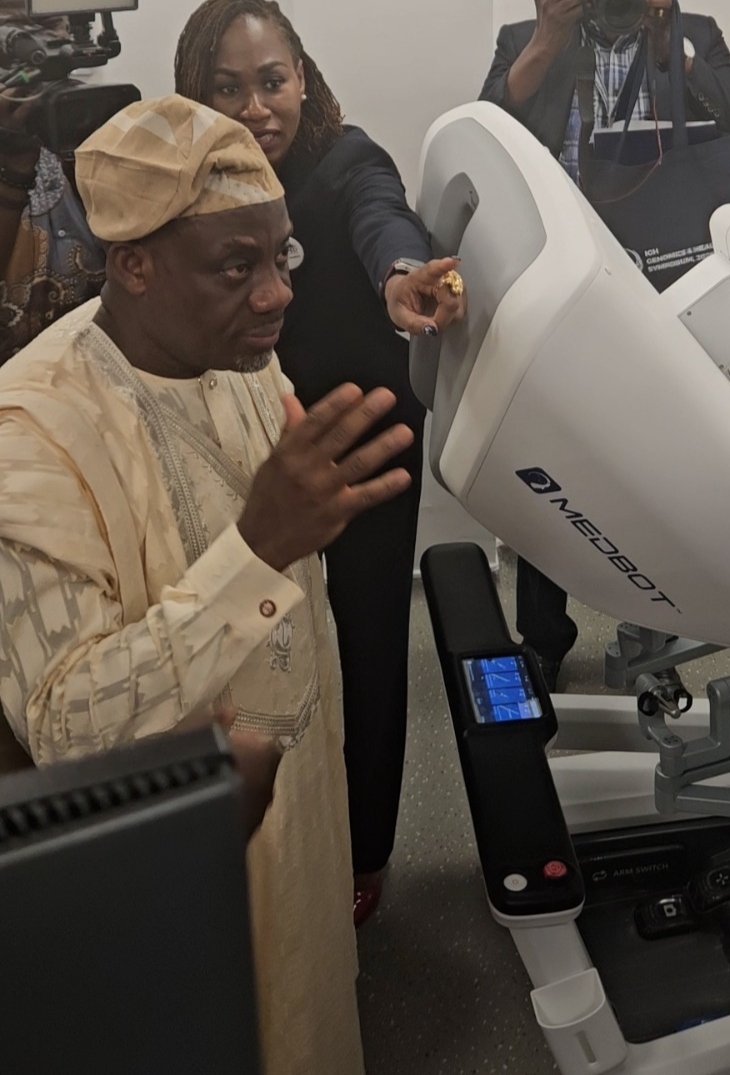
Guests toured the training facilities and witnessed a demonstration of robotic surgery and telesurgery simulation. No patient was involved in the demonstration.
The initiative is expected to provide a platform for developing specialised skills in robotic-assisted surgery and related technologies, while creating opportunities for closer collaboration between educational institutions and healthcare practitioners.
Alausa reaffirmed the Federal Ministry of Education’s commitment to promoting sustainable partnerships among government agencies, private sector investors, universities, specialist training bodies and Nigerian professionals in the diaspora.
He said such collaborations would help expand access to quality training, strengthen institutional capacity and prepare a new generation of skilled professionals to contribute to Nigeria’s development.