By Felix Khanoba
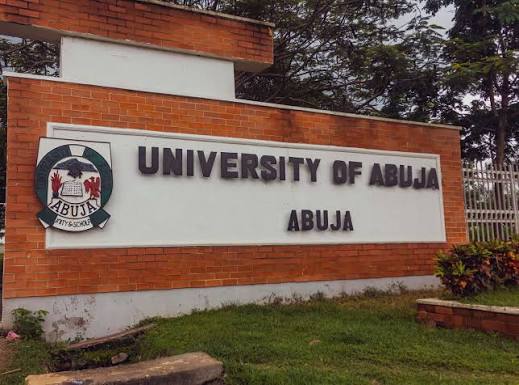
The Joint Action Committee (JAC) of the University of Abuja (UniAbuja) and other stakeholders has rejected claims surrounding the proposed reduction of the university’s land, insisting that the institution was neither consulted nor represented in the preparation of a controversial report allegedly recommending the reduction of its 11,824.04 hectares of land to 4,519.80 hectares.
The body also demanded the immediate reversal of all land allocations made by the Minister of the Federal Capital Territory (FCT), Nyesom Wike, on the university’s land, calling on President Bola Tinubu, as Visitor to the institution, to urgently intervene and protect its property.
The position was contained in a statement issued on Tuesday in response to comments by the Senior Special Assistant to the FCT Minister on Public Communications and Social Media, Lere Olayinka, dated November 16, 2026.
The statement was jointly signed by Professor Sylvanus Ugoh – Chairman, Academic Staff Union of Universities (ASUU), Nurudeen Yusuf – Chairman, Senior Staff Association of Nigerian Universities (SSANU), Comrade Sadiya Ibrahim Hassan – Chairman, Non-Academic Staff Union of Educational and Associated Institutions (NASU).
Others are Engr. Ugochukwu Agumuo – Chairman, National Association of Academic Technologists (NAAT), Comrade Peculiar Eyamu O. – President, Students’ Union Government (SUG), and Comrade Ojobo David Tochukwu – Representative, National Association of Nigerian Students (NANS).
The university stakeholders described the minister’s aide’s statement as containing several inaccuracies, particularly its reliance on the findings of a purported technical committee whose report they said the university never participated in, signed or approved.
According to JAC, the main committee established by the FCT administration to address issues affecting the university’s land held only one meeting, which was its inaugural meeting in April 2021.
It consequently questioned how a committee that never reconvened could have produced a report recommending the reduction of the university’s land.
“The Main Committee only met once, which was the inaugural meeting. How can such a committee produce a report?” the statement queried.
Providing a historical background to the controversy, the stakeholders explained that the University of Abuja was established with a special mandate to provide instructional, research and public service programmes, including distance learning, which required an expansive land area for its development.
They recalled that the Federal Government allocated 11,824.04 hectares of land along the Abuja-Lokoja Road for the development of the university’s main campus, with the title deed designating the property as “Land Set Aside for Use of the Federal Government of Nigeria”.
The committee further cited the University of Abuja Act, which took effect in January 1988, particularly Sections 20 and 22, as providing legal recognition and safeguards for the university’s land and its utilisation.
On the argument that the university’s land could accommodate about 220,000 housing units at 500 square metres per plot, the stakeholders described the calculation as misleading and an inappropriate comparison between university development and residential housing.
They explained that approximately 30 per cent of the university’s main campus land was physically unsuitable for development because of the Kuku Hills, buffer zones for the National Rail Corridor and the 330KV high-voltage power lines running from Geregu to Abuja.
“The logic of ‘220,000 houses can be built at 500 square metres per plot’ is ridiculous not only because universities cannot be equated to residential houses and plots, but also because the statement failed to consider the physical realities on the ground at the location,” the statement declared.
The committee also traced the dispute to previous engagements between the university management and successive FCT administrations, explaining that the institution had consistently sought government intervention over the resettlement of indigenous communities, encroachment, removal of illegal structures and provision of infrastructure.
It disclosed that the university administration approached the then FCT Minister on January 11, 2017, to seek assistance in addressing these challenges.
Similarly, on October 13, 2020, the university management renewed its requests during another meeting with the then minister, leading to the establishment of a joint committee in December 2020.
However, the stakeholders insisted that the committee’s terms of reference did not include any proposal to reduce the university’s land size.
“The issue of UniAbuja Land size was NEVER part of the Committee’s Terms of Reference as falsely claimed by the minister,” they stated.
They further explained that the committee’s inaugural meeting took place in April 2021, after which it never met again.
According to the statement, the university was subsequently invited to a meeting at the Federal Capital Development Authority (FCDA) Conference Room on March 15, 2022, where its representatives were presented with a report by a purported technical committee proposing a reduction of the institution’s land from 11,824.04 hectares to 4,519.80 hectares.
The university representatives, however, reportedly rejected the document, arguing that they were neither involved in the committee’s activities nor aware of its existence.
The stakeholders consequently challenged the FCT administration to produce a copy of the report bearing the signatures of the university’s representatives rather than merely presenting a list of committee members.
“We therefore challenge the ministry to produce the report bearing the signatures of the university representative rather than presenting a membership list,” the statement added.
Defending the pace of the university’s physical development, the committee argued that 38 years was relatively young in the life of a university, noting that institutional development was a gradual process dependent largely on government funding.
It cited Ahmadu Bello University, Zaria, and Obafemi Awolowo University, Ile-Ife, as examples of first-generation institutions that were still undergoing phases of development after more than 60 years of existence.
The stakeholders also listed several partnerships and collaborations entered into by the University of Abuja to demonstrate its commitment to developing its land and fulfilling its academic, research and community service responsibilities.
Among the institutions and agencies mentioned were the National Agency for Science and Engineering Infrastructure (NASENI), Bank of Agriculture (BoA), National Seed Council, National Cancer Research and Training Institute (NiCRAT), Raw Materials Research and Development Council (RMRDC), National Metrology Institute, Rural Electrification Agency (REA), National Board for Technology Incubation (NBTI), Nigeria Genomic City Project and the Federal Ministry of Women Affairs.
On allegations that the university was selling portions of its land, the committee described the claim as false and misleading, insisting that the institution had no legal provision to sell its land.
“The University’s land holding is governed by Section 22 of the University of Abuja Act which expressly prescribes how it shall be used. It has NO provision for sale of any part of the University land,” the statement said.
It explained that the establishment of the Economic and Financial Crimes Commission (EFCC) Academy on the university’s land was based on a partnership arrangement, similar to its collaborations with other government institutions, and was consistent with the university’s community service mandate.
The stakeholders also faulted what they described as attempts to limit the responsibilities of university-based labour unions to salary-related matters, insisting that unions had a broader responsibility to protect public educational institutions and their assets.
“It is also wrong for the Minister to reduce the involvement of Unions to the payment of salaries alone. Unions are the protectors and defenders of our institutions and that is why we will resist the impunity of the Hon Minister regarding University of Abuja land with all our might,” the statement declared.
They further referenced an agreement reached between the Federal Government and the Academic Staff Union of Universities (ASUU) in December 2025, which they said committed the government to taking proactive measures to protect university lands and landed properties.
Consequently, the Joint Action Committee outlined three major demands: the immediate reversal of all land allocations made by the FCT Minister on the university’s land; implementation of the December 2025 agreement with ASUU on the protection of university properties; and urgent intervention by President Tinubu in his capacity as Visitor to the University of Abuja.