By Mercy Aikoye
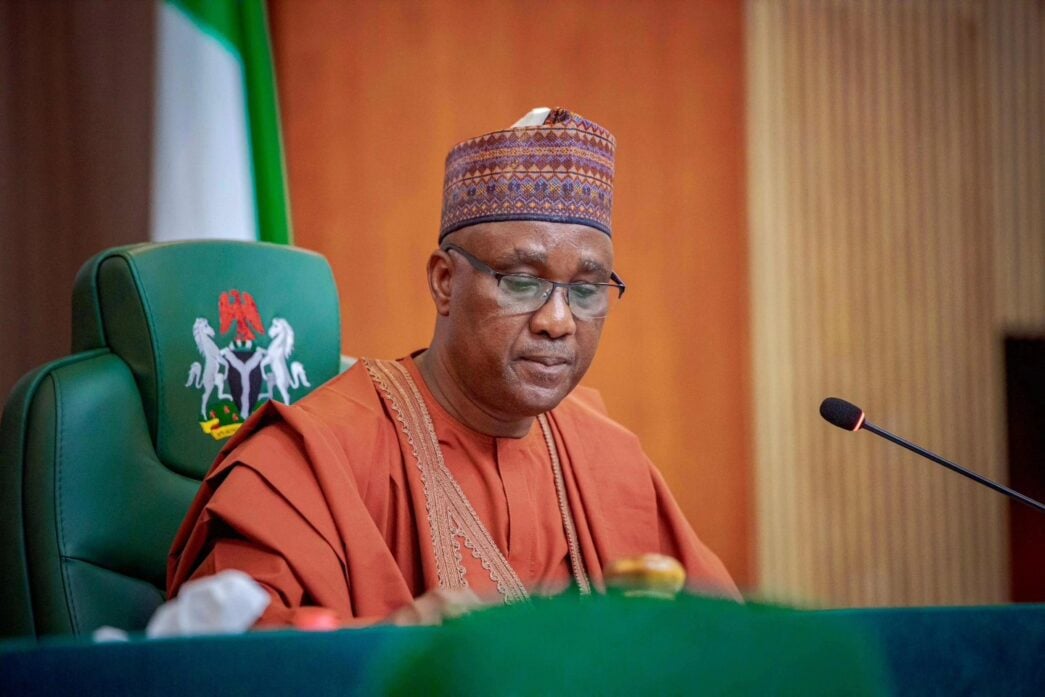
The Speaker of the House of Representatives, Abbas Tajudeen, has urged state governors to commit at least N1bn monthly to dedicated intervention funds for Micro, Small and Medium Enterprises (MSMEs), warning that Nigeria’s ambition of becoming a $1tn economy by 2030 would remain elusive without deliberate support for small businesses.
Tajudeen said MSMEs must be placed at the centre of the country’s economic development strategy, noting that their capacity to create jobs, stimulate local production and improve household incomes made them indispensable to achieving the national economic target.
The Speaker made the call on Monday while declaring open a stakeholders’ strategic roundtable organised by the House Committee on Small and Medium Enterprises, with the theme, ‘Unlocking the Potential of Nigerian MSMEs Through Legislative Reform, Access to Finance, Market Linkages and Strategic Partnership.’
Represented by the House Majority Leader, Julius Ihonvbere, Tajudeen said state governments must take greater responsibility for creating economic opportunities rather than leaving the task of business development and job creation largely to the Federal Government.
He argued that every state had the capacity to establish a dedicated MSME fund of at least N1bn monthly, provided there was the political will to prioritise entrepreneurship and grassroots economic development.
According to him, such funds should be managed transparently, with effective monitoring and clear eligibility requirements to ensure that genuine business owners, particularly small-scale entrepreneurs, benefit from the intervention.
The Speaker expressed concern that despite the establishment of several government agencies and the injection of substantial funds into the sector, many Nigerian businesses continued to struggle with inadequate financing, bureaucratic bottlenecks and weak institutional support.
He said the survival of many small enterprises depended more on the determination of their owners than on government intervention programmes designed to support them.
“Those that are surviving are surviving not because of government and agencies, but in spite of government and agencies,” he said.
Tajudeen identified excessive documentation and cumbersome administrative procedures as some of the major obstacles preventing entrepreneurs from accessing government-backed financial facilities, insisting that intervention programmes must be designed around the realities of small business operators.
He also warned against high-interest borrowing, particularly double-digit interest rates, arguing that the cost of credit could weaken businesses before they became sufficiently established to expand and repay their loans.
He stressed that access to finance should not be measured merely by the availability of funds but by affordability, flexibility and lending conditions that reflect the peculiar challenges of MSMEs.
On legislative interventions, the Speaker highlighted provisions under the new tax laws granting qualified small businesses a zero per cent Companies Income Tax rate, describing the measure as part of efforts to reduce the financial burden on enterprises.
He also called for stronger credit guarantee schemes, improved access to intervention funds and business development support, noting that financing alone would not guarantee success without adequate entrepreneurial skills, proper record-keeping and sound management practices.
Tajudeen further advocated reforms in public procurement to enable qualified Nigerian businesses to benefit more from government spending, while urging entrepreneurs to improve product quality, packaging, branding, technology and distribution to compete in wider markets.
He identified the African Continental Free Trade Area (AfCFTA) as a major opportunity for Nigerian businesses, stressing the need for local enterprises to strengthen their capacity to access markets across the continent.
The Speaker also urged Nigerians to hold state and local government officials accountable for their performance, arguing that economic development and improved living conditions required effective governance at all levels.
In his remarks, Chairman of the House Committee on MSMEs, Pascal Agbodike, called for stronger collaboration among government agencies, financial institutions and private-sector operators to address the challenges limiting the growth of small businesses.
Agbodike said the roundtable was convened to examine gaps in existing government interventions and determine why substantial financial allocations to the sector had not translated into meaningful benefits for many entrepreneurs.
He specifically cited the participation of the Central Bank of Nigeria and the Bank of Industry as an opportunity for lawmakers to assess their programmes, identify implementation challenges and establish areas requiring legislative intervention.
The committee chairman said the lawmakers were interested in ensuring that funds appropriated for MSME development reached their intended beneficiaries rather than remaining at the level of policy announcements and institutional allocations.
He disclosed that the committee would review progress within the next 100 days, stressing that the engagement must produce practical recommendations capable of improving access to finance and strengthening small businesses.
Agbodike, who disclosed that he had been a businessman before joining politics, urged stakeholders to provide honest assessments of existing policies and programmes to enable the National Assembly to develop workable solutions.
He also commended President Bola Tinubu for what he described as his administration’s commitment to economic development and MSME support, urging participants to identify implementation gaps and recommend measures for more effective delivery of government interventions.