By Mercy Aikoye
The House of Representatives Committee on Solid Minerals Development has given the Nigeria Security and Civil Defence Corps (NSCDC) one week to produce outstanding operational records relating to the activities of the Mining Marshals amid allegations of arbitrary arrests, unlawful detentions and closure of legitimate mining businesses.
The Committee also demanded a formal written apology from the Commander of the Mining Marshals, ACC Attah John Onoja, over allegations he made against a member of the Committee, Hon. Abdulmalik Danga, accusing him of working against the Federal Government’s efforts to sanitise the mining sector.
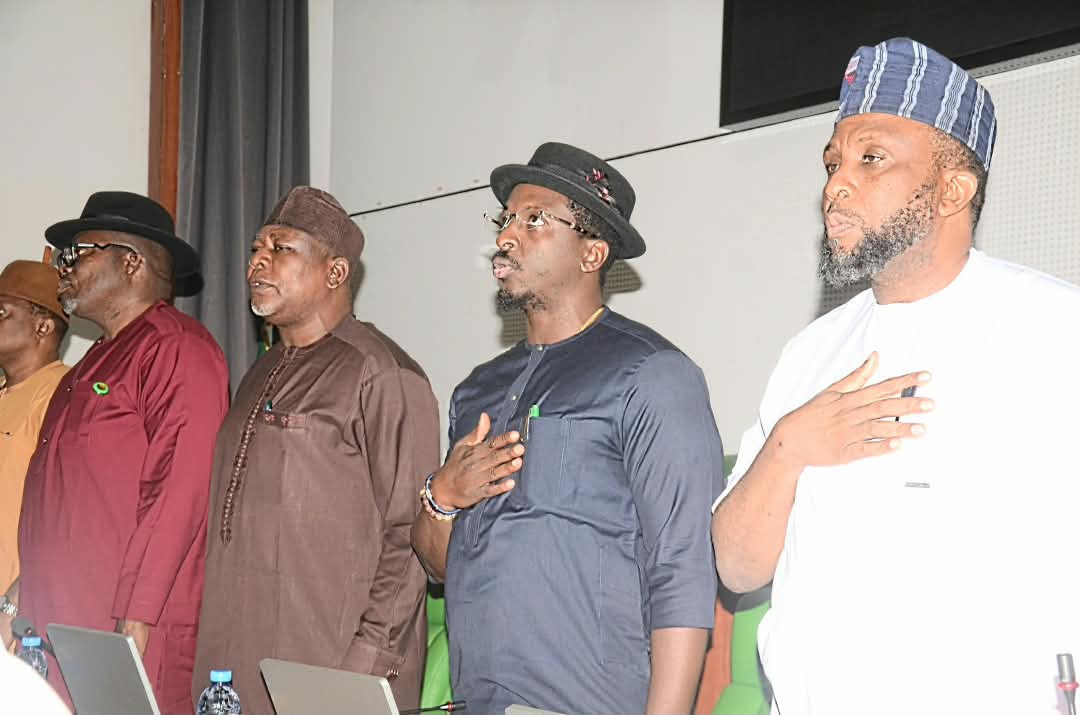
The resolutions followed an investigative hearing chaired by Hon. Jonathan Gaza, where lawmakers questioned the NSCDC leadership over alleged abuse of enforcement powers and the circumstances surrounding a controversial letter written by the Mining Marshals Commander to the Speaker of the House.
The Committee expressed displeasure over the failure of the Corps to submit comprehensive documentary evidence requested to establish the legality and conduct of its mining enforcement operations across the country.
Gaza recalled that the Committee, on October 20, 2026, issued a statutory demand for documentary records and notice of mandatory personal appearance to the Commandant-General, Ahmed Abubakar Audi, requiring him to provide a comprehensive response verified on oath, alongside ten hard copies and an electronic copy of the requested records.
However, the lawmakers said the deadline of 2:00 p.m. on November 3, 2026, elapsed without the submission of the required documents.
The Chairman insisted that the physical appearance of the Commandant-General before the Committee could not substitute for the statutory obligation to produce the requested records.
“Let it be clear on the record that personal attendance does not cure or waive the statutory obligation to produce primary, certified, and unedited documentary records within the possession, custody, or control of the Corps,” Gaza said.
He subsequently directed the Commandant-General, the Commander of the Mining Marshals and all zonal, state and FCT commands of the NSCDC to preserve all records relating to their enforcement activities.
The documents include arrest and custody registers, operational logs, mining site records, financial and banking records, vehicle registers, electronic metadata, official communications and CCTV recordings across the 36 states and the Federal Capital Territory.
Gaza warned that any attempt to conceal, alter, backdate or destroy relevant records, as well as intimidation or retaliation against officers and witnesses, would attract legal consequences.
The Committee also cited provisions of the Legislative Houses (Powers and Privileges) Act, 2017, and the NSCDC Act, warning that it would invoke relevant statutory powers against any officer found culpable.
On the allegations against Danga, the lawmakers confronted Onoja over a letter dated July 24, 2026, addressed to the Speaker, in which the Commander accused the lawmaker representing Adavi/Okehi Federal Constituency of Kogi State of acting against the Federal Government’s efforts to sanitise the mining sector.
In the correspondence, Onoja described Danga’s actions as anti-government and allegedly motivated by illegal mining cartels whose activities were being disrupted by the Mining Marshals.
The allegations attracted strong objections from members of the Committee, who demanded evidence to substantiate the claims, describing them as serious imputations against a serving legislator and the integrity of the National Assembly.
Responding, Onoja maintained that the letter was written in his personal capacity and was intended to address a motion raised by the lawmaker, insisting that he had no intention of undermining the legislative powers of the Committee.
However, Gaza rejected the explanation, questioning why an officer would use official NSCDC letterhead and reference details to issue a correspondence he claimed was personal.
The Chairman consequently asked the Commandant-General to clarify whether the allegations represented the official position of the Corps or whether Onoja had acted without authorisation.
Audi explained that the NSCDC had an administrative procedure requiring officers to obtain approval before issuing official correspondence on behalf of the Commandant-General.
He maintained that since Onoja signed the letter in his personal capacity rather than on behalf of the Commandant-General, he should take responsibility for its contents.
Despite the explanation, the Committee insisted that the use of official stationery raised questions about the circumstances surrounding the letter and demanded a formal written apology from the Mining Marshals Commander to Danga.
Meanwhile, stakeholders in the solid minerals sector accused the Mining Marshals of arbitrary arrests, unlawful detention, intimidation of operators and closure of mining sites, including businesses they claimed possessed valid licences issued by the Federal Ministry of Solid Minerals Development.
The investors alleged that operatives had repeatedly branded their businesses illegal despite their possession of government-issued licences and other regulatory approvals.
They said the enforcement activities had resulted in significant financial losses, with some mining companies forced to suspend operations or shut down completely, leaving heavy-duty equipment and other investments idle.
The stakeholders warned that the alleged actions were undermining investor confidence and creating uncertainty in the solid minerals sector, particularly as the Federal Government intensifies efforts to attract local and foreign investment.
They called for a comprehensive investigation into the activities of the Mining Marshals, insisting that the fight against illegal mining must not be used as a justification for violating the rights of legitimate operators.
The Committee maintained that the investigation would continue and that the NSCDC must account for its enforcement activities and provide verifiable records to support its operations.