By Chuks Oyema-Aziken
The Nigeria Security & Development Forum (NSDF) has endorsed the Federal Government’s de-radicalisation and reintegration initiative, Operation Safe Corridor, describing it as a decisive strategy for securing lasting peace and reinforcing military gains against insurgency.
Speaking at a press briefing in Abuja on Tuesday, the Group Secretary of the Forum, Victor Success, stressed that Nigeria must go beyond battlefield victories by strengthening non-kinetic measures to achieve long-term stability.
“Global experience is clear—you cannot defeat terrorism through force alone,” he said. “Rehabilitation, reintegration, and addressing the underlying drivers of extremism are critical to sustainable peace.”
He praised the Chief of Defence Staff, Olufemi Oluyede, for what he described as forward-thinking leadership in blending military operations with rehabilitation-focused strategies.
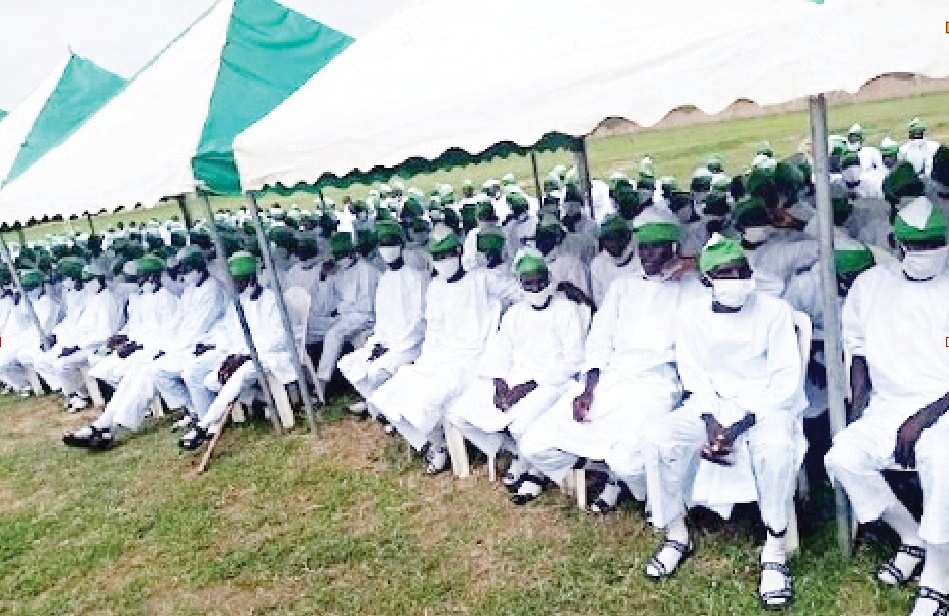
The Forum also welcomed the recent graduation of rehabilitated former fighters under Operation Safe Corridor, calling it a major breakthrough in Nigeria’s peacebuilding efforts.
According to Success, the development highlights the effectiveness of structured deradicalisation programmes and demonstrates that meaningful transformation of former combatants is achievable.
He noted that the initiative is not only reducing the number of active fighters but also weakening insurgent groups internally by encouraging defections, while generating valuable intelligence for security agencies.
In addition, the programme equips participants with vocational skills, enabling them to reintegrate economically and reducing the risk of returning to violent activities.
Placing Nigeria’s efforts within a broader international framework, the NSDF said similar reintegration models in Saudi Arabia, Denmark, Singapore, and Pakistan have proven effective in countering violent extremism and promoting stability.
Addressing public concerns—particularly from victims of insurgency—the Forum acknowledged that trust remains a critical issue, urging stronger safeguards to sustain confidence in the programme.
“We recognise the concerns of citizens. That is why transparency in screening, continuous monitoring, and active community engagement must remain central to the process,” he said.
He further emphasised that support for victims and affected communities must not be overlooked, noting that justice, accountability, and reconciliation are essential to lasting peace.
The NSDF maintained that backing Operation Safe Corridor should be seen not as a concession to insurgents, but as a calculated and necessary strategy.
“This is not a sign of weakness—it is a strategic pathway to enduring peace,” Success stated.
The Forum called on government institutions, civil society organisations, traditional rulers, religious leaders, and the general public to support the initiative.
“Nigeria is at a defining moment. How we consolidate these gains will shape the future of our national security,”he added.
The NSDF reaffirmed its commitment to promoting policies and programmes aimed at strengthening peace, rebuilding communities, and advancing national development.