
By Felix Khanoba
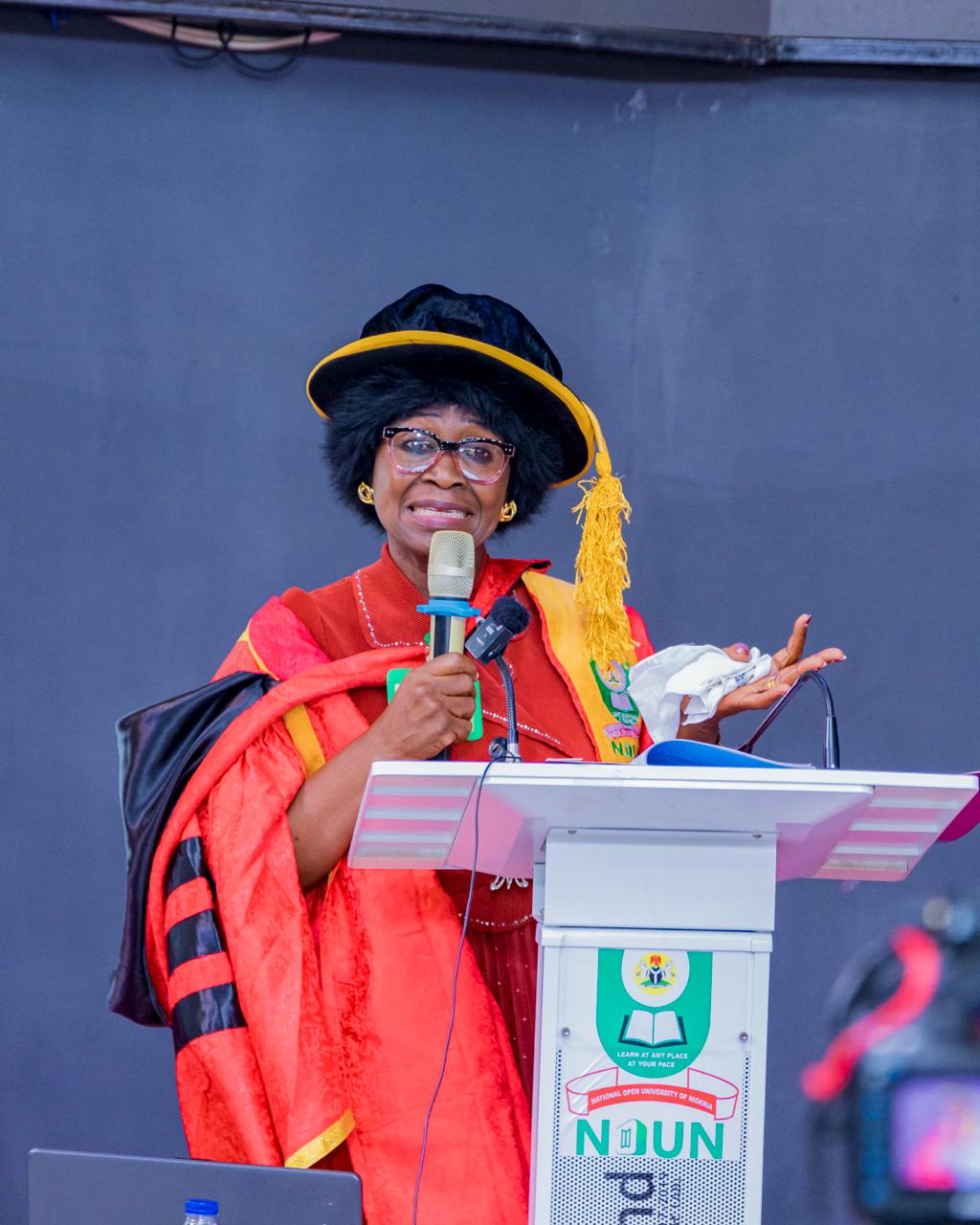
Nigeria’s quest for sustainable national development will remain elusive unless greater attention is given to guidance and counselling services capable of addressing the educational, emotional and social needs of citizens, a Professor of Guidance and Counselling at the National Open University of Nigeria (NOUN), Rosemary Ochanya Ogbodo-Adoga, has said.
The professor made the submission while delivering the university’s 40th Inaugural Lecture, titled “Guidance and Counselling for All: A Pathway to National Development,” at the NOUN Conference Centre in Abuja on Thursday.
According to a statement issued by the university’s Acting Director of Media and Publicity, Omotola Ojudu, Ogbodo-Adoga said guidance and counselling remain essential tools for tackling several societal challenges, including examination malpractice, cultism, substance abuse, unemployment, insecurity, indiscipline, peer pressure, emotional instability and the rising incidence of mental health concerns, especially among young people.
She explained that guidance enables individuals to understand their strengths, recognise their potential and make informed life choices, while counselling offers professional support to help people overcome personal, academic, vocational and social difficulties.
Reviewing the history of the profession from its global beginnings to its growth in Nigeria, the scholar noted that guidance and counselling have become increasingly important in responding to the complexities of modern education and changing societal realities.
She maintained that every individual possesses unique abilities that can be properly developed through effective guidance, adding that quality counselling services help learners make appropriate educational, career and personal decisions that ultimately contribute to national progress.
Highlighting career guidance as a vital component of education, Ogbodo-Adoga observed that many young people are unable to make appropriate career decisions because they lack adequate information and access to professional counselling. She said structured career guidance helps students align their interests, talents and abilities with suitable occupations.
The professor also pointed to rapid technological advancement, globalisation, changing family dynamics and evolving workplace expectations as factors driving the increasing demand for professional counselling services.
She stressed that technological innovations have expanded access to counselling through distance platforms, making it possible for individuals to receive professional support regardless of their location.
Describing counselling as both a preventive and intervention mechanism, she said it equips individuals with effective coping strategies, enhances decision-making abilities and encourages responsible behaviour.
Ogbodo-Adoga further identified integrity, empathy, confidentiality, emotional intelligence, effective communication, objectivity and strict adherence to ethical standards as essential qualities of professional counsellors.
To improve the profession, she advocated the development of standardised psychological assessment tools and locally relevant counselling textbooks, alongside the effective implementation of comprehensive guidance and counselling programmes in schools through orientation, appraisal, consultation, placement, follow-up services, research and counselling interventions.
She also called for increased funding for guidance and counselling programmes, urging governments at all levels to establish dedicated budgetary provisions for counselling services within ministries of education.
The professor recommended regular training and retraining of counsellors through scholarships and bursaries, as well as the recruitment and deployment of qualified professionals to schools and other institutions.
She equally urged compliance with the internationally recommended counsellor-to-student ratio of 1:250 to improve the quality and effectiveness of counselling services.
Among her other recommendations were the establishment of model educational institutions, including NOUN Nursery and Primary Schools in Abuja, Lagos and Port Harcourt, to widen access to quality education and improve learning outcomes.
She also advocated strengthening the regulatory role of the Counselling Association of Nigeria, enacting policies that promote counselling services, encouraging counselling for sustainable livelihoods and expanding entrepreneurship education to foster self-reliance among young Nigerians.
Ogbodo-Adoga reiterated that meaningful national development depends on deliberate investment in the educational, emotional, psychological and career development of citizens.
Reflecting on her academic career at NOUN, she highlighted her contributions to teaching, research, mentorship, curriculum development and academic administration, saying her efforts have consistently focused on promoting quality education and enhancing the university’s academic standing.
During the acknowledgement session, the professor expressed appreciation to her family, mentors, colleagues, friends and members of the university community for their support throughout her academic journey.
She also paid tribute to former Vice-Chancellors of the institution, particularly Professor Vincent Tenebe, whom she credited with giving her the opportunity to join NOUN in 2014.
In a remark, the Vice-Chancellor, Professor Uduma Oji Uduma, represented by Deputy Vice-Chancellor (Academics), Professor Chiedu Mafiana, described the lecture as timely and insightful, noting that guidance and counselling have become indispensable in addressing emerging educational and societal challenges.
The VC, said inaugural lectures provide professors with an opportunity to showcase years of research, scholarship and professional experience to both the university community and the public.
He congratulated Ogbodo-Adoga on what he described as a well-researched and impactful lecture, while urging governments, educators, parents and other stakeholders to accord greater priority to guidance and counselling as a strategic driver of national development.
The event featured the presentation of the inaugural lecture document to the Vice-Chancellor through his representative, as well as the presentation of a commemorative plaque to Ogbodo-Adoga in recognition of her scholarly contributions and successful delivery of the university’s 40th inaugural lecture.


