By Felix Khanoba
The Bloggers and Content Creators Association of Nigeria (BAVCCA) has said it will submit detailed petitions and evidence of alleged corruption in parts of the public procurement system to the Economic and Financial Crimes Commission (EFCC).
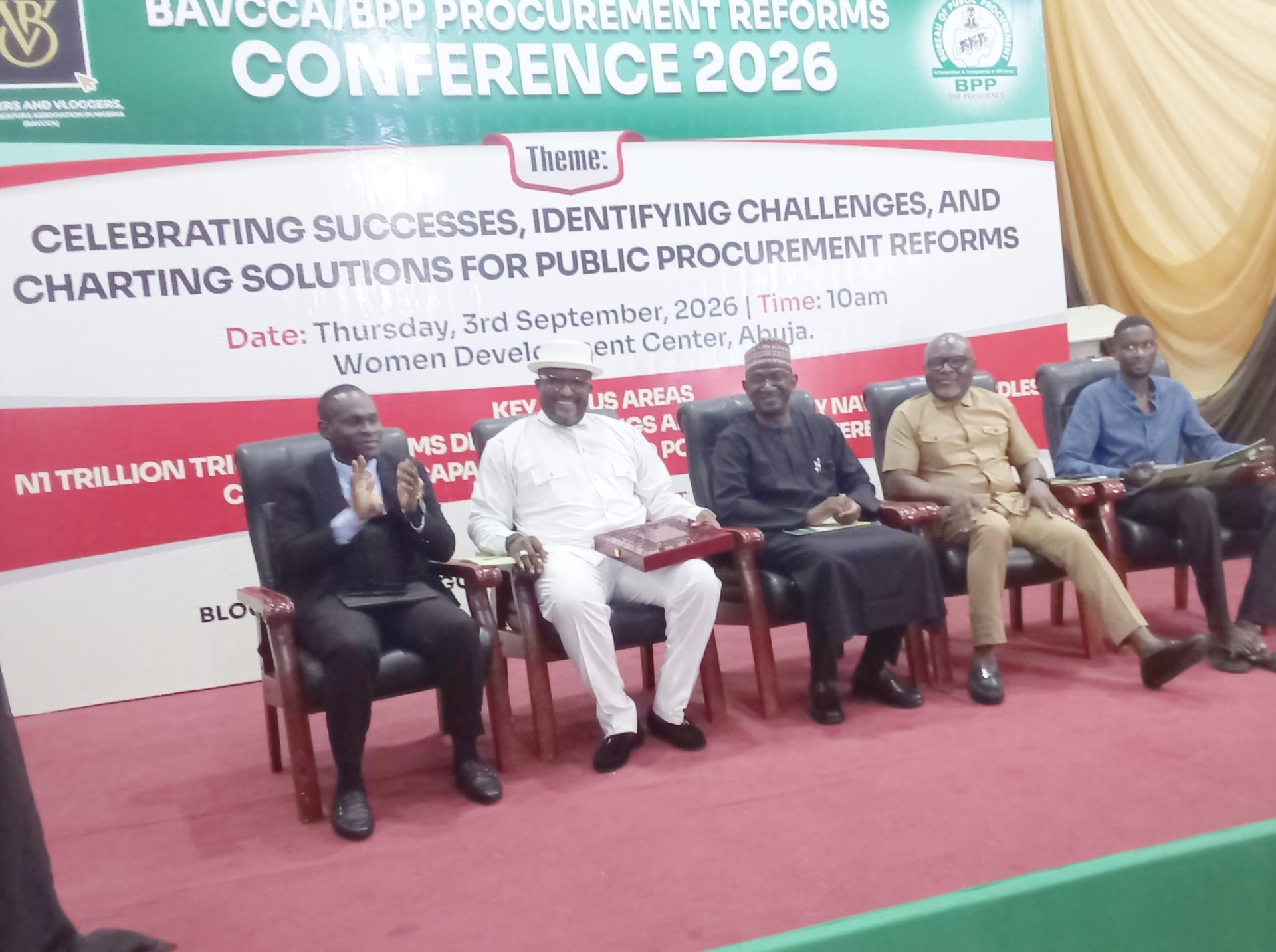
President of BAVCCA, Mr. Ikechukwu Chukwunyere, disclosed this in Abuja on Thursday at the 2026 BAVCCA/Bureau of Public Procurement (BPP) Procurement Performance Conference, where he said the association had uncovered “deeply troubling patterns of wrongdoing” within parts of the public system.
Chukwunyere said the association, in collaboration with the Council of Independent, Civic, Monitoring and Digital Investigations, would formally name government institutions allegedly implicated in corrupt practices and draw the attention of the anti-graft agency to the alleged infractions.
He said, “BAVCCA and the Council of Independent, Civic, Monitoring, and Digital Investigations has uncovered deeply troubling patterns of wrongdoing within parts of the public system.
“In line with our commitment to accountability, we shall be formally submitting detailed letters and evidence to the Economic and Financial Crimes Commission, naming implicated government institutions, and drawing attention to observed acts of corruption.”
According to him, the planned action was in line with the association’s commitment to transparency and accountability, stressing that no institution should be beyond scrutiny.
He said, “We believe that no institution is above scrutiny, and that transparency must be matched to the consequences where necessary.”
Speaking further, the BAVCCA president said responsible digital media had an important role to play in explaining government reforms, monitoring public institutions and tackling disinformation.
He, however, urged content creators to uphold accuracy, balance, verification and proper context in their reports, while commending the reforms being implemented by the BPP and calling for greater collaboration among stakeholders.
“We believe there is a need for stronger and more structured engagement between BPP, the media, the civil society, and the digital content community,” he said.
Chukwunyere said stronger collaboration would enhance procurement education, public awareness, responsible monitoring and understanding of government reforms.
He identified capacity gaps, resistance to change, data manipulation, data challenges and enforcement as some of the major challenges confronting procurement reforms.
“Our objective should therefore be simple, to move from reform to implementation, from implementation to measurable results, and from results to public confidence,” he said.
The BAVCCA president also announced plans by the association to expand its civic engagement ahead of the 2027 general elections through the organisation of government and presidential debates.
He said the debates would provide candidates with opportunities to directly present their manifestos, policies and plans to Nigerians.
Chukwunyere urged Nigerians to actively participate in the electoral process by registering, obtaining their Permanent Voter Cards and making informed choices based on competence, character, capacity and credible programmes.
He also appealed to politicians and their supporters to shun incitement, violence and divisive rhetoric.
In a keynote address, Director-General of the BPP, Dr Adebowale Adedokun, described public procurement as more than a government administrative process, saying it remained a critical instrument for national development.
Represented by the Director of Civil Infrastructure, Engr. Nasir Bello, Adedokun said the success or failure of the procurement system had a direct impact on citizens and the overall development of the country.
He said, “Procurement is not merely a government process, it is a development instrument, an economic driver, and a powerful catalyst for national transformation.”
He explained that public procurement remained one of the major channels through which government resources were converted into infrastructure and other development outcomes, including roads, hospitals, schools, security infrastructure and agricultural programmes.
“When procurement succeeds, citizens benefit. When procurement fails, development suffers. This is why procurement reform is not simply an administrative exercise, it is a national imperative,” he said.
The BPP boss disclosed that the bureau was implementing what he described as one of the most ambitious procurement modernisation programmes in Nigeria’s history, anchored on digital transformation, professionalisation, compliance and the strategic use of government spending.
He identified the implementation of an electronic government procurement system, EGP, as one of the major reforms, saying it would automate key procurement processes across government institutions.
According to him, the system would reduce manual intervention, strengthen audit trails, improve transparency, facilitate real-time monitoring and generate reliable procurement data for evidence-based decision-making.
He said the reform was “not simply digitization. It is a transformation.”
Adedokun also highlighted the government’s Nigeria First policy as an important component of procurement reform, stressing that public spending should be deployed to stimulate local industries, create jobs, promote innovation and retain economic value within the country.
He said, “Government spending must not merely purchase products and services. It must create opportunities. It must strengthen the industry. It must retain value within our economy.”
The BPP boss further emphasised the need to professionalise procurement management, strengthen compliance and oversight, and expand procurement opportunities to micro, small and medium enterprises, women-owned businesses, youth-led enterprises and other underrepresented groups.
On the role of digital media, Adedokun urged bloggers, content creators and digital journalists to become partners in promoting transparency and accountability in public procurement.
He said, “You are no longer mere observers. You are drivers of public discourse. You are amplifiers of information. You are partners in accountability.”
He urged content creators to help citizens understand not only what government spends, but also why and how it spends public funds and the development outcomes generated from such expenditure.
The conference, themed “Celebrating Successes, Identifying Challenges, and Charging Solutions for Public Procurement Reforms,” featured panel discussions and interactive sessions on procurement reforms and transparency.
The event also featured the presentation of the BAVCCA Man of the Year Leadership Award to the BPP Director-General, Dr Adebowale Adedokun, who was also decorated as an ambassador of the association.
Awards and other recognitions were equally presented to leading content creators for their contributions to procurement advocacy and public accountability.